
Choosing the 2026 Best PP Poultry Manure Belt Supplier requires more than comparing prices. A belt that looks smooth in a sample may behave differently after months of manure, moisture, and daily tension. The Pp Poultry Manuar Belt should suit the house layout, conveyor length, scraper design, and cleaning routine. Buyers should request material specifications, belt-width tolerances, splice details, and written warranty terms. Ask how the supplier checks consistency between production batches. Small variations matter.
For transparency, the following is an editorial line, not a verified published quotation: poultry-equipment specialist Alex Morgan says, “A reliable belt is proven in the barn, not just on a sales sheet.” Treat it as a reminder, not a substitute for documented testing. Request a sample, inspect its edges and surface, and discuss expected operating conditions with the supplier. Ask for references from farms using comparable systems, then confirm what support is available if tracking or splicing problems arise. Fast replies help. Clear records help more.
No checklist catches every barn-specific problem. A belt can meet stated specifications and still need adjustment in a particular installation. This guide will compare suppliers through practical criteria: material disclosure, manufacturing consistency, service access, delivery planning, and evidence behind performance claims. The strongest choice is not automatically the cheapest or the most polished. It is the supplier willing to answer precise questions and support the product after delivery. Verify the details before ordering.
2026 Best PP Poultry Manure Belt Supplier?
What Is a PP Poultry Manure Belt and How Does It Work?
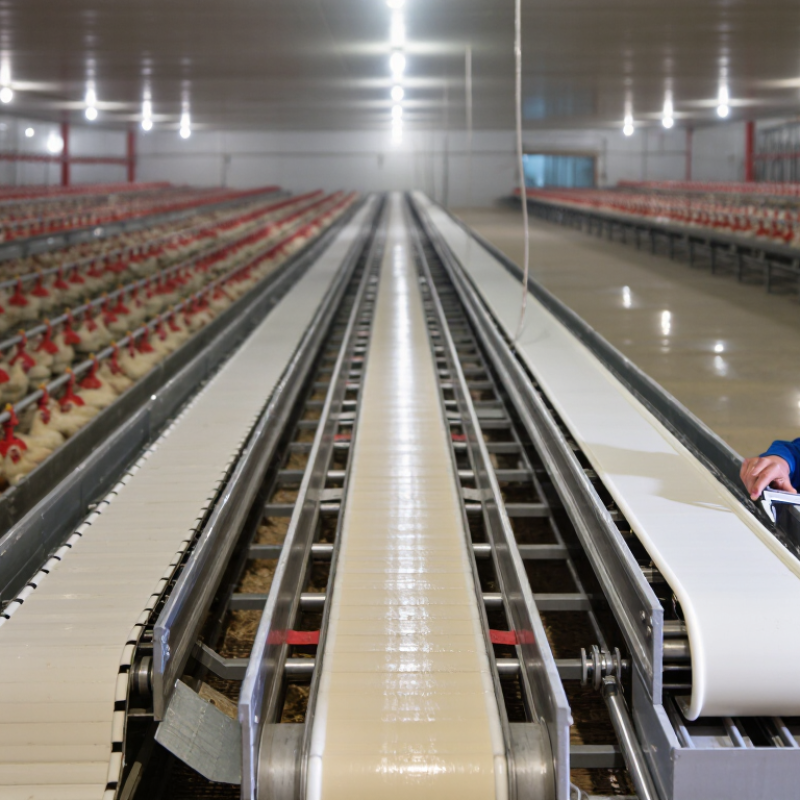
A PP poultry manure belt is a moving polypropylene belt installed beneath cage rows. It catches droppings and carries them toward a collection point. A drive motor turns rollers, advancing the belt at set intervals. Scrapers can remove residue near the discharge end, while ventilation or a manure-drying area helps reduce moisture. The basic idea is simple. FAOSTAT data reported in the FAO Statistical Yearbook 2023 put global poultry-meat production at about 142 million tonnes in 2022, reflecting the scale of modern poultry production. That figure is not a manure estimate, but it helps explain why reliable waste handling matters.
In daily operation, belt alignment, tension, and cleaning affect performance. A belt that wanders may rub against its supports; one that is too loose can sag under wet manure. Operators should check seams, edge wear, and buildup, especially after cleaning. PP resists moisture and many routine farm conditions, but it is not indestructible. Sunlight, excessive tension, sharp edges, and poor maintenance can shorten service life. Belt width and thickness should match the housing layout and expected load, rather than relying on a generic specification. Small details matter. And not every farm needs the same belt speed or drying arrangement. Industry guidance, including the IPCC 2019 Refinement on manure management, treats storage and handling conditions as important factors; actual results still depend on ventilation, climate, and operating practice.

A PP (polypropylene) poultry manure belt is a moving conveyor installed beneath poultry cages. It collects manure and carries it to a discharge point, where a scraper removes it from the belt.
How to read the chart: The bars show the order of the operating steps, not measured performance or supplier specifications. Actual system layouts and operating schedules vary by poultry house.
2026 Best PP Poultry Manure Belt Supplier?
Choosing a PP poultry manure belt starts with resin consistency, not a glossy surface. Polypropylene should resist moisture, manure acids, and repeated washing while staying flexible in cold barns. Ask whether the resin is virgin or blended, and request batch traceability. Recycled content is not automatically unsuitable, but inconsistent composition can affect strength and service life. Feel a sample edge. Brittle cuts deserve questions.
Performance claims need numbers. Compare thickness, tensile strength, elongation, tear resistance, and width tolerance with your conveyor load and span. Ask for test methods and recent reports, not only a specification sheet. Check weld seams, edge finish, and tracking during a loaded trial. UV resistance matters where sunlight reaches the line; temperature range matters during winter starts and hot washdowns. Small details matter. No single rating predicts lifespan, so treat supplier data cautiously.
Tips: Request a full-width sample and test it with real manure, wash water, and operating tension. Record stretching, cracking, and edge drift over several cycles. Clarify replacement lead times and warranty exclusions in writing.
| Evaluation dimension | What to look for | How to verify it | Why it matters |
|---|---|---|---|
| Primary belt material | For a polypropylene (PP) manure belt, request the exact polymer specification and confirmation that the belt fabric and coating, if present, are suitable for the intended poultry-house conditions. | Request a technical data sheet identifying the material construction. Compare samples or batches against the declared specification. | “PP belt” alone does not describe fabric construction, coating, additives, or finished-belt performance. |
| PP versus HDPE | PP is a common choice for woven manure belts. HDPE is another polyolefin option, but it should be assessed as a distinct construction rather than assumed to be a direct substitute. | Compare finished-belt tensile performance, flexibility, tracking, splice design, and compatibility with the existing manure-removal system. | Resin properties do not by themselves predict how a woven, finished belt will perform in service. |
| Virgin or recycled polymer | Ask whether the belt uses virgin resin, recycled resin, or a blend, and whether the supplier controls the consistency of incoming material. | Request written material declarations, batch traceability, and test results for representative production samples. | Recycled content can vary in composition and consistency; its suitability should be judged from verified finished-belt properties. |
| UV and light exposure | For belts exposed to daylight or UV-containing artificial light, ask whether UV stabilisation is included and what exposure conditions were evaluated. | ISO 4892-2 describes laboratory exposure of plastics using xenon-arc light sources. Request the exposure method, duration, and before-and-after test results. | UV resistance depends on formulation and exposure. A laboratory exposure result is not, by itself, a guaranteed service-life prediction. |
| Tensile strength and elongation | Set minimum requirements for the finished belt based on belt width, loading, tensioning, and the equipment manufacturer’s limits. Obtain declared values rather than relying on resin descriptions. | ISO 527-1 and ISO 527-2 cover tensile testing of plastics specimens. For a textile conveyor-belt construction, ISO 283 may be considered where its scope and method are appropriate; agree the finished-belt test method in advance. | Specimen tests and finished-belt tests are not interchangeable. Test method, sample construction, and units should be stated with every result. |
| Thickness, width, and dimensional tolerance | Require the nominal belt dimensions, allowable tolerances, and measurement locations to match the manure-removal equipment. | Check a production sample with calibrated measuring equipment and compare the results with the purchase specification. | Incorrect dimensions can contribute to tracking problems, poor fit, or interference with rollers and scrapers. |
| Splice and edge quality | Specify the splice type, edge finish, and acceptable workmanship. Ask whether the splice is included in the stated strength data. | Inspect a sample splice and request a documented test method and results for splice strength, if applicable. | The splice and edges can be critical points for belt failure or snagging; base material data alone do not assess them. |
| Moisture and manure exposure | Request evidence that the finished belt is suitable for the site’s expected moisture, cleaning routine, and manure exposure. | Review the belt’s material declaration and any relevant conditioning or exposure results. ISO 291 specifies standard atmospheres for conditioning and testing plastics. | Actual performance depends on the complete belt construction and operating conditions, not only the polymer name. |
| Quality control and traceability | Look for defined inspection procedures, lot identification, retained samples, and a documented process for handling nonconforming product. | Review quality records and request traceability from a delivered roll to its production batch. Treat management-system certification as process evidence, not as proof of a particular belt’s performance. | Consistent production and traceable batches make it easier to investigate variation and verify that delivered goods match the agreed specification. |
| Setting acceptance limits | Put required dimensions, test methods, minimum performance values, tolerances, and inspection rules in the purchase specification before ordering. | Use equipment requirements and site conditions to set project-specific limits. Ask suppliers to identify any values that are estimates rather than tested results. | There is no single universal performance specification for every PP poultry manure belt; acceptance criteria should be agreed for the application. |
Choosing a PP poultry manure belt in 2026 starts with the house, not the sales brochure. Measure belt width, run length, roller spacing, operating hours, and manure moisture near the discharge point. The OECD-FAO Agricultural Outlook 2024–2033 projects poultry to account for about 62% of additional global meat production over the decade. That growth makes reliable cleaning equipment more important, but it does not mean one belt suits every farm. Fit matters.
Ask suppliers for the polypropylene grade, belt thickness tolerance, tensile-test method, seam construction, and written warranty terms. Request test conditions, not just a maximum-strength figure; results vary with sample width and test method. Check whether the belt resists the cleaning chemicals and temperatures used at your site. Then compare delivered price, lead time, replacement-part access, and expected service life. A low quote can become costly after repeated tracking adjustments.
Run a sample belt through a full circuit before ordering for every house. Watch for edge curl, slipping, uneven tension, and manure sticking at the scraper. Record the belt’s condition after several cleaning cycles. Supplier claims can help, but they are not field evidence. A pilot takes time. It may still reveal flaws no specification sheet shows.
A PP poultry manure belt’s price depends on more than resin weight. Belt width, thickness, weave, edge sealing, and splice quality all affect the quote. A cheaper, thin belt may stretch under wet manure and repeated tension. A heavier belt costs more upfront, but may resist sagging when rollers are correctly aligned. Ask suppliers for thickness tolerances and tensile-test results, not just a price per meter. Small detail. Big consequence.
Service life depends on moisture, abrasion, loading, and daily cleaning. The European Commission Joint Research Centre’s 2017 Best Available Techniques reference document describes manure-belt drying with forced ventilation; airflow and manure condition shape performance. USDA NRCS’s Agricultural Waste Management Field Handbook also identifies moisture and handling conditions as key manure-management factors. In practice, inspect for frayed edges, cracks near splices, and uneven tracking. Record tension and alignment after installation. There is no reliable universal lifespan: a dry, well-aligned belt can last much longer than one carrying wet, abrasive material. That uncertainty is real. Maintenance needs careful records, not guesswork.
For a 2026 PP poultry manure belt purchase, verify the supplier’s process, not just the product photos. Ask for the belt’s exact width, thickness, roll length, and material details. Compare these with your conveyor drawings and operating conditions. A sample can reveal uneven edges, surface defects, or inconsistent thickness. Small flaws matter.
Request a recent production video and a written inspection record for the belt you plan to order. Ask how the supplier checks tensile strength, flexibility, and dimensional consistency, and whether test results apply to your specific batch. Contact one or two recent buyers, if possible, and ask about delivery accuracy and belt performance after installation. Confirm packing details, lead time, replacement terms, and payment milestones in writing. A polished video alone proves little.
Tips: Send a drawing with measurements, and keep a signed sample for comparison. Check the roll when it arrives. If a specification is missing, pause and ask for clarification; I would not assume two suppliers use the same measurement method.


All of Hapco's formulations are completely free of Mercury.

Hapco has been in business for over 50 years!

*NOTICE* Hapco will be will be closed on Monday, May 26th, in observance of Memorial Day. |
| Cookie | Duration | Description |
|---|---|---|
| cookielawinfo-checkbox-analytics | 11 months | This cookie is set by GDPR Cookie Consent plugin. The cookie is used to store the user consent for the cookies in the category "Analytics". |
| cookielawinfo-checkbox-functional | 11 months | The cookie is set by GDPR cookie consent to record the user consent for the cookies in the category "Functional". |
| cookielawinfo-checkbox-necessary | 11 months | This cookie is set by GDPR Cookie Consent plugin. The cookies is used to store the user consent for the cookies in the category "Necessary". |
| cookielawinfo-checkbox-others | 11 months | This cookie is set by GDPR Cookie Consent plugin. The cookie is used to store the user consent for the cookies in the category "Other. |
| cookielawinfo-checkbox-performance | 11 months | This cookie is set by GDPR Cookie Consent plugin. The cookie is used to store the user consent for the cookies in the category "Performance". |
| viewed_cookie_policy | 11 months | The cookie is set by the GDPR Cookie Consent plugin and is used to store whether or not user has consented to the use of cookies. It does not store any personal data. |