
Skip to Content

Liquid Molding Monthly

2026 Best Prehung Doors for Global Buyers?

Choosing the right Prehung Doors for global projects requires more than comparing online prices. Door size, frame depth, swing direction, weather exposure, and installation skills can change the final result. A door that fits a North American timber wall may fail in a humid coastal apartment. Small details matter.

This 2026 guide examines practical options for homeowners, contractors, developers, and international distributors. It considers solid-core and hollow-core construction, timber, steel, fiberglass, glazing, insulation, seals, hardware, and finish quality. It also reviews manufacturer documentation, testing records, warranty terms, packaging, and replacement support. Reliable suppliers should provide accurate dimensions and clear installation instructions. They should also explain performance claims instead of using vague marketing language.

Regional requirements deserve careful attention. Fire resistance, safety glazing, accessibility, energy performance, and wind or moisture protection may differ between markets. Buyers should confirm local requirements with qualified professionals before ordering large quantities. Product availability and shipping conditions can change during 2026. No ranking is perfect. Some recommendations may suit a commercial project but disappoint in a residential setting. That limitation matters. The best choice balances verified performance, total delivered cost, visual design, maintenance, and dependable after-sales service. This guide aims to make that comparison clearer, while recognizing that real buildings often reveal problems that product pages overlook.
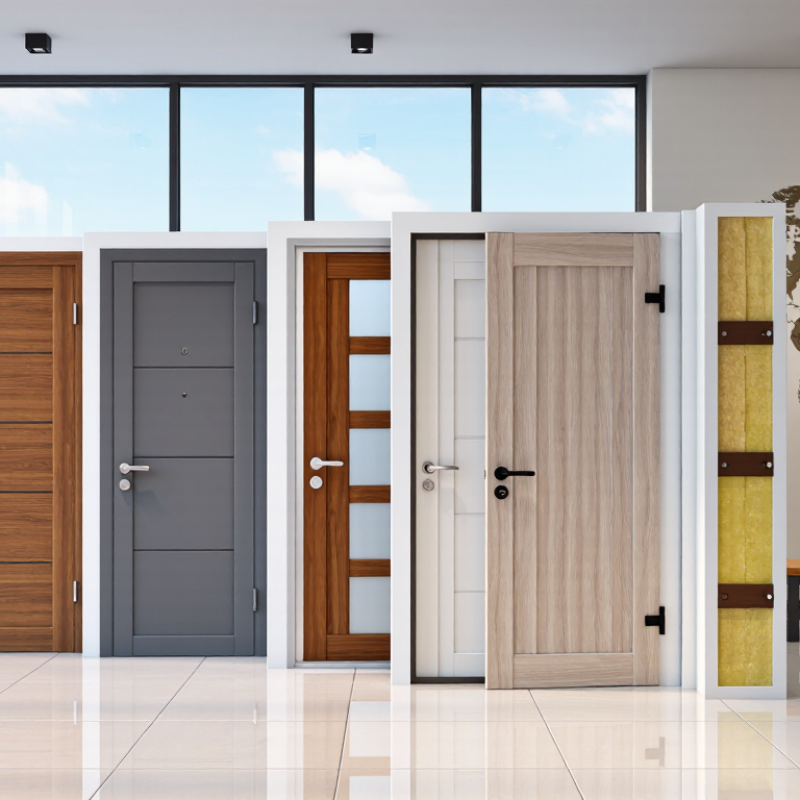
2026 Best Prehung Doors for Global Buyers?

What Makes a Prehung Door Suitable for Global Buyers in 2026

A suitable prehung door for global buyers must do more than look attractive. It should match local wall thickness, rough-opening sizes, swing direction, and installation habits. A complete set includes the door slab, frame, hinges, and prepared hardware positions. This reduces site work and helps control installation errors.

Material selection also matters. In humid coastal regions, moisture-resistant components and sealed edges can prevent swelling. In colder climates, stable cores, tight weather seals, and suitable glazing improve comfort. Buyers should request test reports, product drawings, packing details, and installation instructions in clear language. Packaging deserves attention too. A damaged frame can create expensive delays, even when the door itself is well made. I have found that small details often matter more than photographs.

Tips: Confirm the rough opening before ordering. Check whether the hinge side is viewed from inside or outside. Ask about compatible locks, threshold height, replacement parts, and container loading limits. Compare technical data, not only prices. Also, test one sample before placing a large order. It may reveal an overlooked issue, such as a frame that feels too narrow or a seal that performs poorly in wind. Global buyers should allow room for local adaptation. One standard solution rarely fits every market.


How to Choose the Right Prehung Door Type and Configuration

2026 Best Prehung Doors for Global Buyers?

How to Choose the Right Prehung Door Type and Configuration

Choosing a prehung door starts with the opening, not the door leaf. Measure width, height, wall thickness, and floor level at three points. Small errors can create daylight gaps or force costly site adjustments. For humid coastal regions, consider fiberglass or treated steel frames. Timber can perform well, but it needs stable moisture control and careful sealing.

Climate matters. The International Energy Agency’s 2023 Global Status Report for Buildings and Construction reports that buildings consume about 30% of global final energy. A tight threshold, continuous weatherstripping, and correctly aligned hinges can reduce unwanted air movement. Choose insulated cores for conditioned spaces. Select laminated or tempered glazing where impact, noise, or solar exposure is a concern. Check U-factor and solar heat gain data through recognized testing systems, such as NFRC procedures, when applicable.

Configuration must match daily use and local practice. In-swing doors suit many protected entrances, while out-swing doors can improve interior clearance. Confirm handing from the approach side. Verify fire, smoke, acoustic, wind, and accessibility requirements before ordering. Standards differ between markets. That detail is easy to underestimate. I would also request installation drawings, packing dimensions, replacement hardware details, and moisture protection instructions. A lower purchase price may fail after one rainy season. Real-world performance depends on the opening, installer, and maintenance—not only the factory specification.

2026 Best Prehung Doors for Global Buyers

How to Choose the Right Prehung Door Type and Configuration

The chart compares widely used nominal door-leaf widths for single and paired prehung configurations in North American, UK, and European markets. Paired doors use two equal leaves. Nominal dimensions are shown in millimetres; actual frame, rough-opening, swing, clearance, fire-rating, and accessibility requirements should be verified against local building codes before ordering.

Which Materials, Sizes, and Performance Features Matter Most

2026 Best Prehung Doors for Global Buyers?

Choosing a prehung door in 2026 starts with the opening, not the catalog photograph. Material affects weight, stability, insulation, and maintenance. Solid wood provides warmth and repairability, but it can swell in humid climates. Engineered wood resists movement better and often offers consistent finishing. Steel gives strong security and good value, while fiberglass handles moisture with less upkeep. None is perfect. In coastal projects, I have seen neglected edges deteriorate faster than the door face.

Accurate sizing prevents expensive installation problems. Measure width, height, jamb depth, and wall thickness at several points. Check whether the opening is square, especially in older buildings. Common nominal sizes may not match regional construction standards. A slightly incorrect jamb can create uneven gaps and poor latching. I once trusted a single measurement, and the replacement trim exposed the mistake. That experience still influences every specification I review.

Performance details matter more than decorative panels. Look for continuous weatherstripping, an adjustable threshold, corrosion-resistant hinges, and reinforced strike areas. Low U-value glazing can reduce heat transfer in doors with windows. Acoustic ratings help near airports, highways, and dense housing. For colder regions, examine thermal breaks and insulated cores. For tropical areas, prioritize moisture resistance and reliable drainage. Confirm fire, smoke, accessibility, and security ratings with qualified local professionals. A door may look substantial, yet weak hardware can undermine its performance.

How to Check International Standards, Certifications, and Compatibility

2026 buyers should treat a prehung door as a tested assembly, not merely a slab, frame, and hinges. Check the destination’s product rules before comparing prices. EN 14351-1 may apply to external pedestrian doors in Europe, while North American projects often reference NAFS or ASTM performance standards. Fire-rated assemblies require separate evidence, such as tested fire-resistance reports. A CE mark alone does not prove every performance claim. Ask for the declaration of performance, test laboratory, scope, and production date.

Compatibility is where many international orders fail. Confirm rough-opening size, wall thickness, swing direction, threshold height, lock preparation, weather exposure, and handing. Metric and imperial dimensions can create small gaps with expensive consequences. Verify acoustic, thermal, water, and air-leakage ratings using comparable test methods. The 2023 UNEP Global Status Report states that buildings used over 34% of global energy in 2022. A poorly sealed doorway may seem minor, but repeated leakage affects comfort and operating costs. Catalogue figures can also hide installation limits.

Tips: Request a full-size shop drawing and a sample corner. Match local wall construction, fasteners, and sealants. Check certification validity with the issuing laboratory, not only the seller. Photograph the opening before production. Recheck everything. One overlooked threshold can delay an entire installation. Industry data helps, but local inspection remains necessary.

How to Compare Suppliers, Costs, Shipping, and Installation Support

2026 Best Prehung Doors for Global Buyers?

A reliable prehung door supplier should provide clear drawings, material specifications, and tested performance data. Compare frame material, slab thickness, hinge quality, weather seals, and hardware options. Ask for recent production photos, not only polished catalog images. A serious supplier should explain tolerances and replacement procedures. Small details matter. A door arriving 3 millimeters out of square can delay an entire installation.

Do not compare prices alone. Request a landed-cost estimate covering packaging, inland transport, ocean or air freight, duties, and local delivery. Confirm carton dimensions and gross weight before ordering. Shipping damage often starts with weak corner protection or poor moisture barriers. Ask whether the supplier can provide inspection photos before loading. Installation support should include a clear fitting guide, rough-opening requirements, and video assistance across time zones. Still, remote guidance has limits. Local installers may interpret instructions differently.

Tips: Order one sample set before a full shipment. Test swing direction, seal compression, latch alignment, and threshold height. Keep a written checklist for every quote. Check response times, too. A fast sales reply does not always mean dependable technical support. My own caution is simple: even careful comparisons can miss regional labor costs. Leave room in the budget for adjustments, damaged parts, and one unexpected site problem.

2026 Best Prehung Doors for Global Buyers? - How to Compare Suppliers, Costs, Shipping, and Installation Support

Global buyer comparison of common prehung door configurations and purchasing considerations
Door Configuration Typical Door Leaf and Frame Common Material and Finish Typical Ex-Works Price
USD / Unit
Estimated Ocean Freight Allocation
USD / Unit
Typical Production Lead Time Installation Support to Request Best Use Case Overall Buyer Consideration
Interior Hollow-Core Prehung Door 762–914 mm wide; 1,980–2,130 mm high; 35–45 mm leaf thickness Painted molded skin or thin veneer; composite or softwood frame; standard hinges and latch bore $55–$130 $10–$35 25–45 days Opening-size chart, handing guide, hinge and latch templates, packing list by room Bedrooms, offices, apartments, and other low-impact interior spaces High cost efficiency
Lowest weight and easiest handling, but limited impact resistance and sound control
Interior Solid-Core Prehung Door 762–914 mm wide; 1,980–2,130 mm high; 40–45 mm leaf thickness Engineered timber or mineral-core construction; veneer, laminate, or factory-painted surface $120–$280 $20–$55 30–55 days Installation drawings, shim locations, door-weight handling guidance, adjustable strike plate instructions Hotels, offices, premium residences, and rooms requiring better privacy Strong value for performance
Better acoustic and thermal performance, with higher freight and handling costs
Exterior Fiberglass Prehung Door 810–1,000 mm wide; 2,030–2,135 mm high; 44–60 mm leaf thickness Fiberglass skin, insulated foam core, composite or treated frame, weather-resistant coating $220–$520 $45–$110 35–65 days Threshold and sill details, weather-seal replacement procedure, flashing guidance, water-management drawings Residential entrances and moderate-exposure exterior openings Good durability-to-cost ratio
Confirm frame material, sill drainage, local weather exposure, and hardware compatibility
Exterior Steel Prehung Door 810–1,000 mm wide; 2,030–2,135 mm high; 45–60 mm leaf thickness Galvanized or cold-rolled steel skin, insulated core, primed or powder-coated finish $180–$430 $40–$100 35–60 days Rust-prevention instructions, threshold leveling guide, frame anchoring details, touch-up coating specification Utility buildings, apartments, service entrances, and high-traffic locations High impact resistance
Usually economical, but edge damage, corrosion protection, and weight must be controlled
Fire-Rated Wood Prehung Door 762–914 mm wide; 1,980–2,135 mm high; commonly 45–54 mm leaf thickness Mineral or composite core, wood veneer or laminate, rated frame and listed hardware set $260–$750 $55–$145 45–80 days Complete certification package, approved hardware schedule, frame anchoring details, inspection checklist Hotels, apartments, commercial corridors, plant rooms, and code-controlled projects Compliance is the priority
Do not compare price without matching the required fire rating, test standard, frame, seals, and hardware
Acoustic Solid-Core Prehung Door 762–1,000 mm wide; 1,980–2,135 mm high; 45–60 mm leaf thickness Dense engineered core, perimeter acoustic seals, drop seal or threshold, veneer or laminate finish $320–$900 $60–$160 45–85 days Laboratory acoustic report, seal-adjustment instructions, frame-gap tolerances, installation quality checklist Meeting rooms, bedrooms, studios, healthcare rooms, and hospitality projects Performance depends on installation
Request tested sound-reduction data and verify the complete door-set configuration
Aluminum-Glass Exterior Prehung Door 800–1,200 mm wide; 2,000–2,400 mm high; 45–70 mm frame depth Thermally improved aluminum frame with insulated, laminated, or tempered glazing $350–$1,100 $75–$220 50–90 days Glazing replacement method, anchor layout, drainage details, sealant specification, adjustment procedure Commercial entrances, balconies, modern residences, and high-daylight designs Good design flexibility
Check thermal performance, glass safety classification, condensation control, and crate protection
Oversized or Double Prehung Door Set 1,200–1,800 mm overall width; up to 2,400 mm height; reinforced frame required Solid engineered timber, fiberglass, steel, or aluminum-glass construction $650–$2,000+ $140–$450 55–100 days Structural opening drawings, lifting points, multi-panel alignment guide, hardware adjustment and replacement plan Main entrances, villas, hospitality projects, and architectural openings Highest logistics risk
Confirm container dimensions, crate size, site access, lifting equipment, and installation responsibility
How to compare supplier quotations: Request the same door schedule, rough-opening dimensions, handing, frame depth, finish, hardware, glazing or fire-rating requirements, packaging method, Incoterm, warranty period, replacement-part policy, and installation documents from every supplier. Freight figures above are indicative allocations for consolidated ocean shipments and exclude destination duties, taxes, port charges, local delivery, storage, and installation labor.
Benchmark basis: Price and lead-time ranges are practical planning benchmarks for standard export door sets in 2026. Final costs vary according to order quantity, certification, customization, destination regulations, exchange rates, seasonality, and shipping route.
100% Mercury Free

100% Mercury Free

All of Hapco's formulations are completely free of Mercury.

50 Year Track Record

50 Year Track Record

Hapco has been in business for over 50 years!

ISO Certified

Higher Quality. More Efficiency. View Certificate

Technical Expertise

Hapco's employees are knowledgeable and ready to help.

Join Our Mailing List

Get the latest news, updates, and articles from Hapco, Inc.

Join Now