
Skip to Content

Liquid Molding Monthly

2026 Best Shuttle Rotomolding Machine for Global Buyers

Choosing the 2026 best Shuttle Rotomolding Machine requires more than comparing price, tonnage, or catalog photographs. Global buyers need evidence from real production conditions. That includes cycle consistency, oven temperature control, mold handling, cooling performance, energy use, and after-sales support. A reliable machine should produce stable wall thickness across repeated batches. It should also accommodate practical factory details, such as limited floor space, operator access, and changing mold sizes. Small details matter.

Glenn Beall, a respected rotational molding consultant and author, offers a useful reminder: “A machine does not make a good part by itself.” The statement reflects an important industry truth. Material quality, mold design, heating time, rotation speed, and operator training influence the final product. The equipment remains central, but it cannot correct every process weakness. Buyers sometimes overlook this point. That can become expensive.

This guide examines how to evaluate a Shuttle Rotomolding Machine for international production. It considers machine structure, automation, safety features, maintenance access, and supplier reliability. It also looks at shipping preparation, installation support, spare parts, and technical communication. These factors may seem ordinary. They often decide whether a project starts smoothly or loses valuable weeks.

No single machine fits every buyer. A compact unit may suit seasonal production, while a larger system supports continuous manufacturing. The “best” choice depends on products, output targets, labor skills, and factory conditions. Honest evaluation is necessary. Even strong machines require careful commissioning and ongoing process checks.
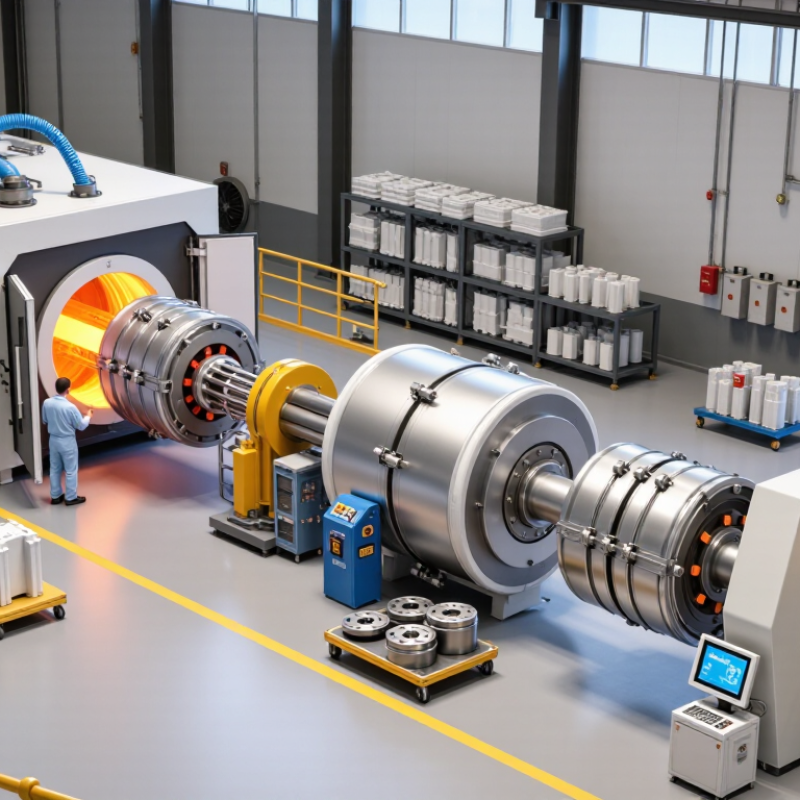
2026 Best Shuttle Rotomolding Machine for Global Buyers

What Is a Shuttle Rotomolding Machine?

A shuttle rotomolding machine moves molds between a heating oven and cooling area. Its shuttle carriage usually serves one oven with two working positions. The mold rotates on two axes while polymer powder melts across its inner surface. This creates hollow products without weld lines, such as tanks, pallets, bins, and playground parts. The operator can unload one mold while another enters the oven. That flexibility matters for mixed production.

According to Grand View Research’s 2024 rotational molding market report, the global market was valued at about USD 5.2 billion in 2023. The report also projects steady growth through 2030. This trend reflects demand for durable, lightweight, and corrosion-resistant plastic products. A shuttle system can suit small and medium factories because it needs less floor space than larger multi-arm equipment. However, cycle time depends heavily on mold mass, wall thickness, powder type, and cooling efficiency. The machine is not automatically efficient.

Tips: Check oven temperature uniformity at several points. Measure part-wall thickness after cooling. Ask for recorded energy use per cycle, not only motor power. During factory trials, watch mold loading, door access, and operator movement. These details often reveal practical delays.

A reliable buyer should also review control accuracy, emergency protection, mold compatibility, and spare-part availability. Industry reports provide useful market direction, but they cannot replace a production trial. One overlooked issue remains ventilation. Poor heat removal can slow cycles and distort parts. Experienced teams usually test the complete process before selecting final machine capacity.


How Shuttle Rotomolding Machines Work

2026 Best Shuttle Rotomolding Machine for Global Buyers

How Shuttle Rotomolding Machines Work

A shuttle rotomolding machine moves molds between heating and cooling stations on a guided carriage. The operator fills a hollow mold with measured polymer powder, then seals it securely. The carriage enters the oven, where controlled heat melts the powder against the mold walls. Two-axis rotation spreads the material across corners, ribs, and deep sections. Rotation speed matters. Uneven movement can create thin areas.

After heating, the shuttle exits the oven and moves into a cooling position. Fans or controlled air reduce the mold temperature while rotation continues. This prevents sagging and helps maintain consistent wall thickness. Water mist may be used carefully, but excessive cooling can distort the part. Experienced operators check cycle data, mold temperature, powder weight, and release conditions.

A practical production lesson is simple: the first cycle is rarely perfect. Small changes in powder loading or ventilation can alter the result. I have seen acceptable-looking tanks fail after cooling because hidden stress was overlooked. Good machines provide stable carriage movement, responsive temperature controls, and clear safety systems. Buyers should also examine service access, electrical compatibility, operator training, and spare-part availability. Global shipping is not the only concern. Local maintenance capacity can decide whether production stays reliable.

Key Features for Global Manufacturing Needs

2026 Best Shuttle Rotomolding Machine for Global Buyers

Key Features for Global Manufacturing Needs

A capable shuttle rotomolding machine must handle varied production conditions. Dual working stations can improve output without demanding a larger floor area. Operators can load one station while the other completes heating, rotation, and cooling. This arrangement supports flexible scheduling for different mold sizes. It also reduces idle time between cycles.

Precise temperature control matters more than impressive marketing figures. Independent heating zones help maintain consistent wall thickness and surface quality. A programmable controller should record temperature, rotation speed, cycle time, and alarm history. Clear displays support multilingual teams and reduce training errors. Safety guarding, emergency stops, and automatic fault detection are essential for responsible operation.

Energy use deserves close attention. Insulated ovens, efficient burners, and controlled cooling can lower operating costs. However, actual savings depend on mold design, resin selection, ambient temperature, and operator practice. No machine fits every factory. A compact system may suit small batches but limit future expansion. Buyers should verify local voltage, gas requirements, ventilation rules, spare-part availability, and technical support before ordering. Factory acceptance testing can reveal problems that brochures often miss. Remote diagnostics are useful, but they cannot replace skilled maintenance on the production floor. Specification sheets need careful review.

2026 Best Shuttle Rotomolding Machine for Global Buyers - Key Features for Global Manufacturing Needs

Indicative reference values for industrial shuttle rotomolding equipment. Actual specifications vary by machine configuration, mold size, material, and production requirements.

Large oven capacity, high payload handling, adjustable temperature control, and sufficient mold clearance are important when selecting a shuttle rotomolding machine for global manufacturing applications.

How to Choose the Best Machine in 2026

How to Choose the Best Machine in 2026

Choosing the best shuttle rotomolding machine requires more than comparing heating power or purchase price. Grand View Research reported that the global rotational molding market reached approximately USD 5.67 billion in 2023. It also forecast a 4.6% compound annual growth rate from 2024 to 2030. This growth increases equipment choices, but it also makes evaluation harder.

Start with your actual production data. Record mold dimensions, polymer type, wall thickness, cycle time, and annual output. A machine should provide enough platen space without wasting energy on unused capacity. Check oven temperature stability, shuttle positioning accuracy, cooling control, and mold-change time. A practical factory trial should measure energy use per cycle, not only theoretical heating capacity. Small details matter.

Safety and maintainability deserve equal attention. Review guarding, emergency stops, electrical documentation, spare-part access, and operator training. ISO 12100 principles can support a structured machinery risk assessment. PlasticsEurope reported global plastics production of 413.8 million tonnes in 2023, showing the scale of the industry and the need for controlled, efficient processing. Still, market forecasts cannot predict your factory’s real bottlenecks. I would not trust a specification sheet alone. Ask for production records, test several molds, and inspect a working installation.

No scorecard is perfect. A cheaper machine may become expensive when cooling delays, uneven walls, or difficult maintenance reduce usable output.

Installation, Operation, and Maintenance Considerations

2026 Best Shuttle Rotomolding Machine for Global Buyers

Installation, Operation, and Maintenance Considerations

A shuttle rotomolding machine needs a rigid, level foundation before production begins. Check floor load capacity, anchor positions, ventilation, and electrical requirements with qualified technicians. Leave enough space around the arms for mold loading and safe inspection. Measure twice. Incorrect leveling can create uneven rotation and inconsistent wall thickness.

During commissioning, verify arm movement without a mold installed. Test emergency stops, guards, temperature sensors, hydraulic pressure, and control signals. Operators should record heating time, oven temperature, mold rotation speed, and cooling conditions for each product. Start with conservative settings. Plastic may burn when heating profiles are copied without considering mold weight, material grade, or ambient temperature. This is a common mistake.

Maintenance should follow actual working hours, not assumptions. Inspect bearings, chains, gearboxes, hydraulic hoses, electrical terminals, and thermocouples at scheduled intervals. Remove resin dust from the oven and control cabinet. Keep it clean. Lubricate only with compatible products, and isolate power before servicing. A maintenance log should include unusual noise, oil leakage, temperature drift, and cycle changes. Small warnings often appear before costly failures. Experienced teams also review rejected parts weekly, although this step is sometimes skipped during busy production. That omission deserves attention. Calibration checks, operator training, and spare sensor planning improve reliability for global installations.

100% Mercury Free

100% Mercury Free

All of Hapco's formulations are completely free of Mercury.

50 Year Track Record

50 Year Track Record

Hapco has been in business for over 50 years!

ISO Certified

Higher Quality. More Efficiency. View Certificate

Technical Expertise

Hapco's employees are knowledgeable and ready to help.

Join Our Mailing List

Get the latest news, updates, and articles from Hapco, Inc.

Join Now