
Global buyers are paying closer attention to purity, consistency, and documentation in cosmetic raw materials. 99% Pure Cetearyl Alcohol often appears in creams, conditioners, balms, and cleansing products. It usually combines cetyl alcohol and stearyl alcohol, creating a waxy solid with strong thickening and emulsifying performance.
The market is not as simple as one purity number. “99%” may describe total fatty alcohol content, while the cetyl-to-stearyl ratio can still vary. That difference affects melting behavior, viscosity, skin feel, and emulsion stability. Buyers should request the INCI name, assay method, carbon-chain profile, melting range, and batch-specific certificate of analysis. Small details matter.
Industry reports support this careful approach. Grand View Research identifies specialty cosmetic ingredients as a growing sector, driven by skincare innovation and multifunctional formulations. Mordor Intelligence also highlights demand for functional ingredients that improve texture, stability, and product performance. These reports indicate opportunity, but their market estimates use different definitions and should not be treated as identical.
Regulatory references add another layer of reliability. The European Commission’s CosIng database lists Cetearyl Alcohol as a recognized cosmetic ingredient, while the U.S. FDA evaluates finished cosmetic products under applicable safety requirements. Neither source automatically confirms a supplier’s “99%” claim. That must come from transparent testing.
This guide compares the top types of 99% Pure Cetearyl Alcohol for international purchasing. It considers product grade, fatty-chain ratio, packaging, documentation, and supply reliability. Some specifications may look impressive yet remain incomplete. That is worth questioning. A lower-cost grade may perform well in a laboratory jar, but behave differently after months of transport, heat exposure, or large-scale production.
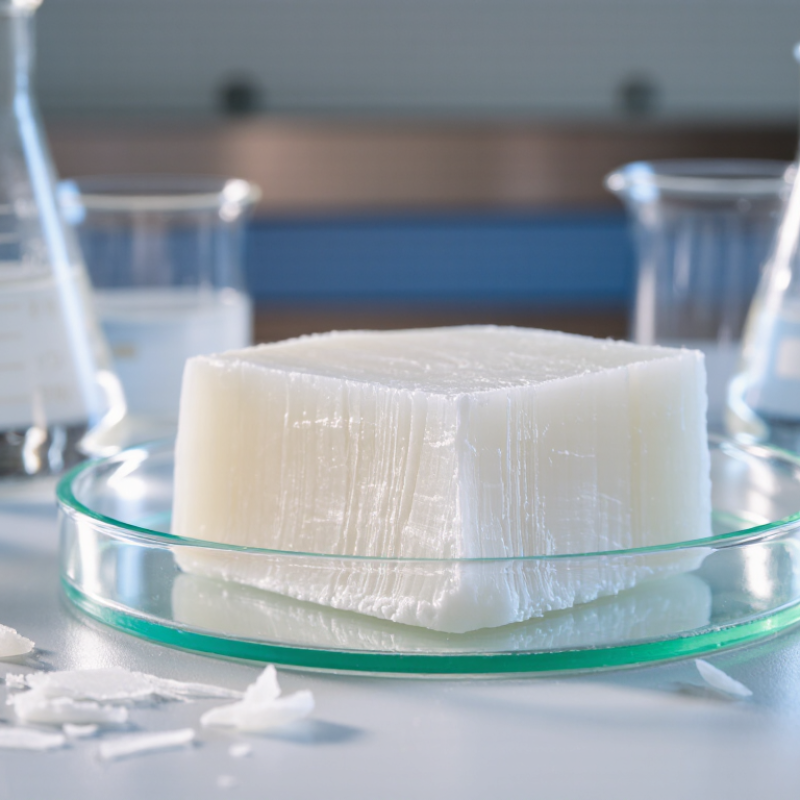
Cetearyl alcohol is a waxy blend of cetyl alcohol and stearyl alcohol. It is not the intoxicating alcohol found in beverages. In creams, conditioners, and cleansing products, it improves texture, supports emulsion stability, and leaves a softer skin feel. Its white flakes or pastilles usually melt into a smooth, structured base.
“99% pure” needs careful interpretation. It commonly describes the combined fatty-alcohol assay, not 99% cetyl alcohol alone. A buyer should check the certificate of analysis for composition, hydroxyl value, acid value, moisture, melting range, and residual impurities. The Cosmetic Ingredient Review safety assessment supports its cosmetic use under normal formulation conditions. However, a purity claim without a testing method is incomplete. That part is often overlooked.
Industry specifications often reference gas chromatography for fatty-alcohol distribution and pharmacopeial-style quality controls. The European Chemicals Agency substance dossier also identifies cetearyl alcohol as a defined UVCB-type fatty substance, reflecting its mixed composition. For global purchasing, suppliers should provide batch results, origin, packaging details, and storage guidance. A typical sample should show clean white appearance, low odor, and consistent melting behavior. “99%” sounds precise, but it may still hide meaningful differences between lots. Testing one batch is useful; testing only one batch is not enough.

Cetearyl alcohol is a fatty alcohol blend composed mainly of cetyl alcohol (C16) and stearyl alcohol (C18). “99% pure” generally describes the assay level of the material, while the C16:C18 ratio determines its handling, melting behavior, and formulation performance.
The chart shows common nominal C16:C18 blend formats used in cosmetic and personal-care specifications. Actual composition limits, assay, melting range, and impurity levels vary by supplier and should be confirmed through the Certificate of Analysis.
Cetearyl alcohol is not a single chemical. It is a blend of cetyl alcohol and stearyl alcohol. Its composition can change by supplier, feedstock, and refining method. A common grade contains both C16 and C18 fatty alcohols, but their ratio may differ. That ratio affects melting behavior, texture, viscosity, and emulsion stability.
“99% pure” usually describes the total fatty alcohol assay. It does not always confirm a fixed cetyl-to-stearyl ratio. Buyers should review the certificate of analysis, especially GC composition, assay, acid value, hydroxyl value, iodine value, moisture, and melting range. In practical receiving work, two lots with the same purity claim may feel different in a cream. This is easy to overlook. A lower melting range may produce softer textures, while a higher C18 proportion can create a firmer structure. Specifications should match the final formulation, not only the headline purity.
Tips: Request a recent COA and a retained sample. Compare GC results with the approved specification. Test viscosity after storage, not only on the production day. Ask whether “99%” means total assay or a specific component. One label can hide important differences. Recheck assumptions when processing conditions change.
Global buyers usually compare 99% pure cetearyl alcohol by composition, grade, and physical form. The main types contain different ratios of cetyl alcohol (C16) and stearyl alcohol (C18). A higher C18 share can provide a firmer texture and stronger viscosity. Higher C16 content may create a softer, smoother cream profile. Supplier specifications should show the ratio, acid value, hydroxyl value, melting range, and moisture level.
Cosmetic-grade flakes remain common for creams, conditioners, and cleansing products. Pastilles or pellets can reduce dust during weighing and improve automated handling. Pharmaceutical-grade material requires tighter documentation, including batch traceability and impurity controls. Technical-grade material may suit industrial formulations, but it should not be treated as a direct substitute. Purity alone does not prove equivalent performance.
The Cosmetic Ingredient Review identifies cetearyl alcohol as a well-established cosmetic ingredient when properly formulated. Market research from Grand View Research also places fatty alcohols within a growing personal-care ingredients sector, supported by demand for stable emulsions and sensorial textures. These reports indicate market direction, not guaranteed product quality. Buyers should request recent certificates of analysis, safety data sheets, and compatibility results. Test the material in the final formula. Small differences matter.
Origin deserves attention. Plant-derived and synthetic routes can show different carbon footprints and supply risks. Sustainability claims need supporting chain-of-custody records. A practical specification might require 99% assay, controlled C16/C18 distribution, low odor, and consistent melting behavior. This is not perfect, but it is more useful than choosing by purity alone.
For global buyers, “99% pure cetearyl alcohol” needs a precise definition. This material is usually a solid blend of cetyl and stearyl alcohols, not one single molecule. Suppliers may offer flakes, pastilles, or pellets. These forms affect melting speed and handling, but not necessarily chemical purity. Request the exact C16/C18 profile, assay basis, origin, and manufacturing date. The Cosmetic Ingredient Review safety assessment supports its cosmetic use, yet safety does not replace batch testing.
A reliable quality file should include GC-FID or GC analysis for fatty alcohol composition. It should also report acid value, hydroxyl value, iodine value, melting range, water, ash, and residual solvents. The European Pharmacopoeia monograph for cetostearyl alcohol provides a useful reference for identity and purity controls. ISO 22716 guidance strengthens expectations for documented cosmetic manufacturing practices. Still, a clean-looking flake proves little. I would compare three recent batch certificates, not one. Supplier sampling can also expose variation hidden by averages. “99%” may describe total fatty alcohols while masking an unusual C16/C18 ratio.
Tips: Ask for an independent laboratory retest before a large shipment. Check GC chromatograms, not only pass/fail statements. Store a sealed retain sample at controlled temperature. A slight odor change may indicate oxidation or poor packaging. Buyers should also verify microbial results when the material enters water-based formulations, using ISO 17516 principles as a reference. Testing plans should match the intended product and regional dossier requirements.
99% Pure Cetearyl Alcohol Top Types for Global Buyers
Choosing 99% pure cetearyl alcohol starts with its physical form and composition. Flakes suit manual weighing and small production lines. Pastilles offer cleaner dosing and faster melting. Powder can disperse quickly, but it may create dust during handling. Cetearyl alcohol is usually a blend of cetyl and stearyl alcohol. Ask for the actual ratio, not only the 99% purity claim. Small ratio changes can affect hardness, viscosity, and skin feel.
Supplier evaluation should begin with a recent certificate of analysis, safety data sheet, specification sheet, and batch traceability record. Check melting range, hydroxyl value, acid value, color, moisture, and chain distribution. Request a retained sample before placing a large order. Then compare it with your formulation trial. A low price can hide inconsistent granule size or delayed documentation. That mistake is expensive. Independent laboratory testing is useful when the application is sensitive or the supplier is new. No supplier document is perfect.
Packaging must match transport conditions. Common options include moisture-resistant 25-kilogram bags, lined cartons, and larger flexible bulk containers. Confirm net weight, pallet details, lot marking, and storage instructions. For international trade, clarify minimum order quantity, production lead time, loading port, Incoterms, payment terms, and document language. Use packaging that prevents heat exposure and moisture absorption. I would also request photos of sealed goods before shipment. It is a simple check, but buyers sometimes overlook it. Verify destination-market requirements with qualified local professionals before import and commercial use.
| Product Type | Typical Composition | Typical Purity / Quality Indicators | Common Applications | Recommended Buyer Checks | Typical Packaging | Typical Trade Specification |
|---|---|---|---|---|---|---|
| Standard Cosmetic-Grade Cetearyl Alcohol | Blend of cetyl alcohol (C16) and stearyl alcohol (C18), usually with C18 as the major fraction | Assay commonly specified at approximately 98–99% total fatty alcohols; white pellets, flakes, or pastilles; melting range commonly around 48–55°C | Creams, lotions, conditioners, balms, emulsions, and personal-care formulations | Request COA, SDS, INCI confirmation, melting point, acid value, hydroxyl value, color, odor, and batch traceability | 25 kg kraft paper bags with inner polyethylene liner; 500 kg or 1,000 kg big bags for larger orders | Typical commercial MOQ: 1 pallet; standard export order: 1–20 metric tons; moisture-protected shipment |
| High-Purity 99% Grade | Refined C16/C18 fatty-alcohol blend with controlled minor fractions | Total fatty alcohols commonly ≥99%; low free fatty acid content; controlled color and odor; consistent solidification behavior | Premium skin care, hair care, emulsions requiring repeatable viscosity and texture | Confirm whether “99%” means total fatty alcohol assay or a single-component assay; compare GC composition and specification limits | 20–25 kg multi-wall bags, cartons, or lined fiber drums; palletized and stretch-wrapped | Lot-specific COA, retained sample, agreed acceptance limits, and pre-shipment inspection for bulk contracts |
| Plant-Derived Cetearyl Alcohol | C16/C18 fatty alcohols derived from vegetable oils or oleochemical feedstocks | Purity may be comparable to conventional grades; feedstock origin should be documented through supplier declarations and traceability records | Natural-positioned cosmetics, vegan formulations, hair conditioners, and body-care products | Check vegetable origin, non-animal declaration, allergen statement, GMO statement, and processing route | 25 kg lined bags or cartons; bulk big bags when handling facilities are suitable | Require origin statement and consistent composition across lots; verify documentation before using natural-origin claims |
| Sustainably Sourced Grade | C16/C18 fatty alcohol blend manufactured from traceable oleochemical feedstocks | Technical parameters generally align with cosmetic-grade material; sustainability status depends on the documented supply chain | Brands and manufacturers with responsible-sourcing or supply-chain reporting requirements | Request valid sustainability certificate or supply-chain evidence, certificate scope, mass-balance status, and renewal date | Standard 25 kg bags or cartons; big bags for container-scale orders | Certificate and claim wording should match the purchased grade, production site, and transaction documents |
| Pharmaceutical- or Excipient-Suitable Grade | Highly refined C16/C18 fatty alcohol mixture manufactured under controlled quality procedures | May require tighter limits for identification, purity, impurities, microbial quality, and heavy metals; compliance is product- and market-specific | Ointments, topical preparations, capsules, and other pharmaceutical formulations where accepted by the applicable monograph or specification | Confirm pharmacopeial status, GMP controls, change-control policy, audit access, and regulatory documentation | Sealed 20–25 kg bags or drums with tamper-evident closure and controlled warehouse handling | Use only when the supplier provides documentation matching the destination-market requirements; do not assume cosmetic grade is pharmaceutical grade |
| Flake or Pastille Form | Same C16/C18 chemical blend supplied in solid flakes, beads, or pastilles | Quality depends on the underlying grade; particle size, dust level, and flowability are the main handling differences | Manual charging, small-batch production, laboratory work, and standard cosmetic manufacturing | Specify particle-size range, fines percentage, bag integrity, and resistance to caking during storage | 20–25 kg lined bags or cartons; moisture barrier recommended for long-distance transport | Suitable for buyers without bulk-melting equipment; include net weight, gross weight, lot number, and production date on each unit |
| Bulk Industrial Grade | C16/C18 fatty alcohol blend supplied for large-scale personal-care, detergent, or chemical processing | Specification may be broader than premium cosmetic grade; exact assay, color, acid value, and melting range must be agreed in writing | Large-volume emulsions, surfactant systems, detergents, industrial creams, and process formulations | Evaluate total delivered cost, unloading equipment, storage temperature, supply continuity, and lot-to-lot consistency | 500–1,000 kg big bags, palletized bags, or temperature-controlled bulk systems where available | Common order sizes: 20–24 metric tons per container, subject to packaging and transport limits; confirm container loading plan |
| Specialty Low-Odor Grade | Refined C16/C18 blend with additional control over residual odor and volatile impurities | Purity is typically specified with odor, color, and volatile-residue limits in addition to assay | Leave-on skin care, facial products, premium hair care, and formulations sensitive to odor | Request sensory standard, odor retention data, storage conditions, and a pre-shipment sample for approval | Sealed lined bags or cartons with clean, odor-free secondary packaging | Include odor acceptance criteria and sample-approval procedure in the purchase specification |


All of Hapco's formulations are completely free of Mercury.

Hapco has been in business for over 50 years!

*NOTICE* Hapco will be will be closed on Monday, May 26th, in observance of Memorial Day. |
| Cookie | Duration | Description |
|---|---|---|
| cookielawinfo-checkbox-analytics | 11 months | This cookie is set by GDPR Cookie Consent plugin. The cookie is used to store the user consent for the cookies in the category "Analytics". |
| cookielawinfo-checkbox-functional | 11 months | The cookie is set by GDPR cookie consent to record the user consent for the cookies in the category "Functional". |
| cookielawinfo-checkbox-necessary | 11 months | This cookie is set by GDPR Cookie Consent plugin. The cookies is used to store the user consent for the cookies in the category "Necessary". |
| cookielawinfo-checkbox-others | 11 months | This cookie is set by GDPR Cookie Consent plugin. The cookie is used to store the user consent for the cookies in the category "Other. |
| cookielawinfo-checkbox-performance | 11 months | This cookie is set by GDPR Cookie Consent plugin. The cookie is used to store the user consent for the cookies in the category "Performance". |
| viewed_cookie_policy | 11 months | The cookie is set by the GDPR Cookie Consent plugin and is used to store whether or not user has consented to the use of cookies. It does not store any personal data. |