7 Best Absorbent Core Manufacturers for Global Buyers?
Choosing an Absorbent Core manufacturer is not simply a price comparison. It is a technical decision affecting leakage control, comfort, production stability, and product reputation. Global buyers must examine SAP distribution, fluff quality, core thickness, acquisition speed, rewet performance, and compression resistance. A core may look efficient in a sample room, yet behave differently after shipping, storage, or high-speed converting.
Dr. Jane F. White, an absorbent-hygiene materials specialist, explains: “The best core balances rapid intake, reliable retention, and comfort under pressure.” This principle guides the manufacturers reviewed in this article. Each supplier is considered through practical evidence, including material consistency, laboratory testing, equipment capability, quality systems, customization options, and export experience. Factory audits matter. So do transparent technical documents and batch-level traceability.
The comparison also recognizes an uncomfortable truth. No manufacturer is ideal for every market. A supplier producing excellent baby-diaper cores may not suit adult incontinence products or feminine-care applications. Regional regulations, climate, packaging conditions, and target price can change the final decision. Buyers should request recent samples, test them under realistic loads, and compare results across several production batches. Do not trust one impressive trial.
Details reveal capability. Look for uniform core formation, clean edges, stable bonding, and minimal material migration. Ask how suppliers manage SAP clumping and equipment downtime. Review complaint records when available. The following seven manufacturers provide a practical starting point for global buyers, although independent validation remains essential before signing a long-term agreement.
What Absorbent Cores Are and Why Global Buyers Need Them
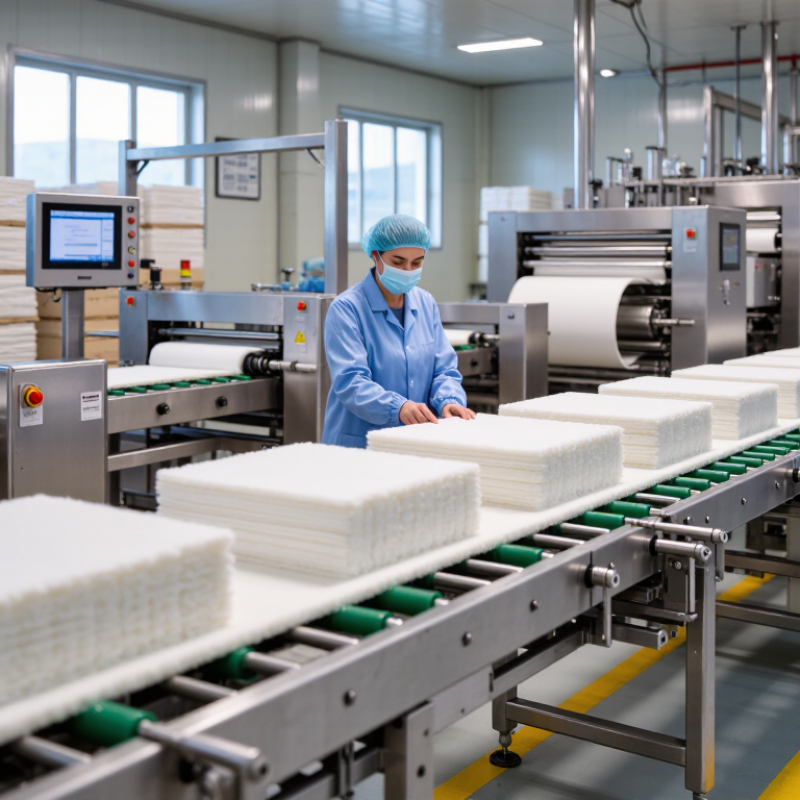
An absorbent core is the functional center of a diaper, incontinence pad, or absorbent hygiene product. It usually combines cellulose fluff with superabsorbent polymer. The fluff draws liquid inward, while the polymer holds it under pressure. A well-designed core can manage fast leakage, repeated wetting, and movement during use.
For global buyers, core performance affects comfort, product safety, and shipping efficiency. Buyers should examine absorbency, retention, rewet, strike-through speed, and core thickness. Laboratory figures matter, but they do not tell the whole story. A core that performs well with clean test liquid may behave differently with thicker fluids. Real-use testing is essential.
Supply conditions also matter. Humidity, transport time, packaging, and local storage can change material performance. During product evaluations, purchasing teams often compare basis weight, polymer distribution, traceability, and production consistency. They should also request current technical data and independent test records. The lightest core is not always the best choice. It may reduce material use but increase leakage risk. No design is perfect. A practical buyer may need to balance absorbency, softness, cost, machine compatibility, and regulatory requirements. Clear communication with manufacturers helps reveal limits before large orders begin. Small pilot runs are wise, although they can slow purchasing decisions. That delay is often cheaper than recalling an unsuitable product.
Seven Leading Absorbent Core Manufacturers for International Buyers
Seven leading absorbent core manufacturers for international buyers should be judged by measurable production evidence, not catalogue language. A practical shortlist includes airlaid-core producers, fluff-pulp converters, SAP blending specialists, tissue-core manufacturers, medical absorbent suppliers, hygiene-component integrators, and regional export factories. These seven profiles cover different performance needs. Grand View Research estimated the global superabsorbent polymer market at about USD 9.8 billion in 2023, with hygiene products as the main application. Smithers also reports continued growth in nonwoven hygiene materials through 2028. Demand is rising, but quality still varies between production sites.
In my sourcing experience, buyers should request basis-weight records, absorption testing, wet integrity results, and three recent batch samples. Ask how each manufacturer controls SAP distribution. Uneven particles can create hard spots inside a diaper or medical pad. Check monthly capacity, export packaging, lead times, and backup pulp sources. ISO 9001 certification helps, but it does not replace factory audits. No scorecard is perfect. A low price can still become an expensive rejection. EDANA guidance also supports clearer material data and responsible product communication across the hygiene supply chain.
Tips: Compare suppliers using the same test method. Confirm absorbency under pressure, not only free swell. Request a video audit when travel is difficult. Recheck results after transport trials. Small details matter.
Product Capabilities, Customization, and Global Supply Coverage
Selecting among the seven best absorbent core manufacturers requires more than comparing price. Buyers should examine product capabilities, customization, and supply resilience. Grand View Research valued the global superabsorbent polymers market at about USD 10.8 billion in 2023. Growth is driven by hygiene demand, thinner designs, and higher fluid-retention expectations.
A capable manufacturer should offer fluff pulp, superabsorbent polymer, airlaid, and nonwoven integration. Core weight, acquisition speed, rewet control, and compression performance need laboratory verification. Ask for test data under realistic pressure, not only dry capacity figures. Customization may include channel patterns, anatomical shaping, elastic compatibility, and different absorbency zones. Global buyers also need regional warehouses, stable raw-material sourcing, and documented quality systems. UN Comtrade data shows that hygiene-material trade crosses many manufacturing regions, so lead-time planning matters. A factory with strong engineering may still struggle during port disruption. That risk deserves attention.
Tips: Request three pilot samples before approval. Test them after storage, bending, and temperature changes. Confirm monthly capacity, minimum order quantities, and backup production sites. Review ISO-based quality records and recent export references. Do not rely on one impressive sample. Real-world performance can be uneven.
How to Select the Best Manufacturer for Your Application
When comparing the 7 best absorbent core manufacturers, fit matters more than reputation. Your application may require rapid acquisition, high retention, or a thinner structure. A baby diaper needs different performance from an adult care pad or medical dressing. Ask manufacturers to explain their core design, including fluff pulp, superabsorbent polymer, bonding method, and liquid distribution layer.
Request samples made with your intended materials and dimensions. Test them under realistic pressure, temperature, and liquid volume. Check acquisition time, rewet, retention, thickness, and core integrity after movement. Reliable manufacturers should provide test methods, batch records, quality limits, and traceability documents. Confirm their production capacity, minimum order quantity, lead time, and packaging conditions. A factory visit or independent audit can reveal details that brochures often miss.
Tips: Compare at least three sample batches, not one. Ask how they handle raw material changes. Review certifications for your target markets. Confirm whether pilot production is available before full-scale orders. Keep written specifications for every approval. A low price may hide unstable absorbency. A perfect sample may not represent mass production. This is where careful buyers often need to slow down and question their own assumptions.
Absorbent Core Manufacturer Selection Priorities
Recommended evaluation weighting for global buyers comparing absorbent core suppliers across hygiene, medical, and industrial applications
Application fit should be assessed across absorption performance, liquid acquisition, retention under pressure, material consistency, converting compatibility, quality control, and supply reliability. The percentages represent a practical procurement framework rather than data from any individual company or brand.