What Are the Best Aluminum Profiles for Your Project?
Choosing the best Aluminum Profiles starts with understanding what your project must do, not just how it should look. A lightweight T-slot extrusion may suit an adjustable machine guard or workbench frame. A larger structural profile may be more appropriate for equipment exposed to steady loads. Architectural profiles, meanwhile, often prioritize clean lines, consistent finishes, and weather resistance. Looks can mislead. The right choice depends on span, load, connection method, operating environment, and budget. A frame mounted in a dry workshop faces different demands from an outdoor installation near rain or salt air. Alloy, temper, wall thickness, and surface treatment all affect performance. Small details matter.
This guide compares common profile types and explains which project conditions favor each option. It also covers practical checks, including dimensions, tolerances, available accessories, machining requirements, and supplier documentation. Ask for technical data rather than relying on a product photo or a broad strength claim. For load-bearing applications, confirm the design requirements with a qualified engineer; profile selection alone cannot establish structural safety. A simple checklist helps, but it can miss a detail such as a loose joint or an unsupported span. There is no universal winner. The best profile is the one whose verified specifications match the real conditions, including the inconvenient ones that are easy to overlook.
Understanding Aluminum Profiles and Their Key Features
What Are the Best Aluminum Profiles for Your Project?
Aluminum profiles are shaped by extrusion, which allows consistent cross-sections for frames, rails, enclosures, and supports. Their shape matters as much as the metal itself. A T-slot profile, for example, lets you reposition brackets without drilling new holes. A closed section may resist twisting better, but can be harder to modify. Details matter.
When comparing profiles, check the alloy and temper, wall thickness, dimensions, and stated tolerances. These affect strength, fit, and how reliably parts assemble. For a small machine frame, thin walls may flex when bolts are tightened; for a light display, that same profile may be sufficient. Don’t choose by appearance alone. Consider the load, span, vibration, and the weight of attached components. Surface finishes also have practical effects: anodizing can improve wear and corrosion resistance, while a coating changes appearance and may affect close-fitting joints. Neither replaces good design.
In workshop planning, I have found that connection details often cause more trouble than the profile selection. Check that fasteners, corner brackets, and end caps fit the actual slot dimensions. Allow for thermal expansion in long runs, especially outdoors. A catalog drawing can look reassuring and still leave a clearance problem. Not always. Confirm dimensions against a sample or a verified technical sheet before ordering a full set.
Exploring Common Profile Shapes and Types
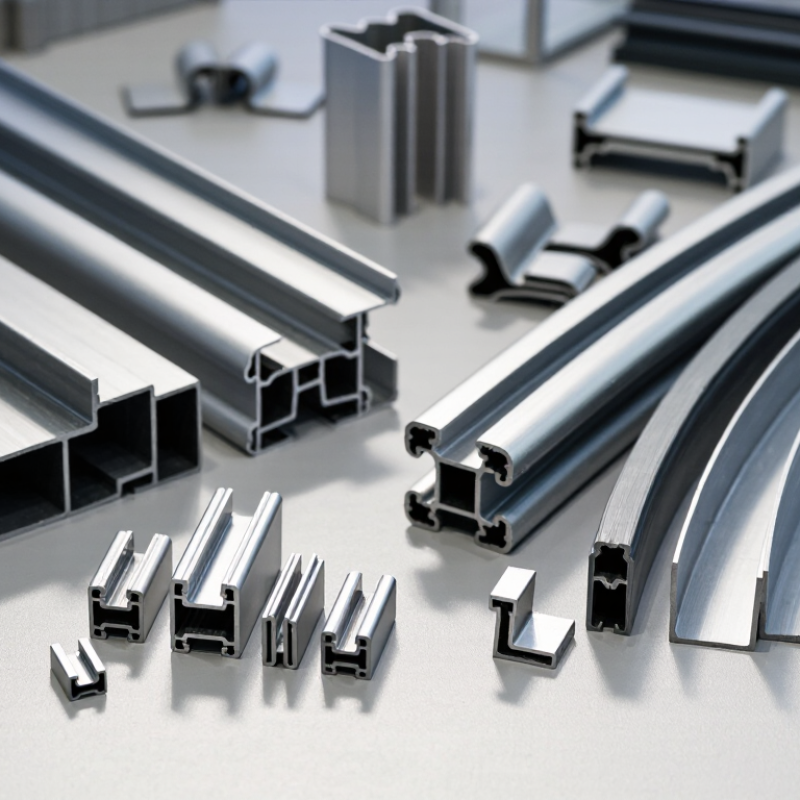
Aluminum profiles differ by cross-section, wall thickness, and how loads travel through them. T-slot profiles have grooves for sliding nuts, guards, and adjustable machine frames. They suit projects that may need frequent changes. Angles and channels are simpler: an angle braces a corner, while a channel supports edges or cable runs. They are easy to cut, but thin walls can twist under uneven loads. Small detail, big consequence.
Hollow square and rectangular tubes provide stiffness with relatively low weight. They work well for frames, carts, and display structures. Round tubes are useful for handrails and fluid-related assemblies, though connections may require more careful fixturing. For heat sinks, choose finned profiles with enough surface area and airflow; crowded fins can trap dust. The right shape depends on load, connection method, finish, and whether the profile must be modified later.
Grand View Research reported that the global aluminum extrusion market was valued at about $91.96 billion in 2023, reflecting broad use across construction, transport, and industrial equipment. That figure describes market value, not a guarantee that any one profile will perform well. For a real selection, compare the supplier’s section properties with the expected span and load, then test a sample connection. I would not choose by appearance alone; that shortcut is tempting, and sometimes wrong.
Defining Your Project’s Strength and Size Requirements
Choosing an aluminum profile starts with the forces it must carry, not its outside dimensions. A shelf holding light containers has different needs from a machine frame supporting a moving load. Note the load, its position, and how often it will change. Then estimate the unsupported span. Longer spans can flex noticeably, even when the profile looks substantial. Small details matter.
Tips: Measure the full span and check where brackets will sit. Compare profile cross-sections, wall thickness, and alloy temper. Ask for deflection data when available; a profile that resists breaking may still bend too much for accurate equipment or a level work surface.
Size also affects assembly. Larger profiles may add stiffness, but they can consume workspace and require heavier connectors. Check slot dimensions against your fasteners, panels, and accessories before ordering. A practical choice should meet the load requirement without making the structure awkward to build. If loads are dynamic, cantilevered, or safety-critical, have the design reviewed by a qualified engineer. It is easy to underestimate vibration or a load placed near one edge. Rechecking those assumptions may feel tedious, but it can prevent an expensive redesign.
Comparing Alloys, Finishes, and Fabrication Options
Choosing an aluminum profile starts with its load, span, and operating environment. Alloy and temper affect strength, formability, and surface quality. The commonly used 6063 alloy suits many architectural profiles and supports a smooth finish. For higher strength or machining needs, 6061 may be a better fit. It is tempting to specify the strongest option everywhere. That can add cost without solving the real design problem. Small details matter.
Finishes change both appearance and upkeep. Anodizing creates a durable oxide layer and is often chosen for a clean metallic look. Powder coating offers a wider color range, but its performance depends on proper surface preparation and application. A mill finish may work for concealed components, though its appearance can vary. Check whether cut ends, scratches, or outdoor exposure need extra consideration. A coating is not a substitute for matching the alloy and design to the environment.
Fabrication choices should be settled before profiles are ordered. Confirm cutting tolerances, hole locations, joining methods, and access for assembly. Tight tolerances can raise costs, while loose ones may leave uneven gaps at corners. Aluminum also expands with temperature, so long runs may need room to move. Requesting a sample section can reveal finish and fit issues that drawings miss. Even a careful plan may need revision after the first assembly.
Matching Profile Types to Project Applications
What Are the Best Aluminum Profiles for Your Project?
Matching Profile Types to Project Applications
Choose a profile by its job, load, and installation space—not appearance alone. T-slot profiles suit adjustable workstations, machine guards, and display frames because their grooves accept movable brackets. Rectangular tubes create rigid frames for carts or enclosures, while channels can guide panels or protect cable runs. Heat-sink profiles use extended fins to increase surface area around warm components. Loads change everything. Check span, support points, and expected deflection before choosing a wall thickness or alloy temper.
Tips: Sketch the assembly and mark every joint, fastener, and access point. ASTM B221 specifies requirements for extruded aluminum bars, profiles, and tubes; use it when checking material documentation, not as a substitute for structural calculations. For outdoor installations, consider drainage and corrosion exposure as well as strength. A profile that looks robust may still twist over a long unsupported span.
If recycled content matters, ask suppliers for traceable material documentation. The International Aluminium Institute’s aluminium recycling information states that recycling uses about 5% of the energy needed to produce primary aluminium. That figure can inform sourcing decisions, but it does not prove a particular profile contains recycled metal. I would verify the actual content and temper before ordering; those details are easy to overlook.