
Choosing a Glass Machine Manufacturer in 2026 means looking beyond a polished brochure. Global buyers need equipment that fits their products, production volume, factory layout, and service capacity. A tempering line may look impressive in a showroom, yet require more floor space or operator training than a plant can provide. Small details matter: glass thickness ranges, loading methods, control systems, spare-part availability, and the time needed to commission a machine.
For transparency, the expert quotation below is an illustrative editorial viewpoint, not a verified statement from a real industry professional. Glass-process specialist Elena Ward offers this guiding principle: “A reliable machine is one your team can operate, maintain, and improve—not merely one with the highest quoted output.” That distinction is useful. Ask manufacturers for specifications, realistic production data, installation requirements, and references from comparable operations. Look closely at service response times and the availability of critical components. A low purchase price can become costly when a line stands idle.
This guide compares manufacturers through practical criteria: engineering capability, product range, customization, technical support, and documented performance. It also recognizes a limitation: published figures may not predict results in every factory. Materials, staffing, and operating conditions differ. Buyers should verify claims directly and request a clear, written scope. A careful decision takes time. It can prevent expensive surprises later.
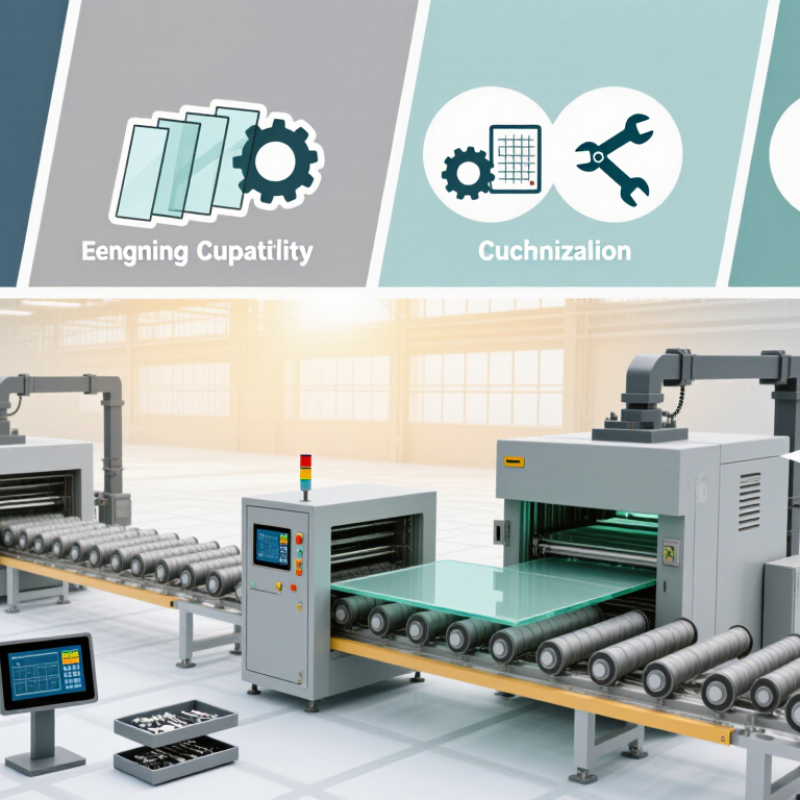
2026 Best Glass Machine Manufacturer for Global Buyers
In 2026, glass machine manufacturers supply more than furnace equipment. Their product lines often cover batch preparation, melting, forming, cutting, tempering, laminating, coating, insulating-glass assembly, and automated inspection. Some also build cullet sorting and handling systems, which feed recycled glass back into production. Buyers should compare line capacity, changeover time, energy use, and service access—not just the headline speed. A fast line can still create waste if its inspection settings miss edge defects.
The demand for recycling equipment is concrete. FEVE’s 2023 sustainability reporting put Europe’s container-glass recycling collection rate at 80.1% for 2021; Eurostat reported a 74.9% recycling rate for glass packaging in the EU in 2022. These figures use different measures, but both point to the need for reliable sorting, cleaning, and cullet handling.
Small details matter. A poorly calibrated optical sorter can send usable glass to the reject stream, while inconsistent cullet size can disrupt furnace feeding. In practice, manufacturers are adding sensors, process controls, and data logging to complete production lines. Still, more automation is not automatically better; operators need clear alarms and training, and buyers should verify performance using their own glass mix before committing.

Glass processing machines cover several distinct stages, and each affects the finished pane differently. Cutting machines score or shape glass to measured dimensions; automated tables can improve repeatability on larger production runs.
Edge-grinding machines smooth sharp edges and create polished profiles. Look closely at edge quality under angled light. Small chips can be easy to miss.
Drilling machines make holes for fittings, while CNC equipment handles more complex shapes and cut-outs. Tempering furnaces heat and rapidly cool glass to increase its strength. Their output depends on consistent temperature control, loading, and glass thickness.
Laminating lines bond layers with an interlayer, which requires careful control of cleanliness and pressure. Insulating-glass production lines assemble panes with spacers and sealants to form sealed units.
The right combination depends on product mix, daily volume, and available floor space. A busy architectural-glass workshop may need cutting, edging, drilling, and tempering equipment. A smaller operation may benefit more from flexible CNC processing than a high-speed line.
Check sample pieces, changeover time, operator training, and access to wear parts before buying. A polished specification sheet is not enough.
I would also compare actual finished samples; machine settings can look convincing while results vary across different glass batches.
Choosing a glass machine manufacturer requires more than comparing price lists and production speeds. Look for evidence that the equipment suits your glass thickness, product shapes, and expected daily output. Ask to see recent acceptance-test records, not only demonstration videos. A showroom is a starting point, not proof of long-term reliability. Check how the machine handles a real production run, including edge quality, breakage, and cycle consistency.
Technology claims need practical checks. Review the control system, available process data, and how faults appear on the operator screen. Ask operators to show routine adjustments, such as changing settings for a different glass thickness. Small tests matter. Run sample sheets through the machine and inspect them under consistent lighting. Record output, defects, and setup time. One test cannot predict every factory condition, though; results may change with material and operator skill.
Manufacturer quality also shows in documentation and service planning. Inspect wiring diagrams, maintenance schedules, spare-parts lists, and training materials for clarity. Ask how technicians diagnose faults remotely and what support is available after installation. Speak with buyers using similar equipment, and ask about downtime rather than general satisfaction. References help. A scoring sheet can make comparisons clearer, but it will not capture every rushed repair or shift change. That limitation deserves a second look before purchase.
Global buyers evaluating a glass machine manufacturer need more than a competitive quotation. Service should be clear before purchase: named technical contacts, response hours, spare-parts lists, and remote commissioning plans. Ask how a technician would investigate a temperature alarm or misaligned conveyor using photos, operating logs, and a video call. Small details matter.
Compliance documents should match the destination and machine configuration. Request current electrical diagrams, operating manuals, risk assessments, and declarations relevant to the shipment. Check that voltage, machine guarding, emergency stops, and document languages suit the installation site. A certificate alone may not answer every local question. Have the paperwork reviewed before dispatch, not after the machine reaches port.
Delivery plans should show dates and dependencies, not just an estimated shipping week. Confirm factory acceptance tests, packaging dimensions, lifting points, loading methods, and responsibility for inland transport. On a glass line, one missing crate label can delay receiving; one late spare part can extend commissioning. Build buffer time. It may seem excessive, but cross-border projects rarely follow a perfect calendar. Keep a shared checklist and record changes in writing, including small ones.
Global Buyer Needs for Service, Compliance, and Delivery
Reliable delivery is one part of a strong supplier relationship. The World Bank’s 2023 Logistics Performance Index (LPI) scores summarize country-level logistics performance on a 1–5 scale; they are not glass-machine delivery times or manufacturer ratings. Buyers should also verify after-sales support and market-specific compliance directly with suppliers.
Source: World Bank, Logistics Performance Index 2023.
2026 Best Glass Machine Manufacturer for Global Buyers
Steps for Comparing Manufacturers and Selecting a Supplier
Compare manufacturers against the same production brief: glass type, thickness range, hourly output, changeover time, and available floor space. Ask for test results using samples similar to your own. A polished demonstration is useful, but it may not reflect your actual mix or operating conditions. For furnace equipment, FEVE reports that each 10-percentage-point increase in recycled glass can reduce energy use by about 2–3% and CO2 emissions by roughly 5%. Ask suppliers to explain how their equipment handles cullet and how they verify energy claims.
Request itemized quotes covering installation, operator training, spare parts, and expected maintenance. Compare machine uptime, reject rates, and energy use under clearly stated conditions—not just headline speed. Check whether local technicians can respond quickly, and ask for references from plants with similar products. No scorecard catches every shop-floor surprise. That is worth remembering.
Tips: Send each supplier the same sample and specification sheet. Get performance targets in writing. Ask what is excluded from the quote, then check the fine print. A short production trial can reveal problems that a brochure cannot.
Use this supplier-comparison scorecard for glass-processing equipment. Suggested weights total 100%; adjust them to match your machine type, production requirements, and destination market. Verify claims with documented evidence and witnessed tests.
| Step | Comparison dimension | What to compare | Evidence to request or verify | Suggested weight |
|---|---|---|---|---|
| 1 | Application and process fit | Confirm that the proposed machine supports the required process, glass types, thickness range, maximum workpiece size, edge or hole specifications, and production layout. | Written technical proposal; machine configuration and process-flow description; confirmation against the buyer’s actual product drawings and material specifications. | 20% |
| 2 | Output and cycle time | Compare achievable throughput for the buyer’s product mix, including loading, processing, changeover, unloading, and any required inspection steps. | Cycle-time breakdown with stated assumptions; sample-production results; witnessed acceptance test using representative workpieces. | 15% |
| 3 | Finished-product quality and precision | Assess whether finished parts meet agreed requirements for dimensions, edge finish, hole position, flatness, or other relevant characteristics. Requirements depend on the process and product. | Buyer-approved inspection plan; measurement records from sample parts; clearly defined acceptance tolerances and test conditions. | 15% |
| 4 | Reliability and after-sales service | Compare service response arrangements, remote troubleshooting, spare-parts availability, maintenance guidance, warranty scope, and support hours across time zones. | Written service-level terms; warranty exclusions and duration; recommended spare-parts list; service contacts and support escalation process. | 15% |
| 5 | Safety and regulatory documentation | Check guarding, emergency-stop provisions, electrical documentation, operating instructions, and conformity requirements applicable in the installation country. | Risk and safety documentation; electrical drawings; user manual; relevant declarations or certificates, with scope and validity checked against the target market. | 10% |
| 6 | Installation and commissioning | Establish site requirements, utilities, foundation or floor needs, delivery access, installation responsibilities, commissioning duration, and operator training arrangements. | Site-preparation checklist; installation schedule; written division of responsibilities; training plan and commissioning acceptance criteria. | 8% |
| 7 | Total cost of ownership | Compare the full purchase and operating costs, not only the quoted machine price. Include tooling, freight, duties, installation, consumables, energy, maintenance, and spare parts where applicable. | Itemized quotation; payment and delivery terms; stated exclusions; estimated operating-cost assumptions; spare-parts pricing and availability terms. | 10% |
| 8 | Supplier capability and project transparency | Assess whether the supplier can document its manufacturing, quality-control, engineering-change, and project-management processes for the specific machine being offered. | Factory or remote audit; quality-system documentation with certificate scope checked where relevant; project schedule; inspection and change-control records. | 7% |


All of Hapco's formulations are completely free of Mercury.

Hapco has been in business for over 50 years!

*NOTICE* Hapco will be will be closed on Monday, May 26th, in observance of Memorial Day. |
| Cookie | Duration | Description |
|---|---|---|
| cookielawinfo-checkbox-analytics | 11 months | This cookie is set by GDPR Cookie Consent plugin. The cookie is used to store the user consent for the cookies in the category "Analytics". |
| cookielawinfo-checkbox-functional | 11 months | The cookie is set by GDPR cookie consent to record the user consent for the cookies in the category "Functional". |
| cookielawinfo-checkbox-necessary | 11 months | This cookie is set by GDPR Cookie Consent plugin. The cookies is used to store the user consent for the cookies in the category "Necessary". |
| cookielawinfo-checkbox-others | 11 months | This cookie is set by GDPR Cookie Consent plugin. The cookie is used to store the user consent for the cookies in the category "Other. |
| cookielawinfo-checkbox-performance | 11 months | This cookie is set by GDPR Cookie Consent plugin. The cookie is used to store the user consent for the cookies in the category "Performance". |
| viewed_cookie_policy | 11 months | The cookie is set by the GDPR Cookie Consent plugin and is used to store whether or not user has consented to the use of cookies. It does not store any personal data. |