Skip to Content

Liquid Molding Monthly

10 Best Heat Shrink Wire Terminals for Global Buyers

Selecting Heat Shrink Wire Terminals for international projects is not just a price comparison. A terminal must match the conductor size, strand type, application, and surrounding environment. In a humid vehicle bay, moisture resistance and a consistent crimp may matter more than a low unit cost. On a control panel, clear sizing marks and repeatable installation can help reduce assembly delays. Fit comes first. This guide compares terminal styles, insulation, tubing construction, sealing behavior, and ease of handling. Manufacturer specifications and test records can help verify claims about temperature range, voltage rating, and material performance.

Global buyers should also consider packaging, lead times, supplier support, and documentation for the intended market. Requirements can differ, so do not treat a product description as proof of suitability. Request current technical documents, confirm conductor-size ranges, and check that the recommended crimping tool matches the terminal. A well-fitted sleeve should shrink evenly around the barrel and wire insulation; uneven heating or a loose crimp deserves a closer look. Details matter. The ten options in this guide are intended to help buyers compare practical strengths and trade-offs, not to declare one terminal best for every job. Even a carefully chosen product can disappoint when sizing, tooling, or installation conditions are overlooked.

10 Best Heat Shrink Wire Terminals for Global Buyers

Understanding Heat Shrink Wire Terminals and How They Work

10 Best Heat Shrink Wire Terminals for Global Buyers

Understanding Heat Shrink Wire Terminals and How They Work

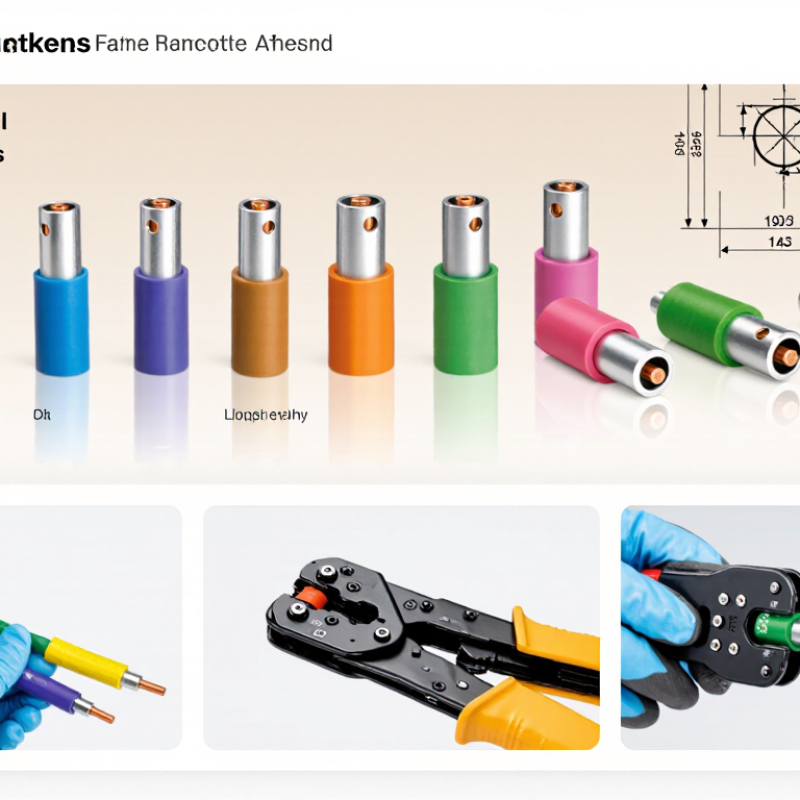
A heat-shrink wire terminal combines a metal connector with an insulating sleeve. The metal barrel holds the stripped conductor after crimping. When heated, the sleeve shrinks tightly around the wire and terminal. Many types include an inner adhesive layer that softens during heating. This can help block moisture and dirt at the connection. It does not make every terminal waterproof. Check the product’s stated rating and intended use.

A reliable connection depends on choosing the correct terminal size and crimping it with a compatible tool. Too little pressure can leave the wire loose; excessive pressure may damage strands or the barrel. After crimping, apply controlled heat evenly until the sleeve fits snugly and any adhesive appears at the ends. Avoid scorching the insulation. Let the joint cool before pulling or handling it. Small details matter. Even experienced users can rush this step.

Tips: Match the terminal to the wire gauge and environment. Inspect the crimp before heating, then check that the tubing has shrunk evenly. A heat gun offers better control than an open flame. Keep in mind that a neat-looking seal is not proof of a sound electrical connection.

Key Features to Compare When Choosing Heat Shrink Terminals

Heat shrink wire terminals should be compared by fit, sealing, and electrical suitability—not appearance alone. Match the terminal’s conductor range to the wire gauge, then check that its barrel accepts the wire cleanly. Loose strands or insulation caught inside the barrel can weaken a crimp. Small details matter.

Look at the tubing’s shrink ratio and adhesive lining. A tight, even seal around the insulation helps limit moisture entry, especially in damp or outdoor installations. But adhesive cannot compensate for poor crimping. Check the stated operating temperature, voltage rating, and terminal material against the application, rather than relying on color or general descriptions. Ratings vary.

Crimp quality deserves a close look. The tool must suit the terminal type, and the finished barrel should hold the conductor without cutting strands. For critical connections, follow the supplier’s instructions and test sample crimps with a pull test before production. That step is often skipped. It can reveal a mismatch between wire size, terminal, and tool.

Compare insulation length and terminal shape as well. Ring, spade, and butt terminals serve different connection layouts, while cramped panels may need a shorter profile. A product can look robust in a listing and still be awkward to install. Check dimensions and technical documentation before ordering.

10 Best Heat Shrink Wire Terminals for Global Buyers

For global buyers, the best heat shrink wire terminal depends on the connection, wire size, and working environment. A useful shortlist includes butt connectors, ring terminals, fork terminals, male and female disconnects, bullet connectors, step-down splices, parallel splices, pin terminals, and flag terminals. That makes ten practical choices. Each serves a different layout; none is a universal fix.

Check the wire range, stud diameter, temperature rating, and product documentation before ordering. Adhesive-lined tubing should shrink evenly around the insulation and conductor. Use a crimping tool matched to the terminal, then inspect the crimp before applying controlled heat. A glossy seal is not proof of a sound electrical connection. Keep the heat moving. Avoid scorching the insulation.

For international purchasing, request clear specifications and traceable test information, and confirm that product approvals suit the destination market and application. Packaging should identify sizes plainly; a mixed carton with unclear labels can slow assembly. Color codes may differ between product lines, so verify dimensions rather than relying on color alone. One detail is easy to miss: a terminal can fit the wire but not the equipment stud. I still double-check both. Temperature exposure, vibration, and moisture also affect the choice, so compare the actual conditions with the stated ratings.

International Standards, Sizes, and Compatibility Considerations

Global buyers should compare heat shrink wire terminals by verified specifications, not appearance alone. Standards differ across markets and product categories. Check the applicable IEC or UL requirements, then confirm the exact standard and test evidence on the supplier’s datasheet. A certification mark should match the product and intended use. Ratings matter.

Size labels can be confusing. A terminal marked for 1.5 mm² wire may not accept every conductor with that nominal area, especially stranded wire with unusual strand construction. Compare the stated conductor range in both mm² and AWG. Then match the terminal barrel to the wire and the stud opening to the fastener. Check twice. The correct crimp tool and die are just as important as the terminal size.

Compatibility also depends on the installation environment. Confirm voltage, operating temperature, insulation material, and any adhesive-lined sealing feature required for moisture exposure. A terminal that fits on a bench may not clear a tight enclosure or tolerate nearby heat. Request test reports and sample parts when specifications are unclear. Catalog tables can make selection seem simpler than it is; I would still verify a sample crimp by checking pull strength, insulation coverage, and the finished joint before approving bulk orders.

10 Best Heat Shrink Wire Terminals for Global Buyers — International Standards, Sizes, and Compatibility Considerations

Terminal Type Typical Use Common Wire-Size Band Key Compatibility Check Standards and Verification Selection Consideration
Heat-shrink butt splice Joining two in-line conductors in repair, control, and low-voltage wiring. Common bands include 0.5–1.0 mm² (approximately 22–18 AWG), 1.5–2.5 mm² (approximately 16–14 AWG), and 4–6 mm² (approximately 12–10 AWG). Both conductors must fit the barrel’s specified range; use a splice designed for the conductor material and stranding. IEC 60352-2 is relevant to solderless crimped connections. Check the exact product documentation for any applicable UL or regional certification. Confirm the finished splice diameter and heat-shrink recovery range fit the wire insulation and installation space.
Heat-shrink ring terminal Securing a conductor to a stud or screw connection point. Available across multiple wire-size bands, commonly including 0.5–1.0, 1.5–2.5, and 4–6 mm². Match the stud-hole diameter to the fastener; common metric sizes include M3, M4, M5, and M6, but availability varies. Verify crimp performance and any required terminal approvals for the intended equipment and market. Choose a ring size that fits the fastener without excessive clearance; consider vibration and access for installation.
Heat-shrink fork (spade) terminal Connecting a wire to a screw or stud where a slotted terminal can simplify removal. Commonly offered in several ranges, including 0.5–1.0, 1.5–2.5, and 4–6 mm². Check stud size, fork width, and whether the terminal can remain secure under the expected movement or vibration. IEC 60352-2 may inform crimp-connection evaluation; confirm product-specific listings and application requirements. Use a ring terminal instead where the connection must not be removable without fully taking off the fastener.
Heat-shrink female quick-disconnect terminal Removable connections to compatible male blade tabs in appliances, vehicles, and control panels. Wire ranges vary by barrel design; common versions cover 0.5–1.0, 1.5–2.5, or 4–6 mm². Match the mating tab width and thickness. Common tab widths include 2.8, 4.8, and 6.3 mm; verify the actual tab specification. Confirm the terminal’s intended current, temperature, and environmental ratings from its technical documentation. Check retention force and available clearance around the mating tab; dimensions are not interchangeable just because widths are similar.
Heat-shrink male quick-disconnect terminal Providing a blade connection that mates with a compatible female quick-disconnect. Offered in multiple conductor ranges, often aligned with common 0.5–1.0, 1.5–2.5, and 4–6 mm² bands. Match blade width and thickness to the female terminal; use compatible mating components from the same dimensional system. Check the applicable product standard or certification for the finished connection and destination market. Confirm blade geometry and fit before installation; a loose or overly tight mating connection can cause unreliable contact.
Heat-shrink bullet connector Compact, separable wire-to-wire connections in vehicle and equipment wiring. Size ranges depend on the bullet diameter and crimp barrel; select by the stated conductor range. Male and female halves must match in diameter, length, and locking or retention design. For crimp quality, consult IEC 60352-2 and the connector manufacturer’s application instructions where applicable. Check whether the connected pair can be disconnected after the heat-shrink sleeves have been recovered.
Heat-shrink step-down butt splice Joining conductors of different sizes, such as a larger supply wire to a smaller branch wire. Each end has a separate specified conductor range; combinations vary by product. Confirm the larger and smaller conductors are inserted into the correct ends and fall within their respective ranges. Verify crimp instructions, conductor-material compatibility, and any required product certification. Do not substitute for a splice rated for the circuit’s current, temperature, or environmental conditions.
Heat-shrink parallel splice Branching or joining conductors side-by-side where a compatible parallel-crimp design is specified. Ranges and the number of conductors supported are design-specific; follow the stated combination table. Check total conductor area, conductor count, and the specified crimp tool and die. Confirm that the connector’s documented test or approval scope covers the intended wire combination. A standard butt splice is not automatically suitable for multiple conductors in one barrel.
Heat-shrink flag quick-disconnect terminal Connections in tight spaces where the wire exits at an angle to the mating tab. Available for multiple wire-size bands; select by both barrel range and mating-tab dimensions. Check tab width and thickness, wire exit direction, and clearance for the insulated sleeve. Review the product’s application ratings and any required regional conformity documentation. Useful where a straight disconnect would bend the wire sharply or interfere with nearby parts.
Heat-shrink pin terminal Terminating a stranded wire for insertion into a compatible terminal block or connector system. Pin diameter and conductor range are product-specific; select from the terminal-block manufacturer’s accepted dimensions. Confirm pin length, diameter, insertion depth, and compatibility with the clamping mechanism. Check the terminal block’s specifications and the pin terminal’s documented crimp requirements. Do not assume a pin terminal is interchangeable with a bootlace ferrule; their geometries and intended connections differ.

Buyer note: Wire-size conversions are approximate, and the ranges shown are common examples rather than universal specifications. Color coding, stud dimensions, current ratings, temperature limits, sealing performance, and certifications can vary by product and market. Always confirm the manufacturer’s data sheet, crimp-tool requirements, conductor material, and applicable local requirements before purchase or installation.

How to Select, Install, and Maintain Heat Shrink Wire Terminals

Choosing a heat-shrink wire terminal starts with the conductor, not the package photo. Match its wire range to the stripped conductor, then confirm the stud size and available clearance. For damp or outdoor equipment, check for adhesive lining and a suitable temperature rating. A tight fit matters. An oversized terminal may pull loose, while an undersized one can damage strands. Check the product’s application data; appearance alone cannot confirm compatibility.

Disconnect power before installation. Cut the wire cleanly and strip only the specified length, without nicking the strands. Insert the conductor fully, then crimp it with the correct die. A firm tug can reveal a weak connection. Use a heat gun, moving it steadily around the sleeve. Avoid scorching the insulation. Stop when the tubing fits closely; a slight, even adhesive bead may indicate sealing. Let the joint cool before handling it.

During maintenance, look for cracks, abrasion, discoloration, or exposed copper, especially near vibration points. Check connections when equipment is safely powered down. Heat shrink cannot repair a poor crimp. Even a smooth-looking sleeve can hide one, which is easy to overlook. Replace damaged terminals rather than wrapping over them, and use a terminal suited to the wire and environment.

Selecting Heat Shrink Wire Terminals by Wire Gauge

Nominal cross-sectional area of common copper wire sizes helps identify the conductor size when choosing a terminal. Always confirm the terminal’s stated wire-size range and installation instructions.

Values shown are nominal AWG conductor areas in square millimeters; they are not terminal ratings. For installation, use a compatible crimping tool and apply heat according to the terminal manufacturer’s instructions.

100% Mercury Free

100% Mercury Free

All of Hapco's formulations are completely free of Mercury.

50 Year Track Record

50 Year Track Record

Hapco has been in business for over 50 years!

ISO Certified

Higher Quality. More Efficiency. View Certificate

Technical Expertise

Hapco's employees are knowledgeable and ready to help.

Join Our Mailing List

Get the latest news, updates, and articles from Hapco, Inc.

Join Now