
Liquid Molding Monthly
7 Best Type B Washers for Industrial Buyers?
Industrial buyers rarely notice a washer until a joint loosens, a painted surface collapses, or torque results become inconsistent. Type B Washers deserve more attention because their outside diameter, thickness, material, and hardness directly influence load distribution. They are small components, but their failure can mark steel, distort thin sheet, or reduce clamping reliability.
Industry data supports this purchasing concern. Grand View Research estimates the global industrial fasteners market reached approximately USD 84.9 billion in 2023, with continued growth expected through 2030. The report identifies construction, automotive, machinery, and heavy equipment as major demand sectors. MarketsandMarkets also projects strong expansion in the broader fastener market, driven by infrastructure investment and industrial automation. These figures do not make every washer valuable. They show why specification discipline matters.
Dr. John H. Bickford, author of Handbook of Bolts and Bolted Joints, offers a useful engineering reminder: “A bolted joint is only as reliable as its weakest component.” That principle applies directly to Type B Washers. Buyers should confirm the governing standard, coating, tensile strength, flatness, and compatibility with the bolt and base material. Type B terminology can vary between suppliers and standards. That is an easy detail to overlook.
This guide examines seven practical Type B Washers for industrial purchasing teams. It considers corrosion exposure, vibration, surface pressure, installation speed, and total cost. Some recommendations may seem obvious. They are not always obvious on the shop floor. Specification sheets can be incomplete, and supplier claims still require verification.
What Type B Washers Are and Their Industrial Applications
7 Best Type B Washers for Industrial Buyers?
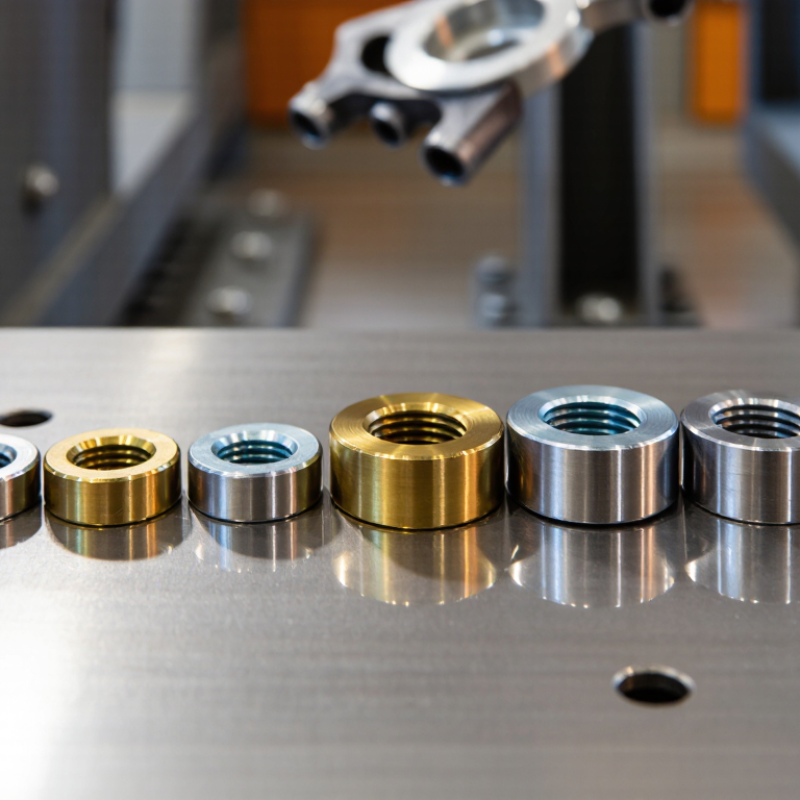
Type B washers are flat load-spreading components used beneath bolts, nuts, and screw heads. Their exact meaning varies by standard and supplier. Some catalogs use “Type B” for a wider outside diameter, while others reference a specific dimensional series. Buyers should verify the drawing, material grade, thickness, and standard before ordering. ASME B18.21.1 and ASTM F844 provide useful comparison points, but they should not replace project specifications. That shortcut is tempting, and often wrong.
In machinery frames, Type B washers distribute clamping pressure across painted steel or slotted holes. In electrical cabinets, they help protect thin panels from local deformation. Construction equipment, agricultural systems, conveyor assemblies, and maintenance platforms also use them. Seven practical selection priorities include outside diameter, inside diameter, thickness, hardness, corrosion resistance, temperature exposure, and traceability. Zinc-plated steel suits many indoor assemblies. Stainless steel performs better in humid processing areas, though galling requires attention.
Material demand remains substantial. The World Steel Association reported 1.892 billion metric tons of crude steel production in 2023. Grand View Research estimated the global industrial fasteners market at approximately US$84.9 billion in 2022. These figures show the scale, not the quality, of washer selection. A low-cost washer can still fail through bending, embedment, or corrosion. Field experience suggests checking washer seating after torque testing, especially on thin or coated surfaces. The label “Type B” alone is never enough.
| No. | Recommended Type B Washer Configuration | Typical Standard Reference | Example Size and Nominal Dimensions | Common Material Options | Suitable Industrial Applications | Primary Selection Advantage |
|---|---|---|---|---|---|---|
| 1 | Standard flat Type B washer | ISO 7089 / DIN 125, normal series | M10: 10.5 mm inside diameter, 20 mm outside diameter, 2.0 mm thickness | Carbon steel, zinc-plated steel, stainless steel | General machinery, fabricated frames, brackets, pumps and equipment assemblies | Balanced load distribution and broad availability across common metric fasteners |
| 2 | Large outside-diameter Type B washer | DIN 9021 / ISO 7093, large series | M10: 10.5 mm inside diameter, 30 mm outside diameter, 2.5 mm thickness | Zinc-plated carbon steel, stainless steel | Sheet metal, aluminum profiles, composite panels and materials with oversized or softer holes | Spreads the clamping load over a larger surface area to reduce pull-through risk |
| 3 | Chamfered Type B washer | ISO 7090 / DIN 125, chamfered series | M12: 13 mm inside diameter, 24 mm outside diameter, 2.5 mm thickness | Carbon steel, stainless steel, corrosion-resistant alloy steel | Precision-machined equipment, flanged joints and assemblies requiring controlled seating | The chamfer helps accommodate the fastener head or nut transition on the bearing side |
| 4 | Heavy-duty Type B washer | ISO 7093-1 / DIN 9021, heavy large-diameter format | M16: 17 mm inside diameter, 50 mm outside diameter, 3.0 mm thickness | High-strength carbon steel, zinc-flake coated steel, stainless steel | Structural steelwork, heavy machinery bases, lifting equipment and industrial support frames | Large bearing area is useful where high preload could deform the connected material |
| 5 | Stainless-steel Type B washer | ISO 7089 or ISO 7093 dimensions with stainless-steel specification | M8: 8.4 mm inside diameter, 16 mm outside diameter, 1.6 mm thickness | A2 stainless steel for general corrosion resistance; A4 stainless steel for more demanding environments | Food-processing equipment, outdoor machinery, marine-adjacent installations and chemical-service assemblies | Improved resistance to rust and atmospheric corrosion compared with unprotected carbon steel |
| 6 | High-strength coated Type B washer | Relevant ISO or DIN flat-washer dimensions with project-specified coating | M20: 21 mm inside diameter, 37 mm outside diameter, 3.0 mm thickness | Hardened alloy steel, zinc-flake coated steel or mechanically galvanized steel | Wind-energy structures, transport equipment, industrial conveyors and high-load bolted joints | Combines high load capacity with improved surface protection when the coating system is correctly specified |
| 7 | Extra-large Type B washer for soft materials | Large-series metric washer dimensions, such as DIN 9021 or ISO 7093 | M12: 13 mm inside diameter, 37 mm outside diameter, 3.0 mm thickness | Zinc-plated steel, stainless steel, or polymer washer paired with a metallic load-spreading washer | Insulated panels, plastics, wood-based components, thin-wall tubing and vibration-sensitive enclosures | Minimizes local crushing, indentation and slot enlargement around the fastener hole |
| Technical note: “Type B washer” is not a single globally uniform designation; its meaning can vary between national and industry standards. The dimensions above are representative metric examples from commonly used ISO and DIN washer series. Always verify the applicable standard, material grade, coating, hardness, load requirements, hole clearance and corrosion environment before procurement. | ||||||


100% Mercury Free
All of Hapco's formulations are completely free of Mercury.

50 Year Track Record
Hapco has been in business for over 50 years!