China Top 10 11kV to 400V Power Transformer Suppliers
China has become a major manufacturing base for medium-voltage distribution equipment. This guide introduces China’s top 10 suppliers of 11kv To 400v Distribution Power Transformer products. It focuses on practical selection, not attractive catalog claims.
An 11kv To 400v Distribution Power Transformer reduces distribution voltage for factories, commercial buildings, farms, and public facilities. Its performance affects safety, energy losses, maintenance costs, and service continuity. Transformer engineer John J. Winders describes the transformer as “one of the most important components in the electrical power system.” That view remains highly practical. A small design weakness can become a serious operating problem.
The suppliers discussed here are assessed through manufacturing experience, technical documentation, testing capability, customization, certifications, and after-sales support. Important details include rated capacity, impedance, tap range, insulation level, cooling method, enclosure design, and temperature rise. Buyers should also examine short-circuit strength and routine test records. Ask for evidence.
Factory experience matters. So does field experience. A supplier may offer low pricing, yet provide weak drawings or unclear delivery commitments. That deserves caution. Some comparisons may remain imperfect because supplier data changes, and public information is not always complete. We should admit that limitation.
The strongest manufacturers usually provide factory acceptance testing, clear nameplate data, dimensional drawings, and responsive engineering communication. Site conditions still matter. Altitude, humidity, ambient temperature, harmonics, and load patterns can change the correct specification. This introduction helps readers compare China’s leading suppliers with greater confidence, while leaving room for independent technical verification.
11 kV to 400 V Transformers: 50 Hz Ratings and IEC 60076 Standards
China Top 10 11kV to 400V Power Transformer Suppliers
An 11 kV to 400 V transformer matches medium-voltage distribution with common low-voltage networks. Most units are designed for 50 Hz operation. The 400 V rating usually means line-to-line voltage, with approximately 230 V available between phase and neutral. Buyers should confirm this detail before comparing quotations.
IEC 60076 provides the main technical framework for transformer design, testing, insulation, temperature rise, and performance. Reliable suppliers should provide routine test reports, winding resistance data, impedance results, and insulation test records. Factory acceptance testing may also include applied-voltage and induced-voltage tests. These documents reveal more than a polished catalogue page.
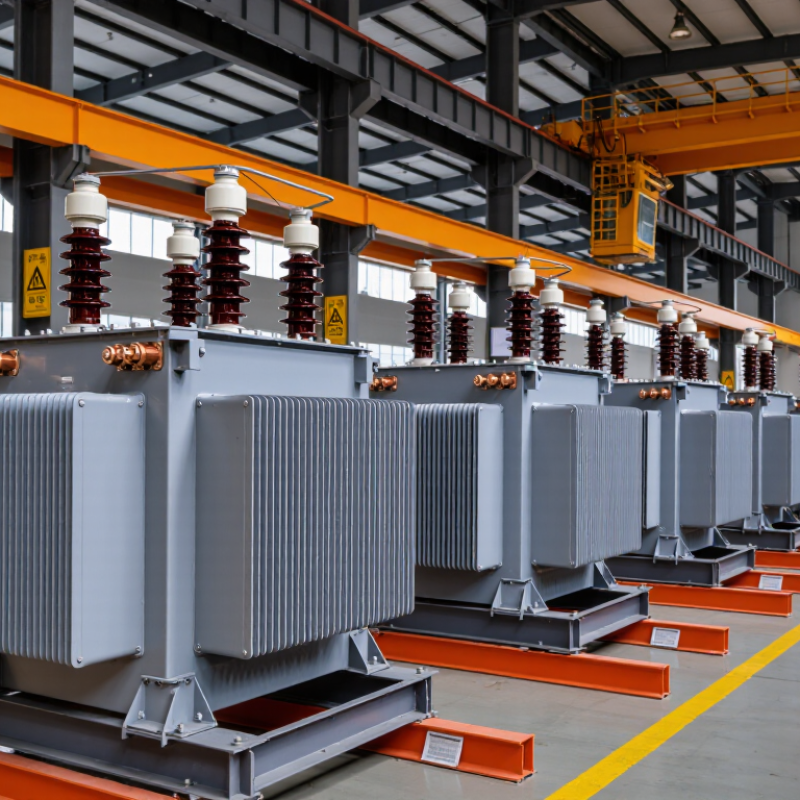
Site conditions matter. A 500 kVA transformer in a clean indoor room differs from one installed outdoors near coastal air. Specify ambient temperature, altitude, enclosure protection, cooling method, tap range, vector group, and short-circuit requirements. Oil-immersed and dry-type designs each need different maintenance planning. I have found that missing load-growth data often causes poor selection. It is an easy mistake.
When reviewing Chinese suppliers, assess production experience, engineering support, traceable materials, and independent inspection arrangements. Ask whether the proposed design follows the applicable IEC 60076 parts, not merely whether it says “IEC compliant.” Check the nameplate, terminal markings, earthing points, and cable entry layout against the installation drawings. Small mismatches can delay commissioning. A lower quotation is not automatically better.
11 kV to 400 V Transformers: 50 Hz Ratings and IEC 60076 Standards
Primary voltage: 11,000 V RMS Secondary voltage: 400 V RMS Frequency: 50 Hz Voltage ratio: 27.5:1
The chart compares the nominal three-phase line-to-line voltages of a typical 11 kV/400 V distribution transformer. IEC 60076 is the applicable international transformer standard series covering requirements such as ratings, insulation, temperature rise, tests, and performance.
China’s Top 10 Suppliers: Ranking by Capacity, Certifications, and Export Data
China’s leading 11kV-to-400V transformer suppliers should be ranked through evidence, not advertising claims.
Annual production capacity, measured in MVA, reveals whether a supplier can support utility-scale orders. Factory testing records also matter, especially temperature rise, insulation strength, and short-circuit performance under IEC 60076 requirements.
Certification adds another layer of reliability. A strong supplier normally provides ISO 9001 quality records, ISO 14001 environmental certification, and independent type-test reports. Export performance should be checked through UN Comtrade data under HS 8504.21 and HS 8504.22. These codes offer useful trade signals, but they do not perfectly separate 11kV distribution transformers from other units. That limitation deserves attention.
The ranking can therefore combine three measurable indicators:
verified MVA capacity certification depth three-year export value or volume
The IEA’s Electricity Grids and Secure Energy Transitions report says annual grid investment must rise to more than 600 billion dollars by 2030. This supports stronger demand for dependable distribution equipment. However, export value alone may reward larger units, not better 11kV-to-400V products. Some suppliers report impressive capacity, yet provide limited factory evidence. That gap should reduce their position. A practical review should request inspection photos, routine-test samples, delivery records, and destination-market certificates before accepting any top-ten ranking.
Technical Benchmarks: 10–2500 kVA Ratings and Up to 99% Efficiency
China Top 10 11kV to 400V Power Transformer Suppliers
Technical comparisons should begin with operating conditions, not catalog rankings. For 11kV to 400V transformers, common ratings range from 10 kVA to 2500 kVA. Efficiency can approach 99% at suitable loading, but this figure is not universal. Core loss continues day and night, even when the workshop is quiet. Copper loss rises sharply as current increases.
The International Energy Agency’s Electricity 2024 report highlights growing electricity demand and the need for stronger, more efficient grids. This supports closer attention to transformer losses. The U.S. Department of Energy’s 2024 distribution transformer rule also pushes manufacturers toward improved energy performance. Buyers should request certified no-load loss, load loss, impedance, temperature-rise, and short-circuit test results. Numbers matter.
Site experience adds another lesson. A 1000 kVA unit may perform differently in a dusty plant than in a controlled test room. Ambient temperature, harmonics, ventilation, and uneven loading can reduce practical efficiency. This point is often underestimated. Technical teams should compare IEC 60076 compliance, insulation coordination, noise data, and maintenance access. “Up to 99%” sounds convincing, but it needs a defined load point, test method, and tolerance. Otherwise, the benchmark remains incomplete.
Design Comparisons: Oil-Immersed, Dry-Type, Dyn11, and Low-Loss Models
Choosing a China-based 11kV-to-400V supplier starts with transformer design, not catalogue price. Oil-immersed units provide efficient cooling and compact outdoor installation. Their tanks require oil testing, leak checks, and suitable fire planning. Dry-type transformers avoid liquid leakage and suit indoor, populated, or sensitive areas. However, they need reliable ventilation and may produce noticeable fan noise. I have seen schedules fail because room airflow was treated as an afterthought. That mistake is avoidable.
Dyn11 is widely selected for distribution systems because its delta primary and grounded star secondary support common 400V loads. The neutral connection can help manage unbalanced single-phase demand. Its phase displacement also matters when transformers operate in parallel. Matching vector groups, impedance, and tap settings is essential. Low-loss models use improved magnetic cores and optimized windings to reduce no-load and load losses. The savings become more meaningful when the transformer remains energized throughout the year.
Do not accept efficiency claims alone. Request routine and type test records, temperature-rise data, noise values, insulation results, and losses at defined loads. A dependable supplier should explain factory inspection, transport protection, commissioning support, and spare-part access. IEC 60076 alignment is a useful reference, but local grid requirements still control the final choice. No design wins every site. In practice, a slightly larger dry-type unit may outperform a cheaper oil model when maintenance access is poor. That judgment deserves a site engineer’s review.