Skip to Content

Liquid Molding Monthly

China Top 10 MBBR Systems for Wastewater Treatment?

Choosing a wastewater treatment supplier is not just a matter of comparing prices. A reliable Mbbr System For Wastewater Treatment must suit the actual flow, wastewater characteristics, discharge targets, and available plant space. In China, manufacturers offer different reactor configurations, carrier media, aeration equipment, and levels of engineering support. Those differences can affect treatment stability and maintenance needs. Small details matter. A carrier’s protected surface area, for example, is useful only when the media remains properly mixed and oxygen reaches the active biofilm.

This guide introduces ten Chinese MBBR system providers and the factors buyers can check before requesting a quotation. It considers process design, documented project experience, equipment specifications, customization, installation support, and after-sales service. Readers should verify claims directly with suppliers and ask for drawings, operating data, and references from comparable wastewater applications. A product brochure alone is not enough. Neither is a low equipment price. Site conditions, influent variability, operator skills, and energy use all influence real performance. Some comparisons may remain imperfect because public information is uneven, and a company’s capabilities can change over time. That is worth admitting. The aim is not to declare one supplier best for every project, but to make shortlisting more practical and evidence-based. Before selecting a system, confirm that the proposed design matches the plant’s measured needs and can be supported after commissioning.
China Top 10 MBBR Systems for Wastewater Treatment?

How MBBR Systems Treat Wastewater

How MBBR Systems Treat Wastewater

A moving bed biofilm reactor (MBBR) treats wastewater by growing microorganisms on small, freely moving plastic carriers. Wastewater enters a tank, where air or mechanical mixing keeps the carriers moving. Their surfaces support a biofilm that consumes organic pollutants and, under suitable conditions, converts ammonia into nitrate. A screen at the outlet keeps carriers inside the reactor while treated water flows onward. The process is compact, but it still needs careful operation.

Carrier quantity and water conditions affect treatment performance. Ødegaard’s 2006 review in Water Science and Technology describes carrier filling ratios reaching about 70% of reactor volume, depending on design. That figure is not a universal target. Operators must also track dissolved oxygen, temperature, pH, and incoming pollutant loads. Too little oxygen can limit nitrification; too much aeration wastes energy. Regular checks of outlet screens matter, too. A blocked screen can disrupt flow, even when the biofilm appears healthy.

Tips: Test influent and effluent routinely. Watch for uneven carrier movement, rising ammonia, and clogged screens. Small changes can reveal trouble early. MBBR performance is not automatic; site-specific pilot testing and experienced process control help confirm design assumptions.


Main Components and Process Stages of MBBR Technology

An MBBR system begins with screening and, where needed, grit removal to protect pumps and downstream equipment. Flow may pass through an equalization tank, where sudden changes in volume or strength are buffered. The biological reactor contains small plastic carriers with protected surfaces for biofilm growth. Retention screens keep the carriers inside the tank while treated water moves onward. Small parts matter.

In an aerobic stage, diffused air supplies oxygen and keeps the carriers moving. In an anoxic stage, mechanical mixing can maintain contact without adding air. Actual tank arrangement depends on the treatment target and wastewater characteristics; one layout does not fit every site. Operators should check dissolved oxygen, carrier movement, and screen condition during routine inspections. A screen partly blocked by fibers can disrupt flow before the problem looks obvious.

As biofilm consumes dissolved pollutants, older growth naturally sloughs from the carriers. A downstream clarifier or other solids-separation unit captures this material; disinfection may follow when required by the intended reuse or discharge conditions. MBBR systems generally retain biomass on the carriers rather than relying on return activated sludge, though plant layouts vary. That detail is easy to underestimate. Temperature swings, uneven loading, or poor pretreatment can affect performance, so design assumptions should be verified with site-specific data.

China Top 10 MBBR Systems for Wastewater Treatment? - Main Components and Process Stages of MBBR Technology

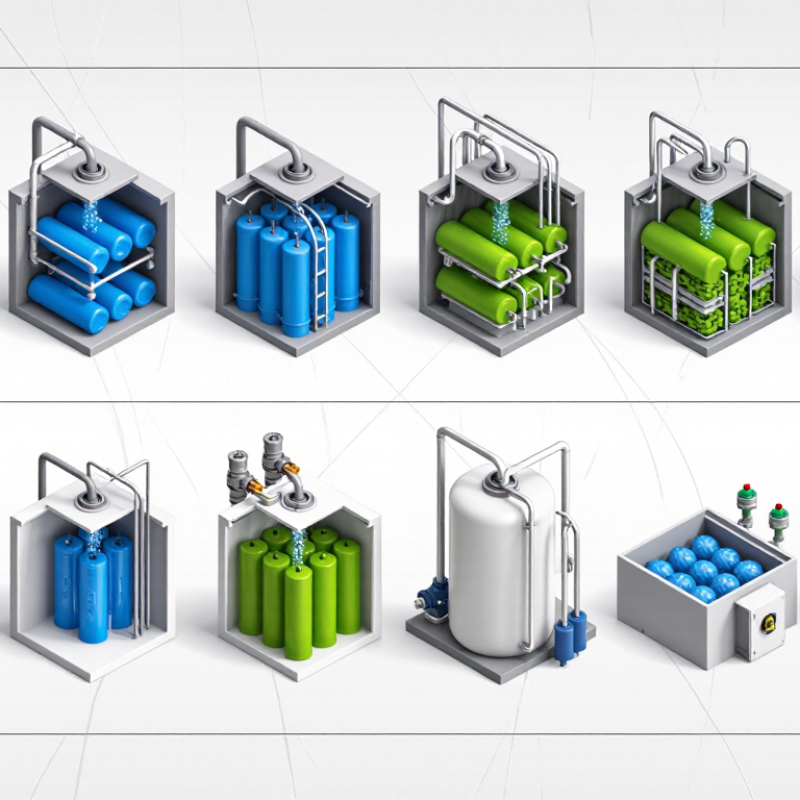
Comparison basis: These are ten common MBBR-based treatment configurations, not a ranked list of suppliers or products. The appropriate process depends on wastewater characteristics, discharge limits, temperature, and site conditions.

No. MBBR System Configuration Typical Application Main Process Stages Main Components Key Design Considerations
1 Single-stage aerobic MBBR Municipal wastewater and biodegradable industrial wastewater Screening and grit removal → equalization, if required → aerobic MBBR → solids separation Moving carriers, aeration grid or diffusers, carrier-retention screens, blower, tank, and downstream clarifier or other separator Used mainly for carbon removal. Aeration must supply oxygen and keep carriers moving; final solids separation is still required.
2 Anoxic–aerobic MBBR Wastewater requiring both nitrogen removal and organic-matter reduction Pre-treatment → anoxic MBBR → aerobic MBBR → solids separation Anoxic and aerobic tanks, carriers, mixers for the anoxic zone, aeration equipment for the aerobic zone, screens, and optional internal recycle Anoxic denitrification needs a usable carbon source. Nitrate-rich mixed liquor is commonly recycled from the aerobic zone to the anoxic zone.
3 Anaerobic–anoxic–aerobic MBBR Wastewater requiring biological nutrient removal, where influent characteristics support the process Pre-treatment → anaerobic zone → anoxic zone → aerobic MBBR → solids separation Separate reaction zones, carriers in designated MBBR zones, mixers, aeration system, carrier screens, recycle pumps, and separator Phosphorus removal depends on suitable biological conditions and operating control; chemical phosphorus removal may be needed to meet a particular limit.
4 Two-stage aerobic MBBR Variable-strength wastewater or applications needing staged biological treatment Pre-treatment → first aerobic MBBR → second aerobic MBBR → solids separation Two reactor compartments, carriers, aeration equipment, retention screens, blowers, and downstream solids-separation equipment Staging can separate higher-load carbon removal from further treatment. Reactor loading and oxygen transfer should be assessed for each stage.
5 MBBR with secondary clarification Municipal or industrial treatment trains where biological solids need gravity separation Pre-treatment → MBBR biological reactor → secondary clarifier → effluent discharge or further treatment MBBR tank, carriers, aeration or mixing equipment, carrier-retention screens, clarifier, sludge collection, and sludge-handling equipment The clarifier separates suspended solids from the treated water; it does not retain the MBBR carriers, which are held in the reactor by screens.
6 MBBR followed by dissolved air flotation (DAF) Wastewater with fine or buoyant solids, including some food-processing and industrial streams Pre-treatment → MBBR → optional coagulation or flocculation → DAF MBBR reactor and carriers, aeration and retention screens, DAF tank, recycle-water pump, air-saturation equipment, and sludge skimmer DAF can separate suspended solids and flocs after biological treatment. Chemical addition is application-specific and requires treatability evaluation.
7 MBBR followed by membrane filtration (MBR) Sites requiring compact treatment or a low-solids effluent for reuse or advanced treatment Pre-treatment → MBBR biological stage → membrane separation → disinfection or reuse treatment, as required MBBR tank and carriers, carrier screens, membrane tank and modules, permeate pumps, cleaning system, and sludge-management equipment The membrane provides solids separation; it does not replace biological treatment. Membrane fouling control and solids loading need careful design.
8 IFAS (integrated fixed-film activated sludge) Upgrades to existing activated-sludge plants where added biofilm capacity is needed Existing activated-sludge process with carriers in selected aeration zones → secondary clarification Activated-sludge basin, suspended-growth biomass, carriers, carrier-retention screens, aeration equipment, and existing or upgraded clarifier IFAS combines attached-growth biofilm with suspended activated sludge. Hydraulic capacity, aeration, carrier retention, and clarifier performance should be checked during retrofit design.
9 Aerobic MBBR for nitrification Wastewater requiring ammonia oxidation, including a dedicated nitrification stage Pre-treatment or carbon-removal stage → aerobic nitrifying MBBR → solids separation Carriers, aerated reactor, carrier-retention screens, blower and diffusers, temperature and dissolved-oxygen monitoring, and separator Nitrification is sensitive to temperature, pH, alkalinity, oxygen availability, and inhibitory substances. Actual design loading must reflect site conditions.
10 Anoxic MBBR for denitrification Wastewater with nitrate requiring biological nitrogen removal Pre-treatment → anoxic MBBR → downstream solids separation or polishing; nitrate recycle may be provided from an aerobic stage Anoxic reactor, carriers, mechanical mixer, carrier-retention screens, recycle pump where needed, and downstream separator Denitrification requires nitrate, anoxic conditions, and an available carbon source. External carbon dosing may be considered when influent carbon is insufficient.

Criteria for Comparing MBBR Systems in China

China Top 10 MBBR Systems for Wastewater Treatment?

Criteria for Comparing MBBR Systems in China

A useful comparison starts with the wastewater, not a supplier’s headline capacity. Influent strength, daily flow swings, temperature, and discharge targets shape the required moving-bed biofilm reactor design.

The UN World Water Development Report 2024 estimates that 42% of domestic wastewater worldwide was not safely treated in 2022. That gap makes dependable performance more important than attractive equipment specifications. But one number cannot describe every Chinese plant.

Compare systems using the same operating conditions. Check media fill and protected surface area, then ask how carriers stay inside the reactor during peak flow. Review blower power, oxygen transfer, screen access, and the time needed to remove trapped solids. These details affect both operating costs and maintenance work. The U.S. EPA’s MBBR technology fact sheet provides a useful technical reference for process evaluation; site-specific testing still matters. Ask for pilot or full-scale results showing influent and effluent concentrations, flow, temperature, and sampling duration. Look for stable results, not a single best-day reading. A neat brochure number is not enough. Honestly, some comparisons remain imperfect when vendors use different test conditions. Independent verification can expose that gap.

Ten Leading MBBR Systems and Suppliers in China

China’s MBBR market includes suppliers offering media, reactor design, process engineering, and complete wastewater treatment packages. A useful comparison of ten leading suppliers should look beyond price and rated capacity. Check whether each supplier can explain media fill ratio, aeration needs, expected loading, and maintenance access. Ask for project references with similar wastewater and operating conditions. A clear process diagram helps reveal what a quotation leaves out. Details matter.

Tips: Request performance data from comparable projects, not just general claims. Confirm what the scope includes: tanks, media, blowers, controls, installation, and operator training. Ask how the supplier handles startup problems and replacement media. Small omissions can become expensive.

A dependable supplier should discuss influent variation and discharge targets before recommending a reactor size. Look for practical drawings, test records, and a straightforward service plan. If possible, review a running installation and speak with its operators. Their feedback may be less polished, but often more useful. One caution: supplier rankings can change with project scale, location, and treatment goals. A provider suited to a municipal plant may not fit a compact industrial site. Compare each proposal against the same technical checklist, and leave room for questions your first review missed.

Applications, Benefits, and Limitations of MBBR Systems

Applications, Benefits, and Limitations of MBBR Systems

Moving bed biofilm reactors use small plastic carriers that circulate inside an aerated or anoxic tank. Microorganisms grow on their surfaces and break down organic pollutants. In municipal plants, MBBR can support treatment where space is limited or existing tanks need greater capacity. Some industrial wastewater streams can also use the process, but their chemistry and pollutant loads require careful assessment.

The carriers provide protected surface area for biofilm growth, so treatment capacity can increase without enlarging the tank. They also tolerate some flow and load changes better than suspended-growth processes alone. That helps. But performance still depends on oxygen transfer, mixing, temperature, and the wastewater itself. A high carrier fill rate is not automatically better; poor circulation may leave parts of the tank underused.

Screens must retain carriers while allowing wastewater to pass, and they need regular inspection for damage or blockage. MBBR also produces excess solids, so downstream clarification or filtration may still be necessary. I would verify these needs through site data and, where uncertainty is high, pilot testing. Design assumptions can miss real operating conditions.

MBBR Systems for Wastewater Treatment: Applications, Benefits & Limitations

Indicative pollutant-removal ranges reported for MBBR treatment; actual results depend on wastewater characteristics, temperature, reactor design, and operating conditions.

How to read this: The bars show indicative removal ranges, not guaranteed performance or a ranking of suppliers. Total nitrogen removal generally requires an anoxic stage; suspended solids separation typically requires downstream clarification. MBBR systems offer compact, attached-growth treatment, but require suitable aeration or mixing and effective solids separation.

100% Mercury Free

100% Mercury Free

All of Hapco's formulations are completely free of Mercury.

50 Year Track Record

50 Year Track Record

Hapco has been in business for over 50 years!

ISO Certified

Higher Quality. More Efficiency. View Certificate

Technical Expertise

Hapco's employees are knowledgeable and ready to help.

Join Our Mailing List

Get the latest news, updates, and articles from Hapco, Inc.

Join Now