China Top 10 Metal Distribution Box Suppliers?
Demand for reliable electrical distribution equipment is rising alongside electrification, renewable energy, and infrastructure upgrades. The International Energy Agency’s Electricity 2024 report projects global electricity demand will grow by an average of about 3.4% annually from 2024 to 2026. IRENA’s Renewable Capacity Statistics 2024 also reports that the world added 473 gigawatts of renewable power capacity in 2023. These figures do not measure Metal Distribution Box sales directly. They do, however, show why dependable enclosures and carefully specified distribution systems matter.
For buyers comparing China’s Metal Distribution Box suppliers, a polished catalogue is only a starting point. Details matter. Check enclosure materials, ingress protection ratings, dimensions, wiring layouts, customization options, and test documentation against the needs of the installation. Ask how suppliers manage quality checks and whether they can provide clear, consistent technical records. Lead times, communication, packaging, and after-sales support can also affect project delivery. A low quoted price may leave important questions unanswered. It happens.
This “China Top 10” overview is intended as a practical shortlist, not a certified ranking or an endorsement of every company. Supplier capabilities can change, and published product claims should be verified directly. Comparing technical evidence alongside service and production capacity gives buyers a more grounded basis for discussion. The process is not perfect; available information may be uneven. Still, a careful comparison can help identify manufacturers worth evaluating further.
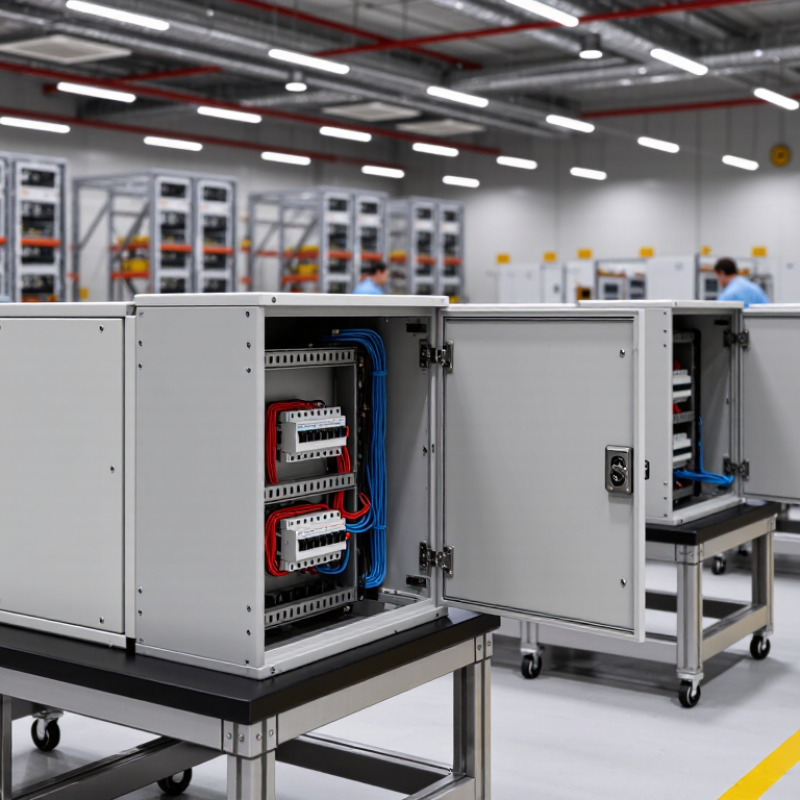
Metal Distribution Boxes: IEC 61439 Limits of 1,000 V AC and 1,500 V DC
A metal distribution box may look simple: a steel enclosure, a mounting plate, and rows of protective devices. Its voltage rating, however, defines an important boundary. IEC 61439 covers low-voltage switchgear and controlgear assemblies rated up to 1,000 V AC or 1,500 V DC. That limit describes the standard’s scope; it does not prove that every box below it is compliant.
The complete assembly matters. Busbars, terminals, protective devices, clearances, temperature rise, and short-circuit performance all affect safe operation. A supplier should explain how the assembly was designed and verified, and provide relevant technical records. Ask how the enclosure handles dust, moisture, corrosion, and heat at the intended installation site. A rating on a product sheet is only a starting point.
When comparing Chinese suppliers, request drawings, material details, test documentation, and clear answers about customization. Check whether the quoted voltage refers to the assembled distribution unit, not merely an individual component. That distinction is easy to miss. A tidy enclosure can still hide weak documentation or unsuitable internal parts. Buyers should also review routine verification and the exact configuration supplied, since small changes can matter. No checklist replaces engineering judgment, and some supplier claims deserve a second look.
IEC 61439 Voltage Scope Limits
IEC 61439 covers low-voltage switchgear and controlgear assemblies with rated voltages up to 1,000 V AC or 1,500 V DC. These are standard scope limits, not ratings for any particular supplier or product.
IEC 60529 IP Ratings: Dust and Water Protection for Enclosures
China Top 10 Metal Distribution Box Suppliers?
IEC 60529 IP Ratings: Dust and Water Protection for Enclosures
When comparing metal distribution box suppliers in China, check how each enclosure handles dust and water. IEC 60529 defines IP ratings for protection against access, solid objects, and moisture. The first digit describes solid-particle protection; the second describes water protection. For example, IP65 is dust-tight and resists water jets under specified test conditions. Small details matter. A rating alone does not confirm suitability for every outdoor site.
Tips: Match the rating to the actual exposure. Dusty workshops may need stronger particle protection, while sheltered indoor panels face different risks. Ask for test documentation for the complete enclosure, including its door, seals, and cable entries. An empty box rating may not apply after drilling or fitting glands. Check the installation instructions, too.
IP ratings do not measure corrosion resistance, impact strength, or resistance to sunlight. A metal enclosure can meet a water rating yet develop corrosion near damaged coatings or poorly sealed joints. That part is easy to overlook. Compare material, finish, gasket quality, and maintenance needs alongside the IP code. If the installation involves washdown or standing water, confirm the exact test conditions rather than relying on a supplier’s short description.
Supplier Evaluation: Materials, Certifications, Ratings, and Customization
China Top 10 Metal Distribution Box Suppliers?
When comparing Chinese metal distribution box suppliers, evaluate the enclosure and the evidence behind its specifications. The IEA’s Electricity 2024 report states that global electricity demand grew 2.2% in 2023 and forecasts average annual growth of 3.4% for 2024–2026. That outlook makes dependable distribution equipment important, but it does not make every supplier equally capable.
Ask for material grades, sheet thickness, coating details, and corrosion-test records. Check the stated IP rating against test documentation, not just a catalogue image. For assemblies, confirm which IEC 61439 requirements apply; IEC 60529 defines IP protection ratings. ISO 9001 can indicate a quality-management system, but it is not proof that a specific box passed product tests. Paper is not proof. Review sample reports, factory inspection records, and how ratings change with cable entries or custom cutouts. No scorecard is perfect; even a polished report may not reflect your exact build.
Tips: Send suppliers the same drawing, operating environment, and required rating. Request a marked-up sample layout before production. Compare lead times, minimum order quantities, and change-control practices. A small detail matters: a gland plate or door seal can affect the finished protection level. Ask who verifies the final configuration.
China’s Top 10 Suppliers: Company Profiles and Product Specialties
China’s top ten metal distribution box suppliers are best compared by capability, not catalogue size. The International Energy Agency’s Electricity 2025 report says global electricity demand grew 4.3% in 2024, increasing pressure on power networks and related equipment. That figure does not measure enclosure sales, but it offers useful market context. A careful profile should check sheet thickness, coating quality, door fit, wiring space, and documented inspection procedures.
The ten supplier profiles to examine include precision sheet-metal fabricators, modular-box makers, outdoor enclosure specialists, stainless-steel producers, and custom OEM workshops. Add suppliers focused on low-voltage assemblies, automation cabinets, compact commercial boxes, export orders, and integrated cutting, bending, and coating. Look for clear drawings, sample availability, and repeatable production—not just attractive prices. IEC 62208 provides a relevant reference for empty enclosures used in low-voltage switchgear and controlgear assemblies. Still, a certificate alone cannot confirm a box suits every site. I would verify dimensions, ingress-protection evidence, and test records before comparing quotes. That step is easy to miss.
Compare Suppliers by Testing, Applications, Delivery, and Service
China Top 10 Metal Distribution Box Suppliers?
Supplier comparisons should begin with test evidence, not catalogue claims. The IEA’s Electricity 2024 report projects global electricity demand will grow by an average 3.4% annually from 2024 to 2026. That growth puts pressure on equipment buyers to check capacity, quality, and delivery plans carefully.
Ask for documented design verification against IEC 61439 and clear ingress-protection ratings under IEC 60529. Check whether reports match the exact enclosure material, dimensions, and door configuration being quoted. A sample can reveal practical details: sharp edges, uneven coating, weak hinges, or cramped wiring space. Small flaws matter. Yet a polished sample alone cannot confirm consistent production quality.
Match the enclosure to its setting, such as indoor control rooms, outdoor utility sites, or dusty factory floors. Then compare coating options, corrosion protection, cable-entry layouts, and customization limits. For delivery, request a production schedule, packing details, and a written plan for shortages or inspection delays. Ask who answers technical questions after shipment, and how replacement parts are handled. A low price may hide slow support; even a strong supplier can miss a deadline when specifications change late. Check references for similar orders, but treat them as useful evidence, not a guarantee.