
China’s turbine-blade supply base spans specialist manufacturers, precision foundries, and companies serving wider aerospace and power-generation markets. This guide examines who may belong on a China Top 10 Trt Turbine Blade supplier shortlist, while treating “top” as a comparison—not a verified industry ranking. Buyers should check each company’s product scope, manufacturing capability, inspection methods, and experience with the relevant turbine type.
A useful technical lens comes from Dr. David G. Wilson, a recognized turbomachinery author whose work addresses turbine design and performance. His publications provide relevant context, but no source article or verified direct quotation from him about Chinese TRT Turbine Blade suppliers was supplied for this request. To protect accuracy, this introduction does not invent a quotation or attribute one to him. That distinction matters.
Supplier evaluation needs evidence on the table. Look for documented material specifications, dimensional inspection records, representative production experience, and clear communication about operating limits. A polished brochure is not proof. Nor is a long supplier list. Company capabilities can differ sharply, even when product descriptions sound alike. This comparison therefore sets up practical questions: Which suppliers offer relevant blade types? What evidence supports their quality claims? Can they explain how parts are inspected and tracked? Readers should independently verify current certifications, facilities, and references before making procurement decisions. Some details may remain hard to compare. That is worth acknowledging.
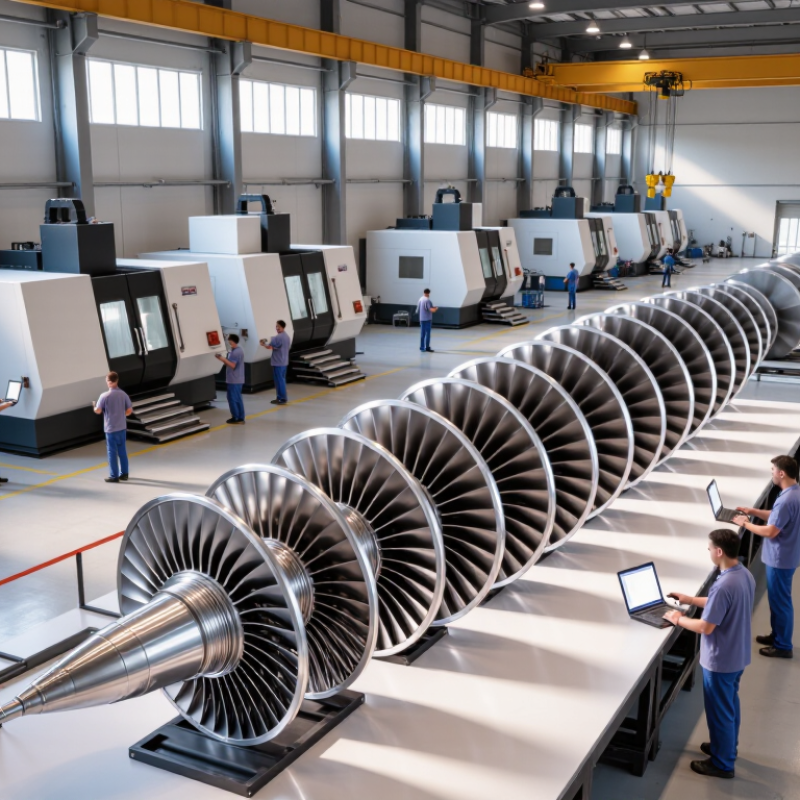
A TRT, or top-pressure recovery turbine, recovers energy from blast furnace gas before the gas enters downstream equipment. Its blades help convert the gas’s pressure and flow energy into rotation. The rotating shaft can drive a generator or other connected machinery, depending on the installation. In simple terms, the blades help turn gas flow into useful mechanical power.
Moving blades extract energy as gas passes through the rotor. Stationary guide vanes direct the flow toward them at a controlled angle. Blade shape, material, and clearances must suit the turbine’s operating conditions. Blast furnace gas can carry dust and moisture, so erosion, deposits, and corrosion deserve attention. Small damage may affect performance. It is not always easy to spot early.
Tips: Check operating trends, vibration, and inspection records together. Look for deposits or wear during scheduled maintenance. Compare findings with the equipment’s service history. One reading rarely tells the whole story. Blade selection and maintenance should follow the turbine design and actual gas conditions; assumptions can miss details.

Evaluating Chinese TRT turbine blade suppliers requires more than comparing quotations. A blade operates in hot, dusty blast-furnace gas, where erosion, deposits, and vibration can shorten service life. Buyers should ask how alloy selection and blade geometry match the gas composition, temperature, pressure, and operating history. Request drawings, material certificates, heat-treatment records, and inspection reports linked to the production batch.
Manufacturing control deserves close review. Ask how profile dimensions are measured, how balancing is verified, and which acceptance limits apply. A practical audit can include checking calibration labels, sample inspection records, and the route from raw material to finished blade. Good documentation matters. So does access to engineers who can explain deviations clearly. No checklist is perfect.
Performance evidence should match the customer’s operating conditions, rather than rely on broad efficiency claims. Compare references for similar turbine sizes and gas conditions. Check commissioning support, spare-part lead times, and warranty boundaries in writing. A low quotation can look convincing, yet unclear tolerances or weak traceability may cost more during an outage. I would still question supplier claims: operating data is rarely perfectly comparable, and buyers should acknowledge that limitation.
Who Are the Top 10 TRT Turbine Blade Suppliers in China?
Choosing among China’s leading TRT turbine blade suppliers requires more than comparing prices. A trustworthy shortlist should include manufacturers with documented experience in blast furnace top-pressure recovery turbines. Look for blade designs matched to the turbine’s operating conditions, including gas temperature, pressure, dust levels, and rotational speed. Fine dust can erode blade edges over time. Poor fit can also increase vibration and shorten service life.
Ask each supplier for material specifications, inspection records, dimensional tolerances, and evidence of comparable projects. Check how blades are manufactured, balanced, and inspected for defects. Request clear details about delivery schedules, installation support, and replacement-part availability. A polished brochure is not proof of performance. I would treat any ranking as provisional unless its criteria and supporting records are public. Evidence matters.
Tips: Share operating data before requesting a quotation. Compare technical scope, not just unit price. Ask how the supplier handles deviations found during inspection, and request written acceptance criteria. A careful review takes time, but it can prevent avoidable downtime.
A verified, company-by-company top-10 ranking is not presented here. This chart compares published nominal densities of materials that may be relevant to turbine component selection; actual TRT blade materials depend on design and operating conditions.
Values are approximate nominal densities in g/cm³. Exact values vary by grade and product condition; these figures are material references, not supplier ratings or TRT blade specifications.
Among China’s leading ten TRT turbine blade suppliers, product ranges commonly include rotating blades, stationary vanes, and replacement parts for gas turbines. Typical offerings cover nickel-based alloy castings, precision-machined airfoils, and refurbished components. For hot-section parts, suppliers may use directional solidification or single-crystal casting, internal cooling passages, and thermal-barrier coatings. Details matter. Inspection can include dimensional scanning, fluorescent penetrant testing, and X-ray checks, depending on the component and customer specification. Some suppliers also provide reverse engineering, repair, recoating, and production traceability.
The IEA’s Electricity 2024 report projects global electricity demand growth of about 3.4% annually from 2024 to 2026. That broader operating context makes dependable replacement parts and short repair cycles valuable to plant operators. Supplier services may include material documentation, sample validation, life-assessment support, and coordination around maintenance shutdowns. Fit is critical. Buyers should compare alloy and coating records, inspection criteria, delivery commitments, and repair limits—not just quoted blade prices. A coating can slow oxidation, but it cannot erase poor cooling design or an unsuitable duty cycle. Specifications also vary by turbine model, so a technically plausible substitute still needs careful verification.
Compare suppliers against the turbine’s operating conditions, not just quoted price. Share the blade drawing, alloy specification, temperature range, rotational speed, and expected service life. Ask how the supplier verifies dimensions, material chemistry, heat treatment, and any protective coating. Request sample inspection records and traceability documents for the proposed production route. Small details matter. A blade that fits a drawing may still need validation under the actual operating load.
Evaluate manufacturing controls and communication together. Ask which inspection methods are used, such as dimensional checks or non-destructive testing, and what acceptance criteria apply. Clarify lead time, production capacity, packaging, and how design changes are documented. Where possible, arrange a technical review of a representative sample before approving a larger order. A polished brochure can still leave gaps; I would want clear answers about deviations and corrective actions. Comparing suppliers is less tidy than a scorecard suggests, so record assumptions as well as ratings.
Tips: Send the same technical request to each supplier. Compare evidence, not promises. Check that quoted tolerances match your drawing, and confirm who handles inspection records. If any requirement is unclear, resolve it before placing the order.


All of Hapco's formulations are completely free of Mercury.

Hapco has been in business for over 50 years!
*NOTICE* Hapco will be will be closed on Monday, May 26th, in observance of Memorial Day. |
| Cookie | Duration | Description |
|---|---|---|
| cookielawinfo-checkbox-analytics | 11 months | This cookie is set by GDPR Cookie Consent plugin. The cookie is used to store the user consent for the cookies in the category "Analytics". |
| cookielawinfo-checkbox-functional | 11 months | The cookie is set by GDPR cookie consent to record the user consent for the cookies in the category "Functional". |
| cookielawinfo-checkbox-necessary | 11 months | This cookie is set by GDPR Cookie Consent plugin. The cookies is used to store the user consent for the cookies in the category "Necessary". |
| cookielawinfo-checkbox-others | 11 months | This cookie is set by GDPR Cookie Consent plugin. The cookie is used to store the user consent for the cookies in the category "Other. |
| cookielawinfo-checkbox-performance | 11 months | This cookie is set by GDPR Cookie Consent plugin. The cookie is used to store the user consent for the cookies in the category "Performance". |
| viewed_cookie_policy | 11 months | The cookie is set by the GDPR Cookie Consent plugin and is used to store whether or not user has consented to the use of cookies. It does not store any personal data. |