China Best Smart Street Light Suppliers for Global Buyers
China is a major sourcing base for connected roadway lighting, but supplier choice takes more than comparing unit prices. A Smart Street Light may combine an LED luminaire, dimming controls, sensors, communications, and remote monitoring. The right configuration depends on the road, climate, power supply, and local operating practices. Small details matter. Ask for clear product specifications, including lumen output, power consumption, surge protection, and operating-temperature range. Request photometric files and sample test reports, then check that they match the proposed model. A polished brochure is not enough.
This guide introduces Chinese suppliers serving international buyers and outlines practical ways to assess them. Look beyond product claims: review manufacturing capabilities, quality-control procedures, customization options, lead times, warranty terms, and after-sales support. Confirm which certifications and test documents apply to your destination market; requirements differ, so buyers should verify them independently. Discuss control-system compatibility early, especially when a project uses existing platforms or network standards. A factory sample can reveal finish, wiring, and assembly quality, yet it cannot prove long-term field performance. No catalog can answer every site question. That is easy to overlook. Ask for relevant project references, clarify who handles commissioning, and agree on how defects will be managed. Even careful checks leave some uncertainty. The aim is not to find a supplier with the boldest promises, but one whose evidence, communication, and products fit the project’s actual needs.
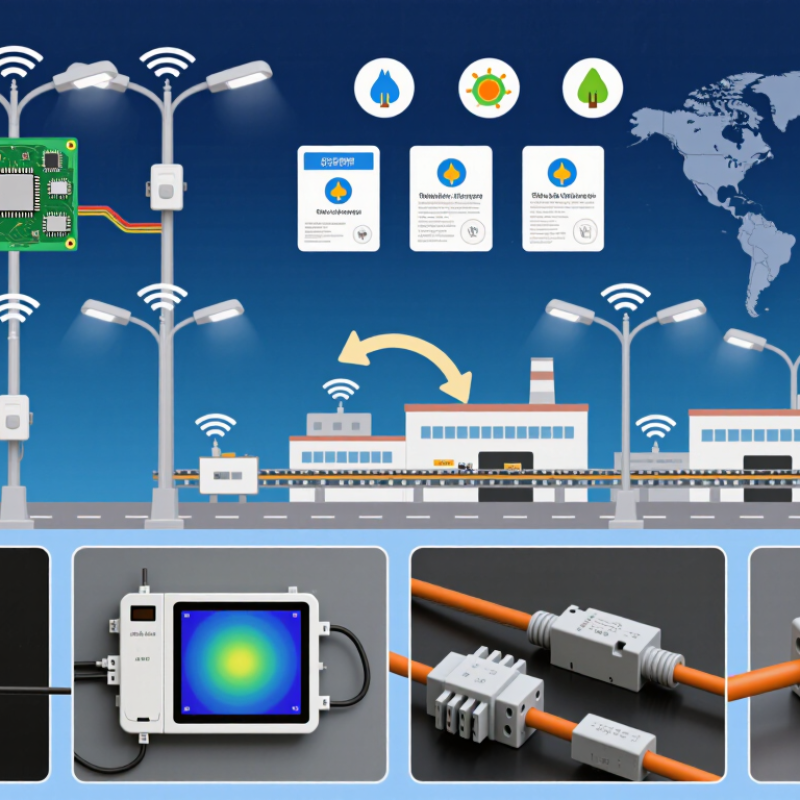
What Smart Street Lights Are and How Their Systems Work
Smart street lights combine efficient LED fixtures with controls that adjust output and report operating conditions. A conventional lamp mainly provides light; a smart unit can also communicate with nearby equipment or a central management platform. The exact configuration varies by road, climate, and project budget. Some systems include ambient-light sensors, motion detectors, or environmental sensors, but these are not required on every pole.
At dusk, a photocell or programmed schedule can switch lights on. A pole-mounted controller can dim or raise output according to settings, detected activity, or operator commands. Communication may use a wireless mesh, cellular connection, or another network, with gateways carrying data to software dashboards. Operators can review energy use, identify outages, and adjust groups of lights without visiting each pole. Useful, but not magic. Rain, tree cover, headlights, or sensor angle can affect readings, so field testing matters.
A practical design starts with the street’s real needs: traffic patterns, pole spacing, maintenance access, and reliable connectivity. Controls should support local operation if the network drops, rather than leaving a road dependent on a remote connection. Buyers should ask how equipment from different suppliers exchanges data and how software updates are managed. Small details matter. Even a capable system may waste energy if dimming levels or schedules are poorly tuned, so plans should allow adjustment after people use the street.
China’s Smart Street Light Supplier Landscape
China’s smart street light supplier landscape is broad, but it is not uniform. Suppliers may focus on LED fixtures, control systems, poles, or complete project packages. Some operate large production lines, while smaller teams handle custom designs and limited orders. The difference matters. A buyer planning a coastal road needs different materials and testing than one lighting an inland industrial park.
A useful supplier review starts with the actual project. Ask for fixture drawings, photometric files, ingress and impact ratings, and sample test reports. Check whether the proposed controller supports the intended communication method and can work with existing infrastructure. Request a sample unit when possible. Its cable glands, seals, and finish reveal details that a catalogue photo can hide. Documentation may look complete, yet unclear ownership of software updates can create problems later.
Production capacity alone is not proof of fit. Compare component traceability, quality checks, warranty terms, spare-part availability, and experience with similar climates. Confirm who manages installation guidance and after-sales support across time zones. These questions can feel tedious. They are still practical. Supplier information is sometimes uneven, and buyers should verify claims rather than treat them as guarantees. A clear specification and a small pilot can expose gaps before a citywide order is placed.
China’s Urbanization Rate (2020–2024)
China’s urbanization rate rose from 63.89% in 2020 to 67.00% in 2024. This provides demand context for smart street lighting suppliers, as urban infrastructure expands. Source: China National Bureau of Statistics.
Key Criteria for Evaluating Chinese Suppliers
A reliable supplier should provide project evidence, not just attractive product images. Ask for recent installation references, photometric test reports, wiring diagrams, and clear specifications for LED output and power consumption. Details matter. Check how the lighting controller communicates with gateways and management software, especially if your project uses equipment from different manufacturers. Request written information about ingress protection, operating temperatures, surge protection, and expected maintenance needs. These details help assess whether a luminaire can handle local weather and road conditions.
Review the supplier’s quality process and production capacity. Ask how components are inspected, how finished units are tested, and whether replacement parts remain available after delivery. A sample can reveal finish quality and connector layout, but one good sample is not proof of consistent production. That is easy to overlook. For a larger order, consider a limited pilot and agree on measurable acceptance criteria before mass production. Confirm warranty coverage, packaging, lead times, and who handles technical questions across time zones. A polished brochure can still hide gaps. If a supplier’s answers are vague, record the unanswered points and resolve them before placing an order.
Types of Suppliers and Solutions Available to Global Buyers
Global buyers can choose among manufacturers, system integrators, and specialist distributors. Manufacturers may offer direct access to pole, luminaire, and controller specifications. Ask for photometric data, material details, and test reports, not just catalogue images. Details matter.
System integrators combine lighting hardware with sensors, communications, and management software. They can design grid-connected or solar-powered systems for different road conditions. A practical proposal should explain dimming schedules, network coverage, and how faults appear on the operator’s dashboard. Request a small pilot when the site is complex. It can reveal gaps that drawings miss.
Distributors and engineering contractors may help with regional stock, installation, or maintenance. Their value depends on local technical support and clear responsibility for each component. Available solutions range from basic LED replacements to connected networks that adjust output by time or detected activity. Some projects also use solar poles where grid access is limited, though battery capacity and cloudy-season performance need careful review. Compare suppliers using the same pole height, road width, operating hours, and lighting targets. Ask how software updates, spare parts, and warranty claims are handled. A low purchase price can hide service costs. And a polished demonstration is not the same as reliable performance over several years.
How to Verify Suppliers and Manage International Procurement
China Best Smart Street Light Suppliers for Global Buyers
Supplier verification begins with evidence, not a polished catalog. Request the company’s business registration, production address, and recent project references. Check that test reports match the exact model you plan to buy; a report for a similar fixture is not enough. Where possible, confirm the issuing laboratory and inspect a sample under realistic conditions. Review lumen output, color temperature, dimming controls, surge protection, and the pole connection. Small differences can complicate installation later.
International procurement needs clear paperwork and realistic schedules. Put technical specifications, inspection criteria, warranty terms, and delivery dates in the purchase contract. Confirm destination-specific certifications and import documents with a qualified local broker. Agree on packaging details, shipping responsibility, and the delivery term before paying a deposit. A supplier’s lead-time estimate may change when components are delayed, so build in a buffer. I would not treat a successful sample as proof that every production unit will match; that assumption deserves a second look. Consider a pre-shipment inspection for larger orders.
Tips: Ask for dated production photos, verify references independently, and approve a written sample standard before mass production. Keep every revision on record.