How to Choose the Best Exterior Door for Your Home?
Choosing the right entry door is about more than curb appeal. The best option should suit your home’s style, climate, daily use, and maintenance needs. Exterior Doors also help create a barrier between indoor and outdoor spaces, so fit and installation matter alongside appearance. A beautiful door that sticks in damp weather can quickly become frustrating.
Start by considering the material. Fiberglass can offer a wood-like look with less routine upkeep, while steel is often chosen for strength and value. Solid wood brings natural grain and warmth, but may need more attention as conditions change. Check the manufacturer’s ratings, warranty, and care instructions rather than relying on appearance alone. Details matter.
Think about how the door will work in your actual entryway. Measure the opening, note which way it should swing, and consider whether a glass panel will bring useful daylight or reduce privacy. Look closely at the threshold, weatherstripping, lock compatibility, and the quality of the frame. Small gaps can let in drafts and rain.
Budget for installation, not just the door itself. An uneven opening or poor sealing can undermine even a well-made product, so use a qualified installer when the work is beyond your experience. There is no perfect choice for every home. A darker finish may show dust; a popular style may not suit your porch. This guide explores the practical trade-offs, helping you compare options and choose a door that feels right today and remains manageable over time.
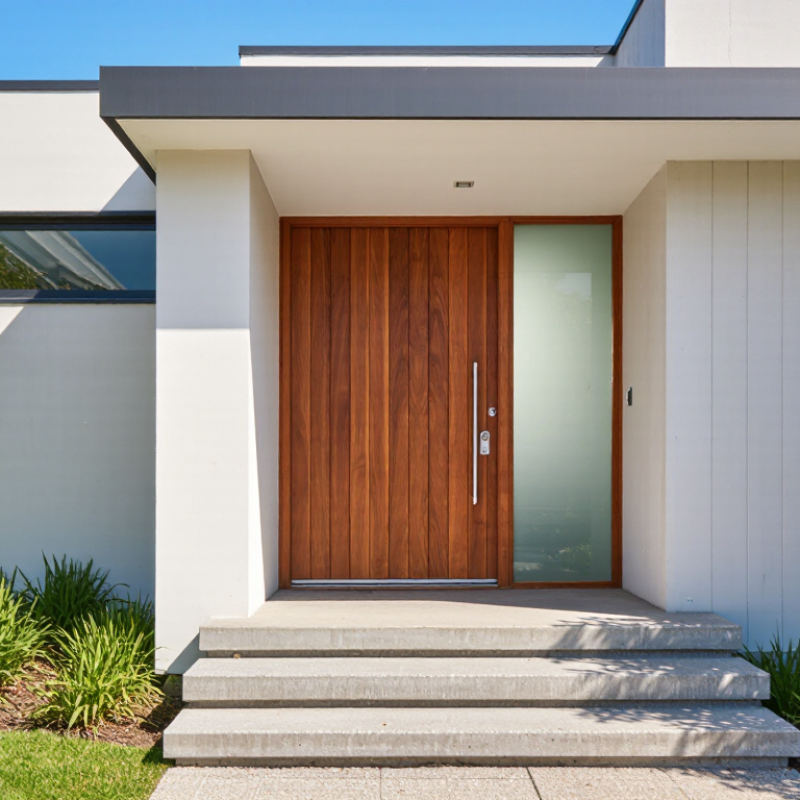
Assess Your Entryway, Climate, and Household Needs
Start with the entryway, not the showroom. Measure the frame, threshold, and swing clearance, then note whether a storm door, sidelights, or a narrow landing changes the fit. A door that looks right may still block a stroller or scrape a rug. Check for drafts on a windy day, too. A tissue moving near the closed frame can reveal a leak, though it is not a formal energy test.
Climate affects what matters most. In cold regions, look for a low U-factor and tight weather seals; in sunny areas, consider how glass may add unwanted heat. The U.S. Energy Information Administration’s 2020 Residential Energy Consumption Survey found that space heating accounted for 42% of household site energy use. That figure is not a door-savings estimate, but it shows why insulation deserves attention. Compare ratings on the National Fenestration Rating Council label, and check whether the door’s finish and materials suit local rain, sun, or salt air.
Household routines matter just as much. Frequent deliveries, pets, or young children may call for a durable surface, easy-to-clean glass, and a secure, simple-to-operate lock. The 2024 Cost vs. Value report estimated a 188.1% cost recoup for steel entry-door replacement in its U.S. averages; local results vary, so treat that as context, not a promise. One detail worth reconsidering: a decorative glass panel may look inviting, but does it provide the privacy your entry actually needs?
Compare Exterior Door Materials and Their Trade-Offs
Exterior door materials solve different problems, so the best choice depends on your climate, budget, and willingness to maintain the finish. Wood offers a warm, natural look and can be repaired or refinished. It may swell, crack, or need repainting when exposed to rain and strong sun. A covered entry helps, but it does not remove upkeep. Small detail, big difference.
Fiberglass resists moisture and usually needs less maintenance than wood. Some versions mimic wood grain, though the texture may look less convincing up close. Steel is often a practical, sturdy option and can provide good insulation when the door is properly built and installed. Scratches can expose the metal, so inspect the finish and edges. In damp or coastal settings, ask how the door handles corrosion. No material is maintenance-free.
Compare the full door system, not just its surface. Check the frame, weatherstripping, glass, and threshold; a well-made slab can still leak air if the fit is poor. I would also consider how much direct afternoon sun reaches the entrance. It can fade finishes and make dark surfaces hot to touch. There is no perfect answer, and material alone cannot guarantee comfort or security. A careful measurement and professional installation matter just as much.
Evaluate Security, Insulation, Durability, and Weather Resistance
Choosing an exterior door starts with the opening, not the finish. Check that the frame is sound and the door sits evenly; a strong slab cannot compensate for a loose frame. For security, look for sturdy hinges, a reinforced strike area, and a lock that fits the door and frame. Small gaps matter. They can make a well-built door easier to force and let drafts slip inside.
Insulation depends on the whole assembly. A foam-filled door can reduce heat transfer, but worn weatherstripping or a poorly fitted threshold may cancel out some of that benefit. If you choose a door with glass, consider the glazing and how much direct sun or cold it will face. Run your hand around the closed edges on a windy day. You may feel a leak before you see one.
Durability comes down to material, finish, and exposure. Fiberglass resists moisture well, while steel can dent and may need attention if its protective coating is damaged. Wood has a warm, natural look, but often needs more upkeep in wet or sunny locations. No option is effortless. Check the sill for standing water, inspect seals for cracks, and ask whether the door is suited to your local climate. A small installation flaw can matter more than an expensive surface finish.
Choose the Door’s Style, Size, and Opening Configuration
An exterior door should suit the home’s proportions, not just a showroom photo. A tall, narrow entry may look balanced with simple glass panels, while a broad porch can handle a wider design. Consider how much daylight and privacy you want. Clear glass brightens a dim hall, but a textured or divided pane can soften views from the street. A small detail can change the whole feel.
Tips: Measure the opening at the top, middle, and bottom. Check width, height, and depth; older frames are not always square. Measure twice.
Choose the door size based on the actual opening and available clearance. Measure the frame opening, not only the existing door slab, and confirm measurements with the installer before ordering. Then decide how it should open. A left- or right-hand swing depends on where hinges sit and how the door moves when opened; check nearby walls, steps, and furniture. In a tight entry, the wrong swing can feel awkward every day. It is easy to focus on appearance and overlook this—worth a second look. The threshold and landing should also allow comfortable passage without the door striking a railing or blocking a walkway.
How to Choose the Best Exterior Door for Your Home: Style, Size, and Opening Configuration | Door Style | Typical Use | Common Nominal Sizes | Opening Configuration | Selection Considerations |
| Panel door | Front, side, or back entry | Single doors are commonly 30, 32, or 36 inches wide and 80 inches high; other heights are available. | Usually a single hinged door; available as inswing or outswing, with left- or right-hand operation. | A versatile traditional choice. Match the panel design to the home’s architecture and check that the door’s material and finish suit the local weather exposure. |
| Flush door | Modern or minimalist entrances and secondary entries | Common single-door widths include 30, 32, and 36 inches; 80 inches is a common height. | Typically a single hinged door, with the swing and handing selected to suit the entry. | Its smooth face creates a simple look. Consider glazing or decorative details if the entry needs more daylight or visual interest. |
| Glazed or half-lite door | Entries where daylight and visibility are desired | Often available in common single-door sizes, including 32 or 36 inches wide by 80 inches high. | Most often a single hinged door; glass may be clear, textured, or otherwise designed for privacy. | Check the glazing’s safety rating and privacy level. Weather exposure, security needs, and the direction of sunlight can affect the best glass choice. |
| French or paired doors | Wide entrances, patios, or formal front entries | Two leaves are often around 30 or 32 inches wide each; overall opening sizes vary by product and framing. | A pair of hinged leaves; one or both may be active, depending on the hardware and design. | Allow room for the swing of both leaves. Confirm the clear opening, threshold details, and how the inactive leaf is secured. |
| Sliding patio door | Patios, decks, and spaces with limited room for a swinging door | Common units are often about 5 or 6 feet wide and 6 feet 8 inches high; larger sizes are also available. | One panel slides past a fixed panel; multi-panel configurations are available. | Measure the full framed opening and confirm which side the operating panel should be on. Check track access, drainage, and screen requirements. |
| Craftsman-style door | Homes with Craftsman, bungalow, or similar architectural details | Usually offered in standard single-door widths such as 32 or 36 inches; exact sizes depend on the product. | Typically a single hinged door; may include upper glazing or sidelights. | Choose panel, glass, and trim details that complement the facade. Sidelights and transoms require a wider or taller overall framed opening. |
Size and fit note: Dimensions above are common nominal examples, not a guarantee of a finished opening size. Measure the existing door slab and frame, check the manufacturer’s specifications for the required rough opening, and verify local code and accessibility requirements before ordering. For hinged doors, confirm the swing and handing from the side where the door is approached.
Plan for Installation, Maintenance, and Long-Term Costs
Choosing an exterior door means looking beyond its color and purchase price. Consider your climate, entryway exposure, security needs, and how often the door will be used. Measure the opening carefully, including its depth and threshold. A heavy door may need a reinforced frame, while an uneven opening can require extra labor. Before ordering, ask for an itemized installation estimate that covers removal, flashing, insulation, hardware, and disposal. Small details matter.
The purchase price is only part of the long-term cost. Weather seals can wear down, hinges may need adjustment, and finishes exposed to afternoon sun can fade. Wood doors may need periodic refinishing; other materials still benefit from cleaning and seal checks. It is easy to overlook these tasks when comparing options. Ask how often the chosen door needs care, what replacement parts cost, and whether the installer will correct drafts caused by a poor fit. Leave room in your budget for maintenance, not just installation.
Tips: After installation, check for daylight around the edges and test the latch. Keep a note of when you inspect the seals. If the door sticks after a seasonal temperature change, do not assume it needs replacing; a small adjustment may solve the problem.