Outdoor electrical equipment faces rain, dust, sun, temperature swings, and accidental impact. Choosing an Outdoor Steel Enclosure Box is therefore a reliability decision, not merely a matter of appearance. Grand View Research’s Electrical Enclosure Market Size, Share & Trends Analysis Report examines demand across materials, product types, and end-use industries. That market context reflects a wider need to protect electrical components in industrial and infrastructure settings. Yet a growing market does not make every enclosure suitable for every site.
Start with the actual exposure. A box mounted beside a coastal loading area faces different corrosion risks from one installed inside a sheltered utility room. Check the required protection rating, steel thickness, finish, door seal, mounting method, and usable internal space. IEC 60529 defines IP ratings for protection against dust and water; NEMA 250 classifies enclosure types for specified environmental conditions. These systems are not interchangeable, so compare the relevant requirements rather than treating their labels as direct equivalents. Small details matter.
This guide explains how to match enclosure construction to location, equipment, and maintenance needs. It also covers ventilation, cable entry, locking, and space for future upgrades. A tightly sealed cabinet may retain heat, while an oversized one can complicate installation. There is no universal best box. And the specification can still be wrong. Review the site conditions and equipment requirements before selecting a model, and confirm critical ratings with the manufacturer’s technical documentation.
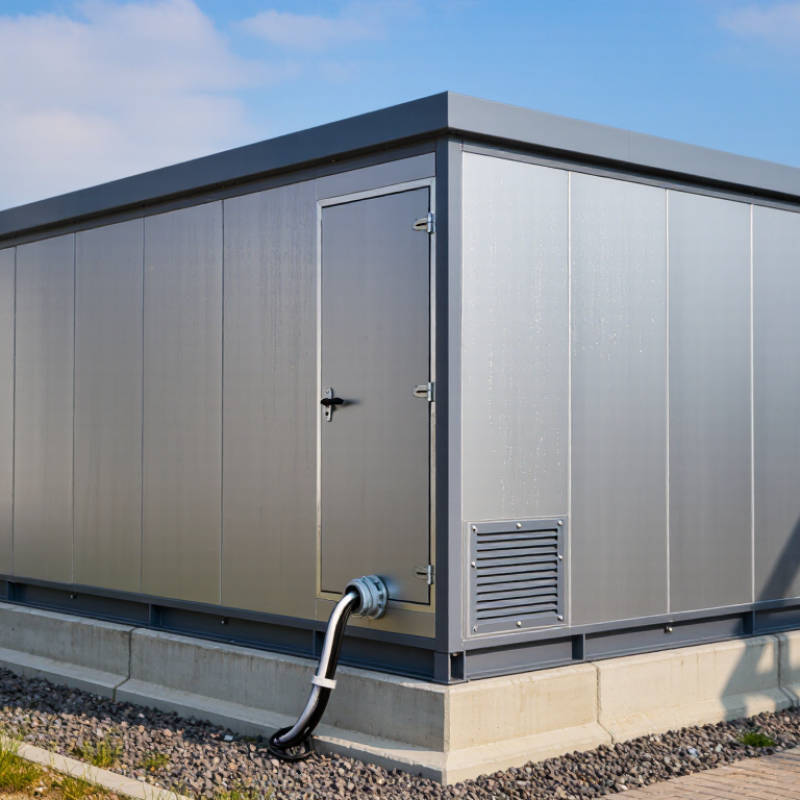
An outdoor steel enclosure should be selected for the place it will actually occupy, not just for a general “outdoor” label. Check whether it will face driving rain, blowing dust, direct sun, salt air, or frequent washdowns. A sheltered wall under an eave is very different from an exposed pole beside the coast. Note the expected temperature range, too. Heat can build inside a sealed box, especially when equipment runs all day.
Match the enclosure’s ingress protection rating to the site’s exposure, and confirm that the rating applies with the chosen door seals and cable glands installed. Steel finish matters where moisture or salt can reach the surface. Also consider condensation: daily temperature swings may leave droplets inside, even when rain stays out. Ventilation can help, but openings may reduce protection, so check equipment heat limits and enclosure guidance together. I have seen site conditions underestimated; a quick walk-around can reveal splash paths and maintenance obstacles that drawings miss.
Tips: Photograph the mounting spot after rain. Keep the door clear for service, and leave room for cable bends. If exposure is uncertain, verify the rating and coating with the enclosure supplier before ordering.

Outdoor steel enclosure selection starts with exposure, not price. Zinc-coated carbon steel can suit sheltered sites, but cut edges and fasteners need attention. For coastal air, fertilizer dust, or frequent washdown, stainless steel may reduce coating maintenance. Grade 304 suits many ordinary outdoor settings; grade 316 adds molybdenum for improved resistance to chloride exposure. Salt changes the calculation. Still, no grade is immune. Trapped moisture, crevices, and damaged finishes can trigger localized corrosion.
NACE International’s 2016 IMPACT study estimated corrosion cost the global economy about $2.5 trillion in 2013, or 3.4% of global GDP. It reported that applying existing corrosion-control practices could save 15–35% of that cost. That benchmark is broad; it cannot predict one box’s service life. Check the door seam, welds, mounting feet, and coating-repair guidance. Small details matter. I would not choose 316 automatically: for a dry inland site, well-coated carbon steel may be more practical. The right choice still depends on the actual exposure.
Determine the Correct Size, Layout, and Mounting Method
Size the enclosure around the installed equipment, not just its listed dimensions. Account for wire-bending space, terminals, cable glands, and likely additions. Check component clearances and heat output. A crowded box traps heat and complicates service. Leave slack. NEMA 250-2020 defines Type 3R protection for rain and sleet; Type 4 adds protection against hose-directed water, while Type 4X also addresses corrosion resistance. Choose a rating for the actual exposure, not just the weather forecast.
Arrange heat-producing components away from sensitive controls, and check door swing and tool access before fixing the layout. Cable entries should follow equipment instructions and allow water to drain safely. IEC 60529 classifies IP protection separately: IP66 is dust-tight and resists powerful water jets. Do not assume an IP rating converts directly to a NEMA type; the standards assess different conditions.
Select wall, pole, or floor mounting based on loaded weight, wind exposure, and the supporting structure. Keep the enclosure’s center of mass close to its mounting plane, and use fasteners suited to the environment. Leave room to open the door fully. A little spare volume helps during wiring, though an oversized box can add cost and wind leverage. This trade-off is easy to overlook on a drawing.
Choosing an outdoor steel enclosure box requires more than checking its size and metal thickness. Weatherproofing should match the installation environment. Look for a suitable ingress protection rating, sealed seams, and a dependable gasket around the door. Rain can enter through cable glands, not only through the main opening. UV-resistant coatings also matter when the box receives direct sunlight every afternoon.
Security depends on the site and the equipment inside. A strong hinge, concealed fasteners, and a lockable handle can discourage casual tampering. For exposed areas, choose reinforced steel and tamper-resistant screws. However, heavy construction alone does not guarantee protection. I once focused on wall thickness and overlooked the mounting points. The box was secure, but the brackets were too weak.
Access features affect daily maintenance. A door that opens widely makes wiring and inspection easier. Removable panels can help, but they may reduce sealing performance after repeated use. Check whether the enclosure provides enough space for gloved hands, cable bends, and future components. Internal mounting plates and organized cable entry points reduce service time. Avoid placing the box where a technician must work in standing water. Poor access becomes a safety problem quickly. Before purchase, test the lock, gasket compression, and door movement physically if possible. Product drawings are useful, but real installation conditions often reveal small problems. There is no perfect enclosure. The right choice balances weather resistance, security, and practical access.
| Evaluation Area | Feature to Check | Practical Baseline | When to Choose a Higher Level | What to Verify Before Purchase |
|---|---|---|---|---|
| Weatherproofing | Ingress Protection (IP) rating | IP55 provides protection against harmful dust deposits and water jets from a nozzle. | IP65 is dust-tight and protected against water jets; IP66 is dust-tight and tested against more powerful water jets. | Confirm the rating applies to the complete, assembled enclosure, including its door, gasket, cable entries, and any installed accessories. |
| Weatherproofing | Rain, wind-driven water, and installation exposure | A gasketed door and correctly sealed cable entries suit many sheltered outdoor locations. | For exposed sites, specify a suitable water-ingress rating and consider a sloped top or rain hood where offered. | Check the test conditions and installation orientation. A water-jet rating does not by itself establish suitability for immersion or every weather condition. |
| Corrosion Resistance | Steel finish and environment | Painted or powder-coated steel can suit ordinary outdoor exposure when the coating remains intact. | For coastal, industrial, or chemically exposed locations, request a finish and corrosion protection designed for that environment. | Ask for coating specifications, surface preparation details, repair guidance, and any applicable corrosion-test results. No finish is maintenance-free in every environment. |
| Temperature & Condensation | Operating conditions inside the enclosure | Allow for the equipment’s operating temperature range and heat generated by installed components. | Use a properly rated heater, thermostat, ventilation, or cooling system if calculations show a need. | Consider direct sunlight, ambient temperature, internal heat, humidity, and condensation. Ventilation openings can affect the enclosure’s ingress protection. |
| Security | Door lock and access control | A keyed quarter-turn or cam lock helps deter casual access. | Consider a multi-point latch, restricted-key cylinder, or monitored access where the site risk requires it. | Check lock compatibility, key control, latch engagement, and whether the locking arrangement is appropriate for the required security level. |
| Security | Door, hinges, and tamper resistance | Look for a rigid door, secure hinges, and a continuous gasket that is not easily displaced. | For accessible or high-risk locations, consider concealed or protected hinges and reinforced locking points. | Review door construction, hinge attachment, fastener access, and how the door behaves when fully closed and locked. |
| Access & Maintenance | Door opening and working clearance | Choose a door opening wide enough to reach terminals and serviceable components safely. | Use a larger enclosure or removable mounting panel when frequent maintenance or bulky equipment is expected. | Check the available opening angle, hinge side, nearby obstructions, and clearance needed for tools and cable bending. |
| Access & Cable Entry | Gland plate, knockouts, and cable routing | Provide cable entries sized for the installed cables and compatible with the required glands. | Consider a removable gland plate or multiple entry zones for larger cable counts or future expansion. | Confirm entry locations, gland sizes, sealing method, bend radius, and whether field-drilled openings affect the enclosure rating. |
| Installation | Mounting and load capacity | Match the mounting arrangement to the wall, pole, or support structure and the enclosure’s loaded weight. | For heavy equipment or exposed sites, specify suitable brackets and structural support for wind and vibration loads. | Check mounting-hole locations, fastener material, substrate strength, and whether the mounting method preserves drainage and sealing. |
| Electrical Safety | Bonding and grounding | Provide a suitable protective-earth connection when required by the electrical design and applicable codes. | Use designated bonding points and verify continuity across removable doors or panels where needed. | Confirm grounding provisions, local code requirements, and the installer’s responsibility for correct bonding. |
| Sizing & Future Needs | Internal space and component layout | Allow room for the equipment, wiring, cable bend radius, and safe access to terminals. | Reserve additional space for planned components, wiring separation, and future maintenance. | Check usable internal dimensions, mounting-plate size, equipment heat dissipation, and any required separation distances. |
| Documentation | Ratings and installation instructions | Use an enclosure with clear technical documentation for its ratings and installation limits. | Request test reports or certification details where the project specification or local regulations require them. | Verify the exact model, accessories, and installation conditions covered by the documentation; ratings can change when holes or components are added. |
Verify the enclosure’s required standards before comparing price or appearance. Check its IP or NEMA rating for dust, rain, and water exposure. Ask for test reports, material details, and installation limits. A rating printed on a label is not enough. The enclosure should also match local electrical and safety requirements. In field inspections, I have seen a well-sealed box fail because cable entries were left unprotected. Small details matter.
Tips: Choose a finish for the environment, not just the color. Powder coating suits many outdoor locations, while galvanized steel or stainless steel may perform better near saltwater. Inspect corners, welds, hinges, and the door seal carefully. A perfect surface can still hide weak drainage or poor ventilation. That part is easy to miss.
Long-term maintenance should be practical. Leave enough clearance to open the door and inspect terminals safely. Check seals for cracks, loose screws, rust spots, and trapped moisture at scheduled intervals. Clean dirt with mild detergent, not aggressive chemicals. Replace damaged gaskets early. My own mistake was delaying one small rust repair; moisture spread beneath the coating. Maintenance records also improve reliability because they show when inspections and replacements occurred. Some plans look precise but fail in real weather. Review them after the first rainy season.


All of Hapco's formulations are completely free of Mercury.

Hapco has been in business for over 50 years!

*NOTICE* Hapco will be will be closed on Monday, May 26th, in observance of Memorial Day. |
| Cookie | Duration | Description |
|---|---|---|
| cookielawinfo-checkbox-analytics | 11 months | This cookie is set by GDPR Cookie Consent plugin. The cookie is used to store the user consent for the cookies in the category "Analytics". |
| cookielawinfo-checkbox-functional | 11 months | The cookie is set by GDPR cookie consent to record the user consent for the cookies in the category "Functional". |
| cookielawinfo-checkbox-necessary | 11 months | This cookie is set by GDPR Cookie Consent plugin. The cookies is used to store the user consent for the cookies in the category "Necessary". |
| cookielawinfo-checkbox-others | 11 months | This cookie is set by GDPR Cookie Consent plugin. The cookie is used to store the user consent for the cookies in the category "Other. |
| cookielawinfo-checkbox-performance | 11 months | This cookie is set by GDPR Cookie Consent plugin. The cookie is used to store the user consent for the cookies in the category "Performance". |
| viewed_cookie_policy | 11 months | The cookie is set by the GDPR Cookie Consent plugin and is used to store whether or not user has consented to the use of cookies. It does not store any personal data. |