How to Choose the Best Polyimide Tape for Your Needs?
Choosing the right Polyimide Tape is not simply a matter of selecting the highest temperature rating. The decision affects insulation, bonding strength, rework time, and product reliability. In a real assembly line, a poor tape may lift around a sharp corner, leave residue on a circuit board, or tear during removal. Small failures can create expensive delays.
Industry data shows why this material remains important. Grand View Research has reported that the global polyimide films market exceeded USD 1 billion in 2023 and is expected to maintain steady growth through the decade. MarketsandMarkets also identifies electronics, automotive, and aerospace applications as major demand areas. These sectors require materials that tolerate heat, chemicals, voltage, and repeated handling. However, market figures vary by research method and product definition. No single report tells the whole story.
A practical selection process should examine temperature exposure, adhesive chemistry, dielectric strength, thickness, tensile performance, and surface compatibility. For example, a 25-micron tape may suit precise coil insulation, while a thicker grade may protect solder joints or mask powder-coating areas. Silicone adhesives often perform better at elevated temperatures, while acrylic systems may offer stronger initial adhesion on clean, smooth surfaces. That distinction matters.
Experience also shows that laboratory ratings do not always match production conditions. Dust, humidity, uneven pressure, and rushed application can reduce performance. The best Polyimide Tape is therefore the one validated on the actual substrate, equipment, and process cycle. Testing remains essential. Even a small trial can reveal problems that a technical datasheet misses.
What Is Polyimide Tape and Where Is It Used?
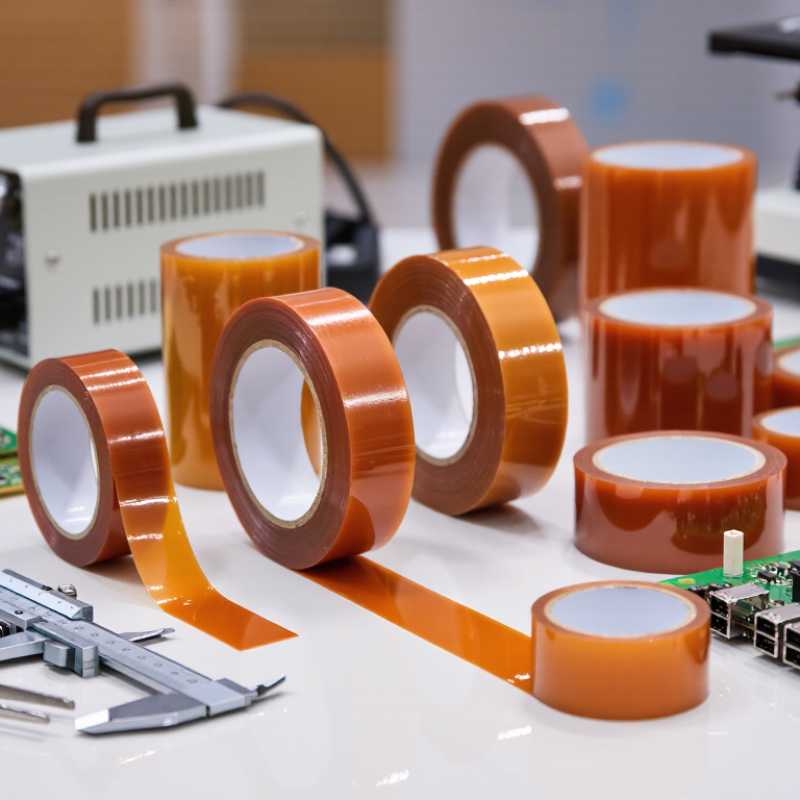
Polyimide tape is a thin, flexible tape made with a polyimide film backing and pressure-sensitive adhesive. It is known for strong dielectric insulation, dimensional stability, and resistance to heat, chemicals, and radiation. Heat changes everything. A tape rated for short exposure may fail during continuous heating.
In electronics manufacturing, polyimide tape commonly masks circuit-board contacts during soldering and protects delicate components from heat. It also wraps wires, insulates transformer parts, and secures flexible printed circuits. Some technicians use it on heated 3D-printing surfaces, although adhesion can vary with the platform material.
The tape matters.
Choosing the right grade requires more than checking the maximum temperature. Review the operating time, adhesive type, thickness, tensile strength, and dielectric performance. Silicone adhesive usually releases more cleanly after heating, while other adhesives may provide stronger initial bonding. Surface cleanliness is critical; dust, oil, and moisture can create lifting or residue.
Practical testing should match the real process. Apply a small sample to the actual surface, expose it to the expected temperature, and inspect the edges afterward. I have seen temperature ratings treated as the whole answer, which is a weak assumption. A datasheet provides useful evidence, but production conditions can still differ. If the tape stretches, tears, or leaves residue, the selected specification needs reconsideration.
Which Performance Requirements Should You Identify First?
Choosing the best polyimide tape starts with performance requirements, not color or price. Define the operating temperature, voltage, surface material, and exposure time. A tape inside a motor may face heat, vibration, and sharp edges. A laboratory assembly may need clean removal instead.
Temperature is the first filter. Do not rely on a headline rating alone. Identify the continuous temperature, short-term peak, and heating cycles. Then check adhesive stability after aging. ASTM D1000 provides recognized methods for measuring adhesion, backing strength, and elongation. IEC 60243-1 supports dielectric-strength testing for electrical insulation. These standards improve comparison, but they do not guarantee performance in your exact assembly.
Measure the details. A 25-micrometer tape may fit a narrow coil, while a thicker version can resist puncture more effectively. Check adhesion on metal, plastic, painted surfaces, and rough edges. According to a 2024 Grand View Research analysis, the global polyimide films market reached approximately USD 1.1 billion in 2023, reflecting strong demand for high-temperature insulation. Still, market growth cannot replace application testing. I once treated a high-temperature rating as decisive. That was a mistake. The adhesive failed during repeated thermal cycling. Test a small sample under real pressure, heat, and dwell time. Small differences matter.
How Do Temperature, Adhesion, and Chemical Resistance Affect Selection?
Choosing polyimide tape starts with the actual temperature cycle, not the highest number on a specification sheet. In production trials, a tape rated for 260°C may still lift during repeated heating and cooling. Thermal expansion stresses the adhesive edge. A 2024 MarketsandMarkets industry report valued the global polyimide film market at about USD 1.1 billion in 2023, reflecting demand from electronics and high-temperature manufacturing. That growth also increases the need for careful qualification.
Adhesion depends on surface energy, pressure, dwell time, and cleanliness. A smooth metal panel may bond quickly, while a dusty composite surface can fail within hours.
ASTM D1000 evaluates adhesion, tensile strength, and electrical tape performance, but laboratory results cannot fully reproduce humidity or vibration. Test both peel and shear strength at the intended temperature.
Small details matter.
Chemical resistance requires equal attention. Solvents, flux residues, oils, and alkaline cleaners can soften some adhesive systems, even when the polyimide film remains intact.
IEC 60216 thermal-aging methods help assess insulation life, yet they do not replace chemical-compatibility testing. A practical screening test uses the real solvent, temperature, and exposure time. It is imperfect, but revealing.
I would also inspect the tape after removal; residue, edge curl, or discoloration often signals a poor match. Temperature, adhesion, and chemical resistance must be judged together, because improving one property can sometimes weaken another.
How Should Tape Thickness, Width, and Backing Type Be Compared?
Choosing the best polyimide tape starts with comparing thickness, width, and backing type for the actual job. I have found that thinner tape is easier to shape around sharp corners. However, it may tear during installation or leave weak insulation over rough surfaces. A thicker tape offers better handling and mechanical protection. It can also create unwanted height under connectors or components.
Width affects coverage, overlap, and installation speed. Narrow tape works well for wires, small terminals, and precise masking. Wider tape covers flat panels with fewer seams. Measure the application before ordering. A five-millimeter gap can matter. Overlapping tape may improve coverage, but it can also produce uneven edges and trapped air. I once selected a width for speed and spent extra time trimming the edges. That choice was not as efficient as expected.
Backing type deserves careful comparison. Polyimide film provides strong heat resistance and dimensional stability. Silicone adhesive often releases cleanly after thermal exposure, while acrylic adhesive may offer stronger initial bonding in some applications. Check the complete temperature range, not only the maximum rating. Review dielectric strength, adhesion, elongation, and residue data. These values should match your surface and process conditions. Test a small sample for one full heating cycle. Laboratory data helps, but real surfaces are less perfect. Dust, pressure, and winding tension can change the result. Also compare the film thickness with the total tape thickness, because the adhesive layer affects fit and electrical clearance.
How to Choose the Best Polyimide Tape for Your Needs?
Compare tape thickness, width, and backing construction according to the application. The values below represent common engineering selections and typical service limits; always confirm the final specification with the tape datasheet.
1. Typical Tape Thickness by Application
Thinner 25–50 µm films are suited to precision masking and compact insulation. Thicker 75–125 µm films generally provide greater mechanical strength, puncture resistance, and handling durability.
2. Common Tape Widths by Application
Narrow widths improve control around terminals and circuit-board features, while wider rolls are more efficient for coil wrapping, surface protection, and bundle insulation.
3. Typical Upper Service Temperature by Backing Type
Polyimide film is commonly selected for high-temperature electrical insulation. Polyester is generally used at lower temperatures, while glass-cloth backings provide high-temperature capability with increased stiffness and abrasion resistance.
How Can You Test and Confirm the Best Polyimide Tape Choice?
Choosing the best polyimide tape requires evidence, not a datasheet alone. Match the tape thickness, adhesive type, and temperature rating to your actual process. Record the substrate, surface finish, pressure, dwell time, and heating cycle. Clean metal and a dusty panel will not produce comparable results. They rarely do.
Test small samples on copper, aluminum, glass, and the intended production material. Press each strip with the same roller pressure. After 24 hours, measure peel force at a steady angle and speed. Then expose the samples to the real heat cycle, such as 200°C for 30 minutes. Check edge lifting, shrinkage, discoloration, adhesive transfer, and insulation performance. For electrical applications, measure dielectric strength after heating, not only before it. That detail matters.
Use at least three samples per condition, because one excellent strip can hide a weak batch. A first test can mislead. In one trial, clean-looking tape failed after repeated thermal cycling because the substrate expanded differently. Retest after cooling, bending, and removal from narrow corners. Compare results with your process limits, not an attractive marketing number. Keep photos, force readings, lot details, and failure notes in a simple record. If residue appears, reduce pressure or dwell time only after confirming adequate holding power. The most reliable tape is the one that remains stable during real handling, heating, and removal.