What is Cold Rolled Coil and Why is it Important?
Cold Rolled Coil (CRC) is a vital component in multiple industries. It is widely utilized in automotive, construction, and appliance manufacturing. According to the World Steel Association, global steel demand is expected to grow by 1.0% in 2023, showcasing the importance of products like CRC. This steel product undergoes a specific manufacturing process that enhances its properties, including strength and surface finish.
CRC is produced by cold rolling thin sheets of steel, resulting in precise dimensions and excellent surface quality. A report from Research and Markets indicated that the cold-rolled steel market is projected to reach $410 billion by 2025. This growth highlights CRC's role in meeting the demands for high-quality materials. Industries rely on CRC for components requiring durability and a polished finish, making it a staple in modern manufacturing.
Yet, the reliance on CRC raises questions. Are manufacturers adequately addressing sustainability concerns? Recycled cold rolled coil could reduce environmental impact. However, challenges remain in balancing cost-efficiency and ecological responsibility. Emphasizing long-term benefits remains essential in the evolving market of Cold Rolled Coil.
Definition and Characteristics of Cold Rolled Coil
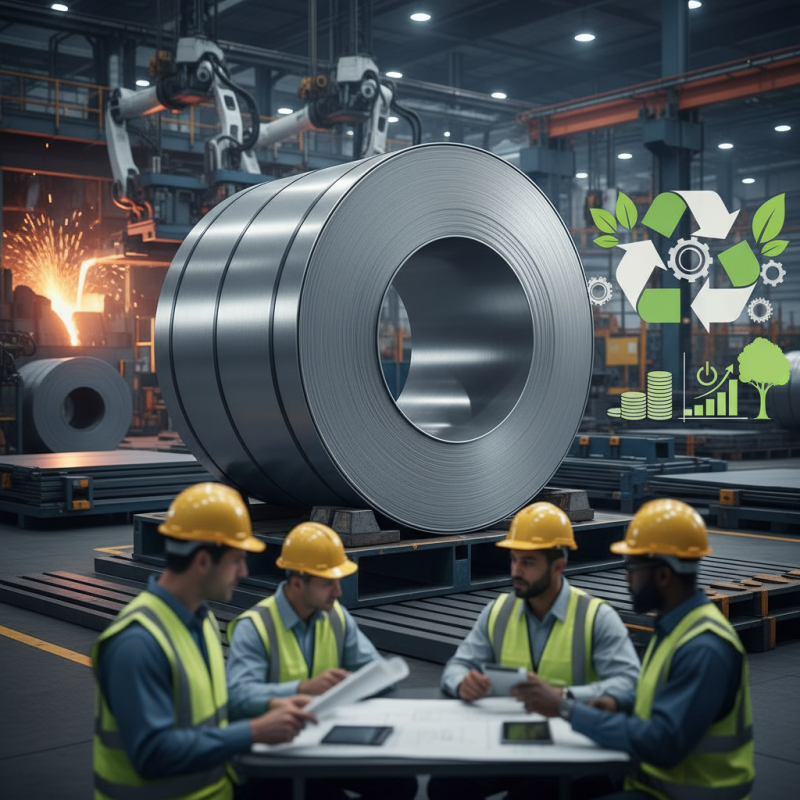
Cold rolled coil (CRC) is a type of steel product created through a cold rolling process. This method enhances the mechanical properties like strength and surface finish, making CRC essential for various applications. The characteristics of cold rolled coil include tighter thickness tolerances and a smoother surface, which are highly valued in industries such as automotive and appliance manufacturing.
Industry reports indicate that cold rolled products can have a tensile strength increase of approximately 20% compared to hot rolled variants. The typical thickness ranges from 0.1 mm to 3 mm. Despite its advantages, CRC can be susceptible to oxidation and requires careful handling during storage. Some manufacturers face challenges in preventing surface defects, which can impact end-product quality. Proper quality control measures are crucial in this aspect.
Moreover, the demand for cold rolled coil is increasing. The global market is projected to grow at a compound annual growth rate (CAGR) of 4.5% from 2023 to 2030. This growth signals both opportunities and challenges. More players entering the market might dilute quality standards. Companies need to rethink their production practices and invest in advanced technologies to stay competitive.
The Manufacturing Process of Cold Rolled Coil
The manufacturing process of cold rolled coil involves several key steps. First, a large slab of steel is heated. This process helps to make the metal more malleable. Once hot, the slab is passed through a series of rollers. These rollers gradually reduce its thickness. This step shapes the steel and enhances its surface finish.
After the initial rolling, the steel undergoes further processing. The cold rolling process occurs at room temperature. It is a crucial phase that improves the mechanical properties of the metal. This includes increased strength and better surface quality. However, it can also introduce some challenges. For instance, the reduced thickness may affect the durability of the final product.
Next comes annealing, where the rolled metal is heated again. This step helps relieve internal stresses. It is essential for achieving the desired hardness and ductility. Yet, maintaining uniform quality can be difficult. Variations in temperature can lead to inconsistent properties across the coil. Manufacturers must pay careful attention to each stage to ensure quality outcomes.
What is Cold Rolled Coil and Why is it Important? - The Manufacturing Process of Cold Rolled Coil
| Dimension | Specification | Properties | Applications |
| Thickness | 0.2 mm to 3.0 mm | High strength, excellent surface finish | Automotive body panels, appliances |
| Width | 600 mm to 1600 mm | Consistent width for manufacturing | Construction, HVAC systems |
| Length | Up to 6000 mm | Customizable for various uses | Manufactured components, furniture |
| Finish Type | Skin pass, Bright finish | Improved aesthetic appeal | Consumer goods, electronic enclosures |
| Weight | Typically 1 ton to 5 tons per coil | Heavy-duty usage | Large scale industrial applications |
Applications of Cold Rolled Coil in Various Industries
Cold rolled coil (CRC) is a crucial component in numerous industries. Its applications are diverse, ranging from automotive to construction. According to industry reports, the automotive sector consumes around 40% of global CRC production. This is primarily due to the material's strength and ability to be shaped into complex forms. Cars require durable materials to ensure safety and performance, making CRC essential.
In construction, CRC is gaining traction. It is used in building structures, roofing, and HVAC systems. A study indicated that steel's use in construction is projected to grow by 5% annually. This growth is driven by the demand for lightweight but strong materials. CRC plays a key role in fabricating components for these structures. Its smooth surface also makes it perfect for aesthetic applications.
However, the cold rolling process can lead to surface defects. These defects can impact the quality of the final product. Manufacturers must focus on quality control. This is crucial to meet industry standards. While CRC provides numerous benefits, its production must be carefully managed to ensure consistency and reliability in various applications. The market's fluctuation also poses challenges. Adjusting production strategies can be vital in addressing these issues effectively.
Advantages of Using Cold Rolled Coil Over Other Materials
Cold rolled coil (CRC) is a type of steel that has been processed at room temperature. This process results in a smoother finish and greater dimensional accuracy compared to hot rolled steel. It is crucial in various industries, including automotive and construction. According to industry reports, the global cold-rolled steel market was valued at approximately $415 billion in 2022, reflecting its significance.
The advantages of using cold rolled coil are substantial. It offers improved strength and a better surface finish. For example, cold rolled products typically exhibit 20-30% higher tensile strength than their hot rolled counterparts. This makes CRC a preferred choice for applications requiring durability. Moreover, the tight tolerances achieved in cold rolling allow for precise fabrication, reducing waste and enhancing efficiency.
However, despite its benefits, cold rolled coil is not without flaws. It can be more expensive than hot rolled materials. This cost can pose a challenge for budget-conscious projects. Additionally, its susceptibility to corrosion may require protective coatings, adding to overall expenses. As industries strive for sustainability, assessing these trade-offs is essential. Balancing the advantages with potential drawbacks remains a consideration for manufacturers and engineers alike.
Factors Influencing the Quality of Cold Rolled Coil
Cold rolled coil is a vital material used in various manufacturing processes. Its quality can significantly impact the final products made from it. Several factors influence the quality, including the initial alloy composition, rolling process parameters, and cooling rates.
The composition of the steel alloy is crucial. Different elements can change the material properties. For example, a higher carbon content can increase strength but decrease ductility. Additionally, the thickness of the initial slab affects the rolling process's effectiveness. If not properly managed, uneven thickness can lead to defects in the coil.
Rolling conditions also play a key role. Temperature control during the rolling process is essential. Too high a temperature can lead to oxidation, while low temperatures might cause brittleness. The cooling rate must be consistent to ensure uniform mechanical properties. A failure in these processes can result in coils with weak spots or excessive warping. Ultimately, attention to these details is necessary for ensuring high-quality cold rolled coil production.