
Green Matcha Powder is finely ground green tea made from shade-grown leaves. Unlike ordinary green tea, matcha is consumed as a suspended powder. This difference affects its flavor, color, texture, and sourcing requirements. Authentic matcha usually comes from carefully cultivated Camellia sinensis leaves, often called tencha before milling.
A responsible sourcing process begins with origin verification. Japan remains strongly associated with premium matcha, especially regions such as Uji, Nishio, and Yame. However, origin alone does not guarantee quality. Ask suppliers about farm locations, harvest dates, shading methods, and milling practices. Stone milling should produce a smooth, bright powder rather than a gritty product. The color should resemble fresh spring leaves, not dull olive dust.
Look closely.
Reliable suppliers should provide traceability documents and independent laboratory testing. Useful checks include pesticide screening, heavy-metal analysis, microbiological safety, and identity verification. Certificates of analysis can support trust, but they must match the actual batch purchased. Packaging also matters. Lightproof, airtight containers help protect matcha from oxidation, moisture, and strong odors.
Taste reveals important details. High-quality powder often has a balanced umami character, gentle sweetness, and limited bitterness. Yet personal preference still matters. Some ceremonial-style matcha tastes delicate, while culinary grades offer stronger bitterness for lattes and baking. No supplier is perfect, and labels can be unclear. A careful buyer should compare evidence instead of trusting attractive claims. Sourcing Green Matcha Powder responsibly requires patience, transparent questions, and a willingness to reconsider assumptions.
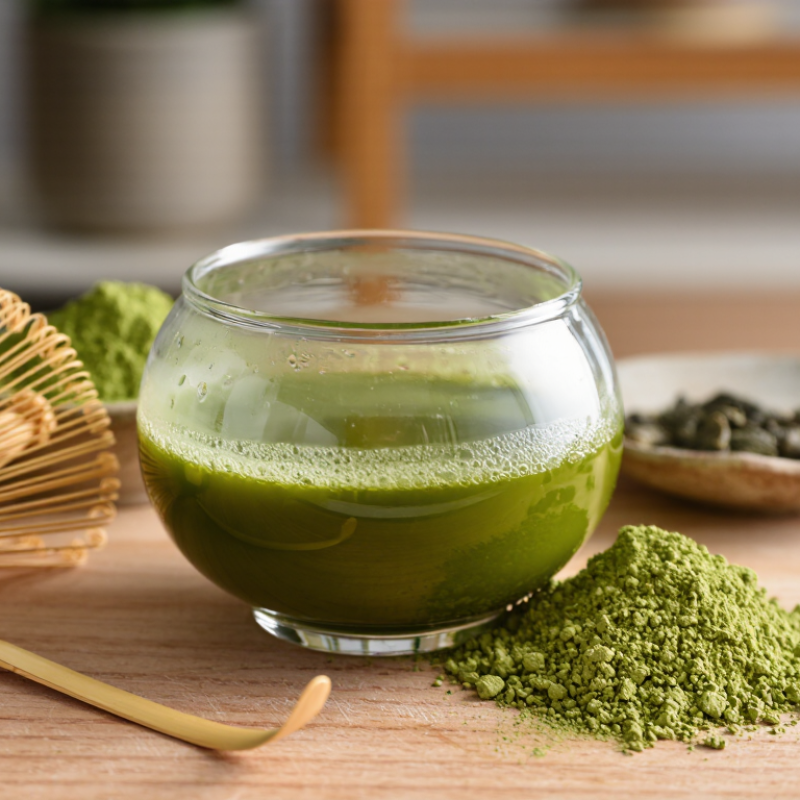
Green matcha powder is finely milled tea made from Camellia sinensis leaves. Unlike ordinary green tea, matcha is consumed as a powder. The leaves are usually shaded before harvest, which can deepen their green color and increase their savory flavor. After picking, producers remove the stems and veins, then grind the leaves slowly into a soft powder. Good matcha feels smooth between the fingers. It may taste grassy, lightly sweet, or pleasantly umami. Some batches taste bitter.
The word “green” describes matcha’s appearance, not a universal quality grade. Bright color can suggest careful processing, but color alone can mislead. Aroma, texture, harvest information, and laboratory testing deserve equal attention. Matcha naturally contains caffeine and plant compounds such as catechins. Its exact profile varies with cultivar, growing conditions, harvest timing, and preparation temperature. Hotter water may draw out more bitterness.
When sourcing green matcha powder, I would check the production region, harvest season, milling method, and storage conditions. A reliable supplier should provide traceability and current testing for heavy metals, pesticides, and microbial safety. Sealed packaging helps protect the powder from light, heat, oxygen, and moisture. Once opened, matcha can lose its fresh aroma surprisingly quickly. My own evaluation would remain cautious: a vivid green powder is not automatically fresh, premium, or responsibly produced. A small whisked sample often reveals more than attractive packaging.

Green matcha powder begins with tencha, not ordinary dried tea leaves. Growers usually cover tea bushes for about 20 to 30 days before picking. Reduced sunlight encourages chlorophyll and L-theanine formation, creating deeper color and a softer savory taste. MAFF’s 2023 crop statistics reported roughly 78,000 tonnes of Japanese tea production, while tencha represented only a small share, near 5,000 tonnes. That gap matters. Matcha sourcing needs more than a green appearance.
Harvest timing affects quality. Young spring leaves are commonly hand-picked or carefully machine-harvested, then steamed briefly to stop oxidation. Workers remove stems and veins before drying the leaf into tencha. The dried material is slowly milled into powder, often with granite equipment. The process is delicate. Excess heat can dull its aroma and damage freshness.
A reliable supplier should document the growing region, harvest date, shading period, pesticide testing, and milling conditions. USDA Foreign Agricultural Service reports have identified Japan’s tea exports as a growing high-value category, but export growth does not guarantee better matcha. I would question powder that looks unnaturally fluorescent or smells flat. Storage also deserves attention. Oxygen, light, and warmth quickly weaken its color and grassy fragrance. Packaging dates help, though they are not perfect proof. Some supply chains still provide limited farm-level traceability. That is where buyers must remain cautious.
Green matcha powder is made from shade-grown tea leaves that are steamed, dried, and stone-ground. Its vivid color begins in the field. Shade reduction slows leaf growth and helps preserve chlorophyll and L-theanine. A 2021 review in Foods links shading with higher theanine levels and reduced bitterness. However, color alone cannot prove quality.
Fresh matcha should appear bright jade, not dull yellow-green. Chlorophyll fades through oxygen, heat, light, and time. The International Organization for Standardization, ISO 11287:2011, identifies matcha as finely ground green tea, but it does not set one universal color grade. That matters. A darker powder may reflect age, processing, or natural cultivar differences. It may not mean stronger flavor.
Flavor comes from chemistry and handling. L-theanine creates a soft, savory note, while catechins contribute bitterness and astringency. Caffeine also varies with cultivar, shading, and serving size. USDA FoodData Central lists green tea as a caffeine source, but its general entries should not be treated as exact matcha values. Testing is better than guesswork.
For sourcing, ask for harvest season, growing region, shading period, milling method, and storage conditions. Request laboratory results for moisture, pesticide residues, heavy metals, and microbiological safety. ISO guidance supports consistent testing, yet supplier paperwork can still be incomplete. A practical check is simple: sift the powder, whisk it with warm water, and observe the foam, aroma, and aftertaste. Good matcha feels fine, but “smooth” is partly personal judgment.
Authentic green matcha powder begins with the right raw material: shade-grown tencha leaves. Farmers cover the plants before harvest, encouraging a deeper green color and a softer, umami-rich flavor. After steaming and drying, producers remove stems and veins before grinding the leaves into fine powder. Ordinary green tea powder is different. It may contain ground leaves, stems, or lower-grade material.
When sourcing matcha, ask for the growing region, harvest season, processing method, and storage conditions. Reliable suppliers should provide batch records and independent testing for pesticides, heavy metals, microbes, and moisture. A certificate of analysis helps, but it is not enough by itself. Check whether the document matches the actual batch. Traceability matters.
Examine the powder carefully. Authentic matcha usually feels silky, not gritty, and shows a vivid green color rather than dull olive brown. Its aroma should suggest fresh grass, peas, or seaweed. In water, it should suspend evenly with whisking, though some settling is normal. Be cautious of extreme color claims or unusually cheap prices. I have learned that appearance can mislead; even excellent-looking powder may taste flat after poor storage. Choose light-proof, airtight packaging with a clear production date. Freshness changes quickly. A small sample before a larger order is often the wiser decision.
| Evaluation Dimension | What Authentic Green Matcha Is | Recommended Sourcing Requirement | Practical Verification Method |
|---|---|---|---|
| Product Definition | Matcha is a finely ground powder made from specially processed green tea leaves, traditionally known as tencha. | Ask the supplier to identify the raw material as tencha rather than ordinary green tea leaves, sencha, or general green tea powder. | Review the product specification, processing description, and raw-material statement before purchasing. |
| Cultivation Method | Traditional matcha production generally includes shading the tea plants before harvest. Shading can increase chlorophyll and influence the tea's flavor and color. | Request the shading period and cultivation description. Avoid suppliers that cannot explain how the tea plants were grown. | Check the technical sheet, farm documentation, or written supplier declaration for cultivation details. |
| Leaf Processing | After harvesting, the leaves are steamed to limit oxidation, dried without rolling, and processed into tencha before milling. | Confirm that the leaves were steamed and processed as tencha. A generic dried-leaf powder is not automatically matcha. | Compare the process flow with the supplier's certificate of analysis and manufacturing records. |
| Grinding Method | Traditional matcha is slowly ground into a fine powder, historically using stone mills. Modern equipment may also be used when it preserves particle quality and limits heat exposure. | Ask about the milling equipment, temperature control, and measures used to prevent excessive heat and oxidation. | Request particle-size information and a description of the milling and cooling process. |
| Color | High-quality matcha commonly has a vivid green appearance. Yellowish, brown, or dull gray tones may indicate aging, oxidation, poor storage, or a different tea powder. | Set a visual acceptance standard, but do not use color alone as proof of authenticity or quality. | Inspect a representative sample under consistent lighting and compare it with the agreed reference sample. |
| Aroma and Flavor | Authentic matcha may have a fresh, vegetal, mildly sweet, savory, or umami character. Excessive bitterness, stale odors, or smoky notes can indicate quality or storage problems. | Evaluate aroma and flavor after preparation in a controlled way, using the same water temperature and powder-to-water ratio for every sample. | Conduct a documented sensory test with multiple trained evaluators rather than relying on a single opinion. |
| Texture | Matcha should disperse into a smooth suspension when whisked, although very fine particles may still settle over time. | Specify an acceptable texture and require consistent sieving or milling controls where appropriate. | Prepare the powder with water and check for excessive grit, hard particles, or abnormal clumping. |
| Origin Traceability | Reliable matcha should have a traceable production origin, including the country or region, harvest period, and processing location where available. | Source from suppliers that can provide lot-level traceability from raw material to finished powder. | Review lot numbers, origin statements, harvest information, and relevant chain-of-custody documents. |
| Harvest Information | Harvest timing affects flavor, freshness, color, and composition. The first harvest is often valued for its delicate profile, but later harvests may be suitable for culinary applications. | Match the harvest period to the intended use instead of assuming that one harvest category is best for every product. | Ask for the harvest date or season and compare it with the product's sensory and analytical results. |
| Intended Grade | Terms such as ceremonial, premium, and culinary are not universally standardized and may differ between suppliers. | Define quality by measurable specifications, sensory characteristics, and application requirements rather than by marketing terms alone. | Request a sample, product specification, sensory description, and agreed acceptance criteria before placing a bulk order. |
| Moisture Control | Matcha is a fine powder that can absorb moisture, leading to clumping, flavor deterioration, and reduced shelf stability. | Require moisture-controlled processing and packaging. Set a moisture specification appropriate to the product and local regulations. | Check the certificate of analysis and, when necessary, verify moisture using an approved laboratory method. |
| Packaging | Light, oxygen, heat, and moisture can accelerate quality loss in powdered green tea. | Choose sealed, food-grade, light-protective packaging with a suitable inner barrier and clear lot identification. | Inspect the packaging seal, material description, production date, best-before date, and storage instructions. |
| Storage Conditions | Matcha is generally best protected from heat, light, oxygen, and humidity. Once opened, repeated exposure to air can reduce freshness. | Specify cool, dry, dark storage and minimize headspace and repeated opening during distribution. | Review warehouse and transport procedures, including temperature, humidity, and stock-rotation controls. |
| Safety Testing | Tea plants can accumulate environmental contaminants, and powdered products are consumed more completely than infused leaves. | Require risk-based testing for heavy metals, pesticide residues, microbiological parameters, and other contaminants required by the destination market. | Verify recent, lot-linked laboratory reports from a competent and appropriately accredited testing facility. |
| Ingredient Purity | Pure matcha should contain green tea powder only unless other ingredients are clearly declared. | Request an ingredient statement and allergen declaration. Avoid undisclosed fillers, sweeteners, coloring agents, or other plant powders. | Compare the label, specification, certificate of analysis, and laboratory identity or authenticity testing when needed. |
| Supplier Qualification | A dependable supplier should be able to explain cultivation, processing, testing, packaging, and traceability controls. | Use a documented supplier-approval process covering food-safety systems, quality controls, complaint handling, and change notification. | Complete a questionnaire, review supporting records, and consider an audit for higher-risk or larger-volume purchases. |
| Sampling Before Purchase | Small samples help identify differences in color, aroma, flavor, texture, and preparation performance. | Approve a representative pre-shipment sample and define how bulk lots will be compared with the approved sample. | Use a written sampling plan and retain a sealed reference sample for future quality checks. |
| Best-Fit Application | Drinking matcha typically emphasizes smoothness, aroma, color, and balanced flavor, while culinary matcha may prioritize color, stability, and cost. | Choose specifications according to the final application, preparation method, serving size, and expected storage period. | Test the powder in the actual beverage or food formula before approving the source. |
Matcha is finely milled green tea made from shade-grown tencha leaves. Grand View Research estimated the global matcha market at about USD 2.15 billion in 2023, increasing pressure on supply chains. That growth makes supplier evaluation more important. Ask for the harvest region, cultivar, shading period, milling date, and lot number. A credible supplier should explain each step clearly. Vague answers are a warning sign.
Certifications provide useful evidence, but they are not perfect. Verify organic certificates through the issuing authority, not only a scanned document. Check whether certification covers farming, processing, and the exact supplier site. Food-safety systems such as HACCP or ISO 22000 can support process control. Request a current certificate of analysis for pesticide residues, heavy metals, microbes, and moisture. The Codex Alimentarius pesticide-residue database can help compare reported limits. Still, paperwork cannot prove good flavor.
Freshness needs practical checks. Look for a recent milling date, sealed light-blocking packaging, and cool storage records. Bright green color helps, but color alone can mislead. Smell the powder after opening. Fresh matcha should suggest grass, spinach, or mild sweetness, not cardboard or damp hay. A 2024 market analysis by Mordor Intelligence identifies freshness and quality consistency as major purchasing factors. I would sample several lots before signing a long contract. Even then, sensory grading remains partly subjective. That is an uncomfortable limitation.


All of Hapco's formulations are completely free of Mercury.

Hapco has been in business for over 50 years!

*NOTICE* Hapco will be will be closed on Monday, May 26th, in observance of Memorial Day. |
| Cookie | Duration | Description |
|---|---|---|
| cookielawinfo-checkbox-analytics | 11 months | This cookie is set by GDPR Cookie Consent plugin. The cookie is used to store the user consent for the cookies in the category "Analytics". |
| cookielawinfo-checkbox-functional | 11 months | The cookie is set by GDPR cookie consent to record the user consent for the cookies in the category "Functional". |
| cookielawinfo-checkbox-necessary | 11 months | This cookie is set by GDPR Cookie Consent plugin. The cookies is used to store the user consent for the cookies in the category "Necessary". |
| cookielawinfo-checkbox-others | 11 months | This cookie is set by GDPR Cookie Consent plugin. The cookie is used to store the user consent for the cookies in the category "Other. |
| cookielawinfo-checkbox-performance | 11 months | This cookie is set by GDPR Cookie Consent plugin. The cookie is used to store the user consent for the cookies in the category "Performance". |
| viewed_cookie_policy | 11 months | The cookie is set by the GDPR Cookie Consent plugin and is used to store whether or not user has consented to the use of cookies. It does not store any personal data. |