What Is a High Voltage Distribution Box?
A High-Voltage Distribution Box is a controlled enclosure for routing electrical power safely. It receives energy from a battery, charger, inverter, or other high-voltage source. Then, it directs that power toward several protected circuits. You may find one in electric vehicles, energy storage systems, industrial equipment, and renewable energy installations.
Inside, the box often contains busbars, fuses, contactors, connectors, sensors, and insulation barriers. These parts manage current flow and help isolate faults. A service disconnect can separate the high-voltage system during maintenance or emergencies. The enclosure also protects sensitive components from dust, moisture, vibration, and accidental contact. Small details matter. A loose terminal can create heat, resistance, and eventual failure.
Designers usually consider voltage rating, continuous current, short-circuit capability, thermal performance, creepage distance, and enclosure protection. They also verify material selection, sealing, grounding, and cable routing. Applicable requirements may include IEC, ISO, UL, or regional electrical standards. The correct standard depends on the product and installation location. Certification alone does not guarantee a suitable design.
Real installations can be less perfect. Labels may fade, connectors may age, and maintenance records may remain incomplete. That assumption can be wrong. A box rated for one system may not suit another system with different fault energy or cooling conditions. This guide explains how a High-Voltage Distribution Box works, what components it includes, and which design checks deserve careful attention. Understanding those limits supports safer decisions, more reliable operation, and better long-term maintenance.
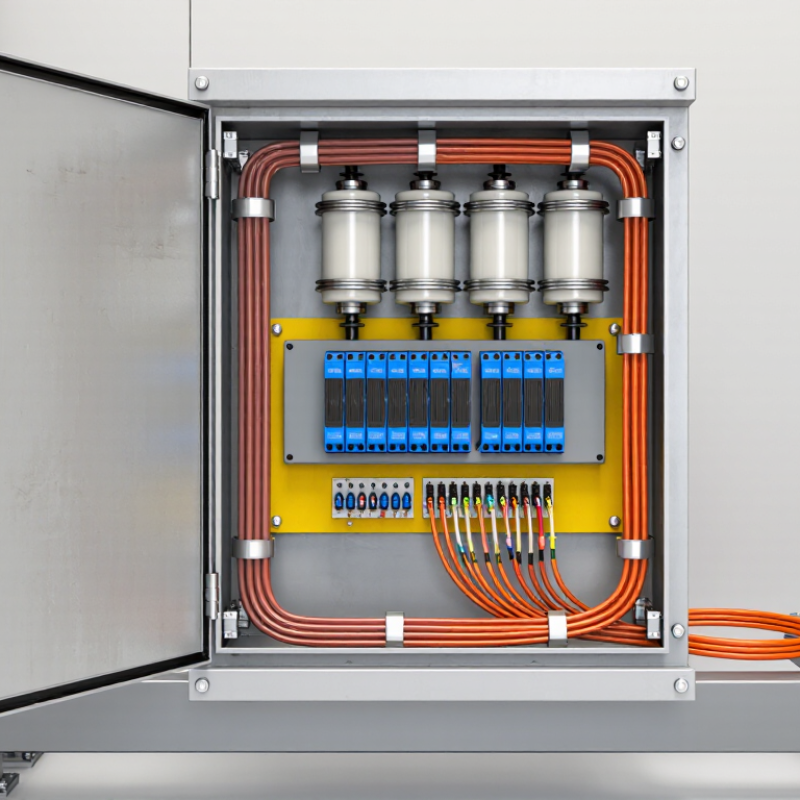
Definition and Role: Distributing 400–800 V DC Power in High-Voltage Systems
A high-voltage distribution box manages 400–800 V DC power inside modern high-voltage systems. It receives energy from a battery pack and routes it to inverters, charging equipment, heaters, and compressors. Internal contactors connect or isolate each circuit. Fuses limit damage during severe faults. Pre-charge components reduce current surges before major contactors close. Sensors monitor voltage, current, temperature, and insulation conditions.
The need is growing. The International Energy Agency’s Global EV Outlook 2024 reported nearly 14 million electric car sales worldwide in 2023. Electric cars represented about 18% of global new-car sales. More vehicles now require compact, carefully controlled power distribution. A well-designed box shortens cable paths and reduces electrical losses. It also supports safer service procedures by isolating high-voltage branches.
Small details matter. A loose busbar connection can create heat within minutes. Moisture, vibration, and poor sealing can weaken long-term reliability.
The simple definition is incomplete. A distribution box is also a protection, measurement, and maintenance interface. However, voltage alone does not prove system safety. Actual performance depends on insulation coordination, fault detection, cooling, enclosure design, and validated assembly. IEC 60664 principles can guide insulation decisions, but field conditions may expose weaknesses that laboratory tests miss. Engineers should question clean test results when real vehicles face dust, road shock, and repeated thermal cycles.
Core Components: Busbars, Fuses, Contactors, Sensors, and Insulation Barriers
What Is a High Voltage Distribution Box?
Core Components: Busbars, Fuses, Contactors, Sensors, and Insulation Barriers
A high voltage distribution box routes electrical power from a source to several protected circuits. It commonly serves batteries, inverters, motors, or auxiliary systems. Inside, compact parts must manage high current, heat, vibration, and electrical separation. The enclosure may look simple. Its internal layout is not.
Busbars form the main conductive paths. They usually use copper or aluminum and need controlled spacing between energized sections. Fuses interrupt circuits when current rises beyond a safe limit. Their rating must match the cable, load, and fault conditions. Contactors act like electrically controlled switches. They connect or isolate high voltage during startup, shutdown, or emergency conditions. Poor contact pressure can create heat. That small detail matters.
Sensors monitor voltage, current, temperature, or insulation status. Their readings support control decisions and maintenance checks. Insulation barriers separate live conductors from the housing and nearby circuits. They may use molded plastics, coated supports, or layered barriers. During inspections, I look for discoloration, loosened fasteners, cracked supports, and moisture marks. These clues often appear before a serious failure. A clean box can still contain a weak connection. That is easy to miss.
Designers should also consider creepage, clearance, thermal expansion, sealing, and service access. A sensor may be accurate, yet poorly positioned. A fuse may protect the circuit, but complicate replacement. Even experienced teams sometimes optimize space too aggressively. That choice deserves another review. Reliability comes from measured details, verified materials, and repeatable inspection practices.
Electrical Ratings: Up to 1,000 V AC or 1,500 V DC Under IEC Classifications
A high voltage distribution box routes electrical power between an incoming source and several protected circuits. Inside, busbars, fuses, contactors, terminals, and monitoring parts share one enclosed structure. The enclosure also limits accidental contact and helps control heat, dust, and moisture.
Its key electrical rating may reach 1,000 V AC or 1,500 V DC under relevant IEC classifications. AC and DC ratings are not interchangeable. A 1,000 V AC system can create different insulation stress than a 1,500 V DC system, especially during switching. Engineers must check voltage, current, frequency, short-circuit strength, and pollution level together. The voltage label alone is insufficient.
Clearance and creepage distances deserve close attention. A box installed near a battery pack may need wider spacing than one used in a clean control cabinet. Insulating barriers, grounding paths, cable glands, and torque-controlled terminals also affect safety. During inspection, technicians should look for heat marks, loose conductors, cracked insulation, and moisture trails. Small defects matter.
The stated rating assumes correct installation and maintenance. It does not guarantee safe operation in every environment. IEC compliance should be supported by design records, temperature-rise tests, dielectric tests, and documented production checks. In practice, specifications can be misunderstood, particularly when AC and DC values appear on the same label. That detail deserves a second review.
Safety Design: Isolation Monitoring, Precharge Control, and IP67 Enclosure Protection
What Is a High Voltage Distribution Box?
A high voltage distribution box routes electrical power between the battery, inverter, charger, and auxiliary loads. Its safety design matters as much as its switching capacity. During field inspections, technicians often look for clear isolation paths, secure terminals, and signs of heat stress. Small details can reveal larger risks.
Isolation monitoring measures resistance between the high voltage circuit and the vehicle chassis. If insulation weakens, the monitor can trigger an alert before a dangerous fault develops. The system should also support a controlled shutdown, not only display a warning. Precharge control protects capacitors inside the inverter and other power electronics. A precharge resistor gradually raises voltage before the main contactors close. Without this step, inrush current may weld contacts or damage components. Timing, voltage feedback, and contactor feedback must work together. A rushed design can pass a bench test but fail under temperature changes.
IP67 protection adds another layer. The enclosure must resist dust and temporary water immersion under defined test conditions. Proper gaskets, cable seals, and connector locking features are essential. Drainage and pressure changes deserve attention too. Condensation can still appear inside a well-sealed box. That detail is easy to overlook. Engineers should verify sealing after vibration, thermal cycling, and service access. One inspection is not enough. Reliable protection comes from documented tests, careful assembly, and realistic maintenance procedures.
High Voltage Distribution Box Safety Design
IEC 60529 ingress-protection codes commonly used for enclosed electrical equipment. The first digit represents protection against solid particles, while the second digit represents protection against water.
Key point: IP67 indicates a dust-tight enclosure and protection against temporary immersion in water up to 1 metre for up to 30 minutes. Isolation monitoring and precharge control are additional electrical safety functions and are not represented by the IP code.
Applications and Testing: EV, Energy Storage, and Industrial Systems Compliance Criteria
What Is a High Voltage Distribution Box?
Applications and Testing: EV, Energy Storage, and Industrial Systems Compliance Criteria
A high voltage distribution box routes, protects, and isolates electrical power. In electric vehicles, it manages battery output, pre-charge circuits, contactors, and auxiliary loads. The IEA Global EV Outlook 2024 reported nearly 14 million electric car sales in 2023. That volume increases pressure on consistent high-voltage testing.
For EV systems, engineers typically verify insulation resistance, dielectric withstand, creepage, clearance, thermal performance, and high-voltage interlock operation. A welded contactor can create a dangerous hidden fault. Energy storage systems require additional attention to short-circuit strength, enclosure protection, temperature rise, and emergency isolation. The IEA Batteries and Secure Energy Transitions report stated that battery demand reached about 750 GWh in 2023. However, installation conditions vary widely, so one test profile cannot fit every cabinet.
Industrial applications often reference IEC 61439, IEC 62477-1, and relevant machine safety requirements. Tests should include visual inspection, torque verification, protective bonding, functional switching, and fault simulation. Test records need serial numbers, instruments, calibration dates, and acceptance limits. Small gaps in records matter.
Tips: Define the voltage range before selecting components. Measure insulation after assembly, not only before installation. Check connectors after vibration testing. Review creepage distances at maximum pollution conditions. A practical improvement is adding temperature sensors near terminals, although sensor placement can still miss local heating. Independent laboratory testing strengthens reliability, but it does not replace site-specific risk assessment or local compliance review.