
Choosing the best Curing Adhesive is not simply a race for maximum bond strength. It is a process decision involving materials, temperature, speed, safety, and long-term reliability.
Market evidence shows why this choice matters. MarketsandMarkets estimated the global adhesives and sealants market at approximately USD 78.6 billion in 2023. It projects growth to about USD 92.3 billion by 2028. The report links this expansion to electronics, automotive, packaging, and construction demand. These sectors require faster production and more dependable bonding. (MarketsandMarkets, Adhesives & Sealants Market, 2023)
The numbers look convincing.
However, market growth does not identify the right formulation for your assembly. A supplier may recommend a two-part epoxy for metal, yet your production line may need UV curing. A transparent plastic component may yellow under heat. A moisture-sensitive substrate may fail before the adhesive fully cures. These small details often decide whether a bond survives vibration, humidity, or repeated thermal cycling.
Professional evaluation should include open time, cure depth, viscosity, shrinkage, adhesion testing, and storage stability. ASTM D1002 can support lap-shear comparisons for metallic specimens, while ASTM D3359 helps assess coating adhesion through cross-cut testing. These tests are useful, but they cannot reproduce every field condition. That limitation deserves attention.
A reliable selection method combines supplier technical data, controlled trials, and documented failure analysis. Ask for test conditions, not only headline performance. Examine safety data and compliance requirements before production approval. The strongest adhesive on paper may be the wrong choice in practice. Experience still matters, and even experienced teams can overlook surface preparation.
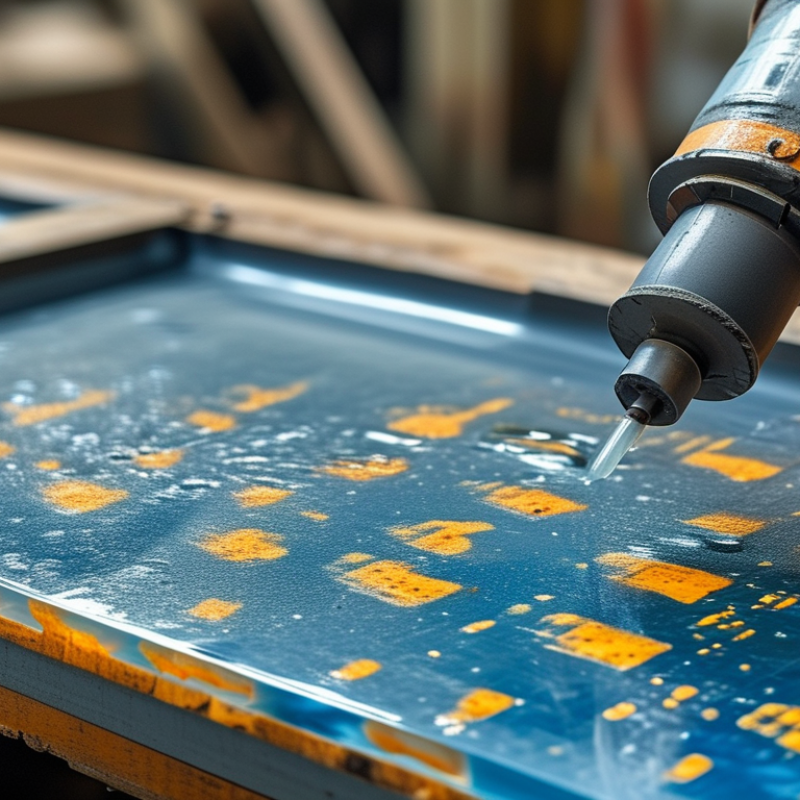
When selecting a curing adhesive, start with the curing mechanism, not the label. Light-curing adhesives harden quickly under suitable ultraviolet or visible light. They work well for transparent parts, but shaded areas may remain soft. Two-part epoxies cure through a chemical reaction and provide strong, durable bonds. They handle heat, chemicals, and wider bond gaps, although mixing requires accurate control. Moisture-curing adhesives suit flexible joints and uneven surfaces. They often cure slowly in dry environments.
Core properties should match the assembly conditions. Viscosity controls whether the adhesive flows, fills gaps, or stays on a vertical surface. Hard adhesives resist movement and support rigid parts. Flexible grades absorb vibration and thermal expansion more effectively. Check tensile strength, elongation, temperature resistance, and chemical compatibility in the technical data. Cure depth matters too. A thick bead may cure differently from a thin film.
Test the actual materials before production. Surface energy, cleanliness, and joint geometry can change performance dramatically. I have seen a strong adhesive fail because the bonded area was too small. That mistake is easy to repeat. Prepare sample joints, measure cure time, and inspect failures rather than relying only on advertised strength. No adhesive is perfect. A slower system may offer better reliability, while a fast system may sacrifice working time. Choose the property that protects the joint’s weakest point.

How to Choose the Best Curing Adhesive?
Choosing a curing adhesive begins with the materials, not the product label. Glass, aluminum, rubber, and engineered plastics react differently during bonding. Check surface energy, porosity, flexibility, and chemical resistance before selecting an adhesive. A rigid adhesive may hold metal securely but crack when bonded to a flexible polymer. Thermal expansion also matters. Two joined materials can expand at different rates during heating, creating hidden stress.
Tips: Clean surfaces with a compatible method, then allow them to dry fully. Roughen smooth surfaces only when the material permits it. Measure the bond gap carefully. A thicker layer may cure unevenly or remain soft inside. Check the technical data sheet for cure temperature, working time, and full-strength time. A small test coupon is worth the effort.
Curing conditions must match the assembly process. Light-curing formulas need reliable light access, while heat-curing types require controlled temperature exposure. Moisture-curing adhesives can perform well in damp environments, but humidity may change the working time. Always test the actual materials, including coatings and surface treatments. Laboratory results can look excellent, yet production parts may fail after vibration or temperature cycling. That is where selection becomes less certain. Recheck the bond after aging, not only after initial curing. One overlooked coating can change everything.
Choosing a curing adhesive starts with the production environment, not the advertised cure speed. In practical trials, compare fixture time, full cure time, and bond strength separately. A part may hold after two minutes but remain chemically immature for hours.
UV curing works well when light can reach the adhesive joint directly. It suits clear components and automated assembly. Heat curing can provide consistent results, but it may damage heat-sensitive plastics or increase energy use. Moisture curing handles enclosed areas better, although humidity strongly affects its performance. Two-part systems offer reliable gap filling, yet mixing accuracy and working life demand careful control.
I once treated “fast cure” as the best option. That choice created rushed handling and uneven bonds.
Processing conditions can change results more than the adhesive itself.
Record surface cleanliness, gap size, temperature, humidity, and clamping pressure during testing. A 0.2-millimeter gap may cure differently from a thin film. Metal, glass, and polymer surfaces may also require different preparation.
Use sample parts from the actual production line, not only laboratory coupons. Measure bond strength after the intended aging period, including heat, moisture, and vibration exposure.
Small details matter. The most suitable adhesive balances curing method, speed, equipment limits, operator control, and the required service life.
Yet some test results remain difficult to explain, so repeat trials before changing the process.
Choosing a curing adhesive starts with the finished joint, not the uncured liquid. Check lap-shear strength under ASTM D1002, then test peel, impact, and fatigue resistance. One impressive number is not enough. A joint holding 25 MPa in a dry laboratory may weaken after moisture, heat, or vibration exposure.
Use realistic conditioning cycles. Common screening includes 85°C and 85% relative humidity, thermal cycling, salt exposure, and chemical contact. However, accelerated aging does not equal service life. The ISO 9142 framework supports environmental conditioning, but each application still needs field-relevant validation. Record failure location, not only peak force. Cohesive failure inside the adhesive often indicates better interface control than clean separation.
Environmental resistance is becoming more important in transportation and electronics. The International Energy Agency reported over 14 million electric-car sales in 2023, creating more demand for lightweight, vibration-resistant assembly methods. Grand View Research estimated the global adhesives and sealants market at approximately 77 billion dollars in 2023. Market growth, however, does not prove product reliability. I would compare cured samples after identical preparation, cure time, and surface cleaning. Small preparation errors matter. I have seen excellent formulations fail because contamination was overlooked. A practical selection should balance bond strength, durability, cure depth, repair time, and worker exposure controls. The cheapest test plan can become the most expensive mistake.
Comparative evaluation of representative adhesive classes using bond strength, durability, and environmental resistance.
The bond-strength score is normalized from representative lap-shear strength values of 12–30 MPa. Durability represents the percentage of initial strength retained after prolonged heat and humidity exposure. Environmental resistance represents strength retention after combined temperature, moisture, and chemical cycling. Higher scores indicate stronger overall performance, but final selection should also consider cure speed, substrate compatibility, flexibility, and process requirements.
A reliable curing adhesive starts with controlled testing, not attractive packaging. Check the technical data sheet for cure time, temperature limits, viscosity, and substrate compatibility. Test small samples using the real materials and joint design. For metal bonds, ASTM D1002 provides a recognized lap-shear testing method. Record mixing ratios, open time, humidity, and failure type. A neat bead can still hide a weak bond.
Application conditions matter. Clean surfaces with a suitable method, then allow them to dry completely. Apply a consistent bead without trapping air. Measure bond-line thickness with spacers when precision matters. Follow the stated cure schedule, and do not move the parts too early. The U.S. Bureau of Labor Statistics reported 2.6 million nonfatal workplace injuries and illnesses in private industry during 2023. That figure supports disciplined handling, ventilation, and personal protective equipment. It does not prove every adhesive process is dangerous, but it deserves attention.
Tips: Keep the safety data sheet nearby. Use nitrile gloves only when chemical compatibility is confirmed. Store containers sealed, upright, and within the stated temperature range. Mark opening dates and rotate older stock first. Never return contaminated adhesive to its original container. Inspect for skinning, separation, or unusual odor before use. I sometimes find storage checks are skipped under production pressure. That is a practical weakness worth correcting. Fresh-looking material is not always usable.


All of Hapco's formulations are completely free of Mercury.

Hapco has been in business for over 50 years!
*NOTICE* Hapco will be will be closed on Monday, May 26th, in observance of Memorial Day. |
| Cookie | Duration | Description |
|---|---|---|
| cookielawinfo-checkbox-analytics | 11 months | This cookie is set by GDPR Cookie Consent plugin. The cookie is used to store the user consent for the cookies in the category "Analytics". |
| cookielawinfo-checkbox-functional | 11 months | The cookie is set by GDPR cookie consent to record the user consent for the cookies in the category "Functional". |
| cookielawinfo-checkbox-necessary | 11 months | This cookie is set by GDPR Cookie Consent plugin. The cookies is used to store the user consent for the cookies in the category "Necessary". |
| cookielawinfo-checkbox-others | 11 months | This cookie is set by GDPR Cookie Consent plugin. The cookie is used to store the user consent for the cookies in the category "Other. |
| cookielawinfo-checkbox-performance | 11 months | This cookie is set by GDPR Cookie Consent plugin. The cookie is used to store the user consent for the cookies in the category "Performance". |
| viewed_cookie_policy | 11 months | The cookie is set by the GDPR Cookie Consent plugin and is used to store whether or not user has consented to the use of cookies. It does not store any personal data. |