Top Industrial Cable Reel Types for Global Buyers
Industrial Cable Reel selection affects more than storage. It influences cable protection, handling speed, and safe deployment across factories, construction sites, ports, and utility projects. A reel that suits a stationary workshop may be unsuitable for a mobile power unit. Drum material, winding capacity, braking, mounting, and exposure to dust or moisture all matter.
The market context is expanding. The International Energy Agency’s 2023 report, Electricity Grids and Secure Energy Transitions, says annual grid investment must rise above $600 billion by 2030 to meet stated transition needs. More grid work means more cable to transport, manage, and install. It does not, by itself, prove demand for any particular reel type. Fatih Birol, the IEA’s executive director, described the wider shift: “The world is entering the Age of Electricity.” He is an energy-sector authority, not a cable-reel specialist. No verifiable quotation from a named Industrial Cable Reel specialist was supplied, so attributing one here would be misleading.
This guide compares major reel types for global buyers, including manual, spring-driven, motorized, portable, and heavy-duty models. It focuses on practical differences: cable length, load, operating environment, and maintenance needs. A detail worth checking twice: reel capacity claims can vary with cable diameter and winding method. Buyers should confirm dimensions and duty ratings with manufacturers before ordering. A neat product table cannot replace that step.
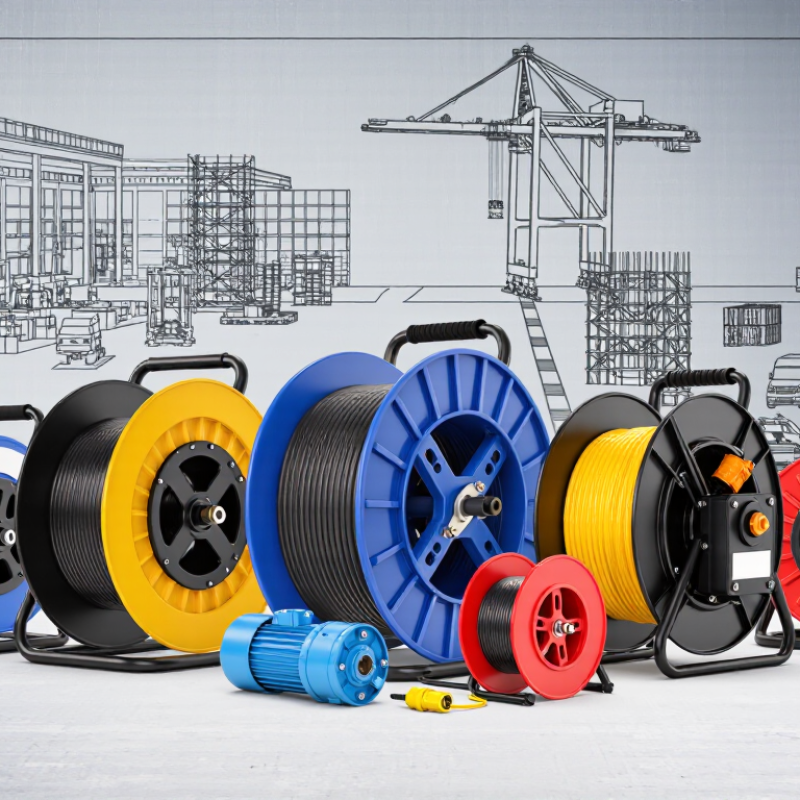
Understanding the Role of Industrial Cable Reels
Industrial cable reels do more than hold spare cable. They control how power or signals reach moving equipment, including cranes, service vehicles, and production lines. A suitable reel pays out cable steadily and rewinds it without dragging it across floors. That matters in a busy workshop. Less snagging, less wear. Reels also keep cable organized between shifts, making inspection and replacement easier.
The operating method shapes the reel’s role. Spring-driven reels suit repeated movement over a defined travel distance, while motorized units can handle heavier cables or longer runs. Manual reels may be practical for occasional use. For rotating applications, a slip ring can maintain electrical contact as the drum turns. Its rating must match the circuit and operating conditions. Cable length, conductor size, bend radius, speed, and duty cycle all affect selection. A reel that is too small can stress cable; an oversized one may add cost and mounting burden.
The work area matters too. Dust, moisture, heat, and impact can change enclosure and material needs. Check how the reel will be mounted, and where the cable enters and exits. These details are easy to miss on a drawing. Real installations are rarely as neat as the plan. Verify travel distance and cable routing on site before ordering, since a few centimeters can alter the payout path.
Classifying Reels by Rewinding Mechanism
For industrial cable reels, the rewinding mechanism affects handling effort, cable life, and installation requirements. Hand-cranked reels are straightforward and suit shorter cables or occasional use. Operators control the winding speed directly. That control helps around delicate cables, but repeated cranking can become tiring with heavy cable or frequent cycles.
Spring-driven reels rewind automatically when the cable is released. They are useful at workstations where cable must extend and retract often. Check the spring’s rated capacity, cable length, and mounting position before selecting one. A poorly matched spring may retract too forcefully or fail to take up cable evenly. Small details matter.
Motor-driven reels handle longer cables and demanding duty cycles with powered winding. They may need suitable power, controls, and protection for the installation environment. Compare cable weight, operating frequency, and required payout length, not just reel capacity. There is no neat winner. Field conditions can differ from planning assumptions, and an otherwise suitable reel may be awkward to service or position. Verify the actual routing path and leave room for inspection before specifying the mechanism.
Top Industrial Cable Reel Types for Global Buyers — Classifying Reels by Rewinding Mechanism
Manual reels are rewound by hand; spring-rewind reels retract using stored spring force; motorized reels use a powered drive. This chart compares mechanism characteristics, not performance ratings. “Yes” means the characteristic applies.
Comparing Manual, Spring-Driven, and Motorized Reels
Top Industrial Cable Reel Types for Global Buyers
Comparing Manual, Spring-Driven, and Motorized Reels
Industrial cable reels differ in how they manage cable and how often workers use them. Manual reels suit occasional use, short runs, and locations without a power supply. An operator turns a handle to wind the cable onto the drum. Simple and dependable. Still, retrieving a long, heavy cable can become tiring over a full shift. Check drum capacity, cable diameter, and mounting space before selecting one.
Spring-driven reels retract cable automatically after it is pulled out. They work well at workstations, service bays, and equipment points where cable is extended repeatedly. Check that the cable length, spring force, and locking mechanism match the task. Excessive retraction force can cause a sharp rewind; weak force may leave slack. Motorized reels suit longer cables, heavier loads, or frequent operation. They require compatible power and controls, plus room for maintenance. Their added cost may not pay off for occasional use.
Tips: Measure the actual cable route, including bends and the distance to the connection point. Inspect the reel’s mounting surface and leave clearance for drum rotation. If possible, test cable handling under typical load; a specification sheet cannot show every awkward reach or snag.
Exploring Reels for Power, Data, and Fluid Lines
Power reels handle the changing reach and weight of supply cables on cranes, service vehicles, and factory equipment. Motorized reels suit frequent movement; spring-driven models can work for lighter, shorter runs. The International Energy Agency’s 2023 report, Electricity Grids and Secure Energy Transitions, estimates that 80 million kilometres of grids must be added or refurbished by 2040. That expansion makes cable handling and maintenance practical concerns, not minor details. Check cable mass, travel distance, duty cycle, and the reel’s rated capacity before choosing.
Data lines need different care. Fiber and Ethernet cables can suffer from excessive bending, crushing, or electrical interference. A reel should respect the cable maker’s minimum bend radius, and powered systems may need suitable slip rings or data-rated rotary connections. Small details matter. A cable that looks intact may still deliver unreliable signals after repeated tight winding.
Fluid lines call for hose reels matched to pressure, temperature, fluid compatibility, and required flow. Swivel joints and seals deserve close inspection, especially where hoses move through dusty or wet work areas. Multi-passage reels can carry separate services, but shared space does not mean shared compatibility. A useful selection process starts with the actual line specifications and movement pattern. It is tempting to choose by reel diameter alone; that shortcut can miss the real wear point.
Choosing a Reel for Operating Conditions and Global Standards
Choosing an industrial cable reel starts with the route, load, and environment—not the catalogue photo. The International Energy Agency’s 2023 Electricity Grids and Secure Energy Transitions report says annual grid investment needs to rise from about USD 300 billion to over USD 600 billion by 2030. That signals expanding infrastructure, but it does not prescribe a reel type. Heat, dust, moisture, cable weight, and winding speed still determine the practical choice. Small details matter.
Open steel drums suit heavy-duty handling and visual inspection. Enclosed reels can better shield cable from dirt and splash, while spring-driven or motorized reels suit frequent movement. Match drum diameter to the cable’s minimum bend radius, and check the reel’s rated load and duty cycle. For global projects, verify applicable requirements, such as IEC 61316 for construction-site cable reels, and confirm enclosure ratings under IEC 60529 where relevant. Standards depend on the product and application.
Tips: Measure the full cable length under real working conditions. Check connector clearance and mounting space, too. Ask suppliers for test reports and material details, not just a standards logo. A specification can look complete on paper and still miss the site’s tight turning space. That deserves a second check.