Why Choose Mild Steel Pipe for Global Projects?
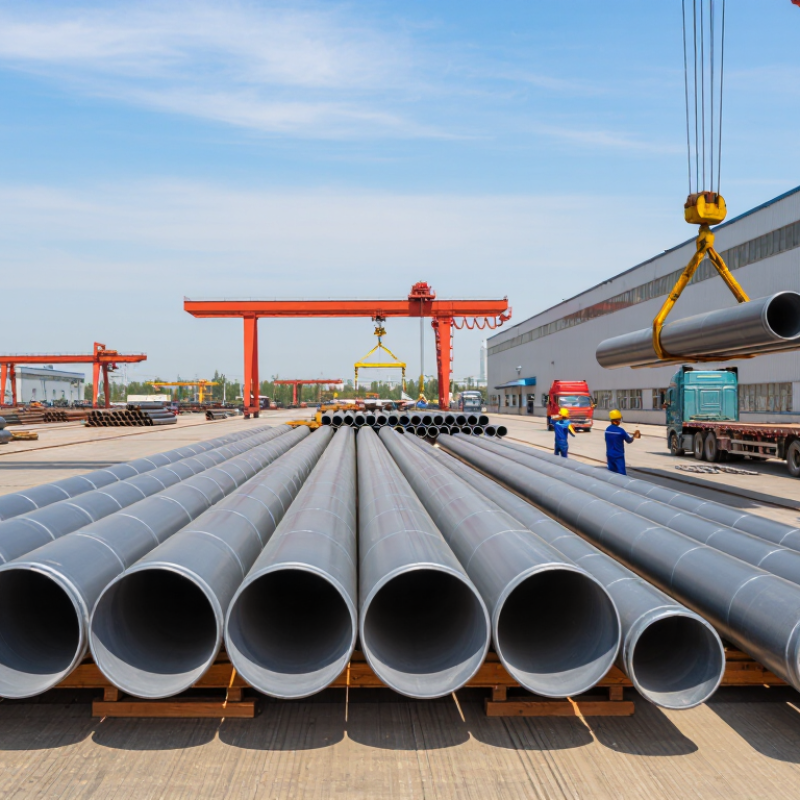
Global infrastructure demands materials that remain practical under pressure, distance, and changing site conditions. Mild Steel Pipe often meets that need through its balanced strength, weldability, and cost. It carries water, air, oil, structural loads, and industrial fluids across many project environments. A six-meter pipe can leave a mill, cross several borders, and arrive ready for cutting, coating, or installation.
Materials scientist Professor Michael F. Ashby writes, “The objective of design is to create products that perform their function at minimum cost.” This principle explains the continuing value of Mild Steel Pipe. Its carbon content supports reliable fabrication, while standard dimensions simplify procurement and replacement. Engineers can select wall thickness, diameter, grade, and coating according to pressure, temperature, soil, and corrosion exposure. Experienced contractors also understand its limits. Unprotected steel can rust quickly in wet or saline conditions. Poor welding can weaken a connection.
That reality deserves attention.
Choosing Mild Steel Pipe is not simply a price decision. It requires verified mill certificates, dimensional inspection, traceability, and suitable international standards. Project teams should confirm testing requirements before shipment, not after delivery. They should also review local climate data and installation practices. In my view, the strongest case is practical rather than fashionable: this pipe is familiar, repairable, widely available, and adaptable. Still, it is not perfect. A cheaper specification may create higher maintenance costs later. Responsible selection balances initial budget, service life, safety, and evidence from qualified engineers.
Why Choose Mild Steel Pipe for Global Projects?
What Is Mild Steel Pipe?
Mild steel pipe is a carbon steel tube with a relatively low carbon content, commonly about 0.05% to 0.25%. Exact limits vary by grade and governing standard. This detail matters.
Lower carbon content usually improves weldability and makes fabrication easier. Workers can cut, bevel, and join the pipe with familiar workshop methods. ASTM A53, for example, defines requirements for carbon steel pipe used in mechanical and pressure applications.
The World Steel Association reported 1.89 billion tonnes of crude steel production in 2023. That enormous industrial base supports broad material availability and established processing capacity. Mild steel pipe is therefore practical for water lines, structural frames, air systems, and general industrial service.
It is not automatically corrosion-proof. Exposed pipe may need coating, lining, drainage design, or scheduled inspection. A poorly protected pipe can show rust around welds and threaded connections first. Site experience often reveals this before a spreadsheet does.
Designers should verify pressure, temperature, wall thickness, chemistry, and local code requirements. “Mild steel” is a useful commercial term, but it is not a complete engineering specification. That distinction is easy to overlook.

Mild steel pipe remains practical for global projects because its properties suit demanding, varied environments. Its balanced strength and ductility help it resist everyday loads without becoming overly difficult to fabricate. On a construction site, crews can cut, drill, bend, and weld it with familiar equipment. This reduces training demands and supports faster repairs. Small differences still matter.
For water, air, and structural service, engineers can select suitable grades, wall thicknesses, and connection methods. Standard dimensions simplify procurement across regions and make replacement sections easier to source. In project reviews, clear mill certificates, dimensional checks, and weld inspections improve material traceability. These records support quality decisions when suppliers and contractors work across different countries. Reliable documentation is not glamorous, but it prevents expensive confusion.
Cost is another important property. Mild steel pipe is generally accessible, widely recyclable, and economical for large quantities. Its weldability can reduce installation time, especially where many joints require fitting. However, bare steel is vulnerable to corrosion, particularly near saltwater, humid storage areas, and chemically active soil. Protective coatings, internal linings, drainage details, and scheduled inspections must match the service conditions. A coating can fail at one damaged edge. That small defect may spread under trapped moisture. Engineers should avoid treating mild steel as a universal solution; correct thickness, protection, and maintenance planning decide whether it performs reliably.
Mild steel pipe supports infrastructure because it combines practical strength, weldability, and broad availability. World Steel Association data reports 1,888.2 million tonnes of crude steel production in 2023. This scale supports stable material access across many markets. Contractors can cut, weld, and assemble pipe sections near the worksite. That flexibility matters when roads, water networks, and industrial facilities require different layouts.
Water transmission is a clear example. The OECD Environmental Outlook to 2050 projects global water demand may rise by 55% between 2000 and 2050. Mild steel pipe can carry treated water, irrigation flows, and wastewater when engineers select suitable linings and protection systems. It also serves as structural columns, fire-service piping, compressed-air lines, and supports for mechanical equipment. A 600-millimetre pipe crossing a muddy construction trench shows its value: strong, repairable, and familiar to local crews.
It is not perfect. Unprotected steel can corrode, especially in wet soil or coastal air. Engineers must assess wall thickness, coatings, linings, weld quality, and inspection access. The Global Infrastructure Hub estimated a global infrastructure investment need of 94 trillion US dollars from 2016 to 2040. That pressure can encourage rapid purchasing, but speed should not replace design review. A cheaper pipe may create higher maintenance costs later. Small specification errors can become large field problems.
Mild steel pipe supports water transmission, low-pressure gas distribution, structural works, and general industrial systems. The chart compares minimum specified yield strengths from widely used international pipe standards.
Values are minimum specified yield strengths in megapascals (MPa): ASTM A53 Grade B, API 5L Grade B, EN 10217-1 P235TR1, and JIS G3452 SGP. Actual project selection should also consider wall thickness, diameter, corrosion conditions, temperature, and applicable local codes.
Why Choose Mild Steel Pipe for Global Projects?
For global projects, mild steel pipe offers practical strength, weldability, and broad availability. Its value depends on controlled manufacturing, not price alone. The governing specification should be agreed before production begins. Common references include ASTM, ASME, EN, and ISO standards. However, these standards are not interchangeable. Engineers must confirm grade, wall thickness, diameter, pressure class, and application requirements.
Quality control should begin with verified raw materials and heat numbers. Each batch needs traceable records, including chemical composition and mechanical test results. Dimensional checks should measure outside diameter, wall thickness, straightness, and pipe length. Welded pipe also requires visual inspection and suitable non-destructive testing. Ultrasonic or radiographic examination may reveal flaws invisible from the surface. Factory acceptance records should match the purchase specification exactly.
Documentation matters greatly at customs and on construction sites. A complete material certificate, inspection report, and packing list can prevent costly delays. Protective coating, end caps, and moisture-resistant packaging also deserve attention. Small details matter. No checklist catches everything. A certificate may look complete but still contain an incorrect heat number or missing test value. That weakness deserves a second review. Independent inspection can improve confidence, especially when several countries, contractors, and regulatory systems are involved. Compliance is not a final stamp; it is a traceable process from steelmaking to installation.
A practical comparison of recognized standards, inspection methods, and compliance considerations for international mild steel pipe projects.
| Project Dimension | Recognized Reference | Typical Requirement or Practice | Quality-Control Evidence | International Project Value |
|---|---|---|---|---|
| Material Definition | Carbon steel / mild steel specifications | Low-carbon steel is commonly selected where moderate strength, weldability, formability, and cost efficiency are required. The exact chemical and mechanical limits depend on the applicable product standard. | Heat number traceability, chemical analysis, tensile testing, yield-strength testing, and elongation records. | Provides a familiar material platform that can be matched to regional design codes and procurement specifications. |
| Pipe Manufacturing Standard | ASTM A53/A53M | Covers welded and seamless steel pipe commonly used for mechanical and pressure-related applications, including water, air, and steam service within the specified limits. | Dimensional inspection, visual examination, mechanical tests, and the applicable hydrostatic or nondestructive examination required by the specification. | Widely recognized in projects using U.S.-based or ASTM-referenced procurement documents. |
| Pressure-Service Standard | ASTM A106/A106M | Specifies seamless carbon steel pipe for high-temperature service, with grades commonly identified as A, B, and C. Design pressure and temperature limits must be verified separately. | Chemical analysis, tensile and bend or flattening tests where applicable, dimensional checks, and hydrostatic or approved nondestructive testing. | Supports process, utility, and thermal-service projects that require a recognized high-temperature pipe specification. |
| General-Purpose Threaded Pipe | EN 10255 | Covers suitable non-alloy steel tubes for welding and threading, with defined series, outside dimensions, wall thicknesses, and delivery conditions. | Verification of dimensions, mass, surface condition, mechanical properties, and required leak or pressure testing according to the ordered type. | Useful for European and international building-service, water, and mechanical-installation projects. |
| Pipeline Transportation | ISO 3183 | Applies to steel pipe for pipeline transportation systems and includes requirements that may cover manufacturing, testing, inspection, and delivery documentation. | Product identification, chemical and mechanical testing, dimensional checks, weld inspection where applicable, and traceable inspection records. | Provides a globally recognized reference for pipeline procurement, subject to project design and regulatory requirements. |
| Welding Quality | ISO 3834 and project welding procedures | Welding activities should be controlled through qualified procedures, competent personnel, approved consumables, and documented inspection stages. | Welding procedure qualification records, welder qualifications, weld maps, visual inspection, and applicable ultrasonic, radiographic, magnetic-particle, or liquid-penetrant testing. | Reduces weld-related risk and improves acceptance consistency across different countries and inspection teams. |
| Dimensional Accuracy | Applicable ASTM, EN, or ISO product tolerance requirements | Outside diameter, wall thickness, length, straightness, ovality, end condition, and weight must conform to the selected standard and purchase order. | Calibrated gauges, micrometers, ultrasonic wall-thickness measurement, length checks, and inspection reports linked to heat or batch numbers. | Improves fit-up, installation speed, joint reliability, and compatibility with valves, flanges, and fittings. |
| Pressure and Leak Testing | Product standard and approved inspection and test plan | Hydrostatic testing or an allowed nondestructive alternative is selected according to the pipe standard, service conditions, diameter, wall thickness, and contract requirements. | Recorded test pressure, holding time, test medium, equipment calibration status, and acceptance result. | Creates objective evidence that the supplied pipe meets the specified integrity requirements before shipment. |
| Corrosion Protection | Project coating specification; ISO 12944 for protective paint systems | Protection may include mill coating, external paint, galvanizing, lining, wrapping, cathodic protection, or a combination selected for the environment. | Surface-preparation checks, cleanliness assessment, coating-thickness readings, holiday detection where specified, and visual inspection. | Allows the same base material to be adapted for indoor, buried, marine, humid, or industrial environments. |
| Management-System Control | ISO 9001 quality-management principles | A controlled quality system should address purchasing, production, inspection, nonconformity management, corrective action, document control, and continual improvement. | Approved procedures, calibration records, internal audits, nonconformance reports, corrective-action records, and release documentation. | Improves process consistency and simplifies supplier evaluation for multinational project teams. |
| Material Traceability | EN 10204 inspection documents | The required inspection-document type should be stated in the purchase order. A 3.1 certificate normally provides manufacturer-issued results for the supplied product; 3.2 involves additional validation by an authorized inspector or purchaser’s representative. | Certificate-to-product matching, heat-number marking, batch records, test results, and controlled release approval. | Supports audits, customs documentation, site receiving, and future maintenance investigations. |
| Regulatory Compliance | Local pressure-equipment, construction, water, fire, and environmental regulations | Product-standard compliance alone may not satisfy legal requirements. The project must confirm applicable national codes, approved materials, pressure classifications, and installation rules. | Compliance matrix, design calculations, certificates, third-party inspection records, and authority or consultant approvals where required. | Prevents specification gaps when one supply chain serves multiple jurisdictions. |
| Logistics and Site Handling | Project packing and shipping requirements | Pipe ends, threads, coated surfaces, and identification markings should be protected during lifting, storage, inland transport, and ocean shipment. | Packing-list verification, marking inspection, photographic records, loading checks, and receiving inspection at the project site. | Reduces transit damage, installation delays, and disputes between suppliers, freight providers, and contractors. |
Mild steel pipe remains practical for global infrastructure because its purchase cost is usually lower than stainless or alloy alternatives. World Steel Association data recorded 1.89 billion tonnes of crude steel production in 2023. That scale supports broad supply and replacement access. Standard outside diameters also simplify procurement, stacking, and container planning. UNCTAD’s Review of Maritime Transport 2024 states that ships carry over 80% of global trade by volume. Efficient packing matters when projects cross oceans.
Installation can be economical, especially where local crews already understand cutting, welding, and field alignment. Mild steel is forgiving during fabrication. Not always, though. Poorly prepared joints can create delays, rework, and safety risks. Clear welding procedures, inspection points, and lifting plans reduce those problems. Smaller sections may also enter restricted sites more easily than heavier alternatives.
Long-term maintenance needs stricter attention. The NACE IMPACT study estimated global corrosion costs at about US$2.5 trillion annually, or roughly 3.4% of global GDP. It also reported that 15–35% of corrosion costs could be avoided through better management. A suitable coating system, drainage design, and scheduled thickness checks are therefore essential. Small scratches become serious defects near saltwater, buried joints, and chemical exposure. Budgeting only for the pipe is a common mistake. The cheapest option can become expensive when access, recoating, and shutdowns are ignored.


All of Hapco's formulations are completely free of Mercury.

Hapco has been in business for over 50 years!
*NOTICE* Hapco will be will be closed on Monday, May 26th, in observance of Memorial Day. |
| Cookie | Duration | Description |
|---|---|---|
| cookielawinfo-checkbox-analytics | 11 months | This cookie is set by GDPR Cookie Consent plugin. The cookie is used to store the user consent for the cookies in the category "Analytics". |
| cookielawinfo-checkbox-functional | 11 months | The cookie is set by GDPR cookie consent to record the user consent for the cookies in the category "Functional". |
| cookielawinfo-checkbox-necessary | 11 months | This cookie is set by GDPR Cookie Consent plugin. The cookies is used to store the user consent for the cookies in the category "Necessary". |
| cookielawinfo-checkbox-others | 11 months | This cookie is set by GDPR Cookie Consent plugin. The cookie is used to store the user consent for the cookies in the category "Other. |
| cookielawinfo-checkbox-performance | 11 months | This cookie is set by GDPR Cookie Consent plugin. The cookie is used to store the user consent for the cookies in the category "Performance". |
| viewed_cookie_policy | 11 months | The cookie is set by the GDPR Cookie Consent plugin and is used to store whether or not user has consented to the use of cookies. It does not store any personal data. |