
Skip to Content

Liquid Molding Monthly

Who Are the Top Control Relay Manufacturers in China?

A Control Relay may be small, but its failure can stop a production line, interrupt a pump, or leave a control cabinet silent. Buyers in China therefore need more than a low quotation. They need dependable coil performance, clearly rated contacts, consistent production, and evidence that each specification matches the application. The details matter: a relay chosen for a 24 VDC control circuit is not automatically suitable for a different coil voltage or switching load.

MarketsandMarkets’ Relay Market report estimates growth from approximately USD 9.2 billion in 2023 to USD 12.1 billion by 2028. This is a broad relay-market forecast, not a China-specific control-relay count, so it should be read as context rather than a purchasing guarantee. For product evaluation, IEC 61810-1 provides a relevant reference for electromechanical elementary relays. Buyers should still review current datasheets, test evidence, operating temperature, electrical life, and traceability with each manufacturer.

This guide compares Chinese manufacturers by product range, application experience, quality practices, and support—not by headline claims alone. A practical reminder captures the point: “Verify the load, coil, and switching duty before comparing prices.” No named expert quotation is included because no verifiable source was supplied; inventing one would weaken trust. That limitation matters. Supplier claims and market estimates both deserve scrutiny.
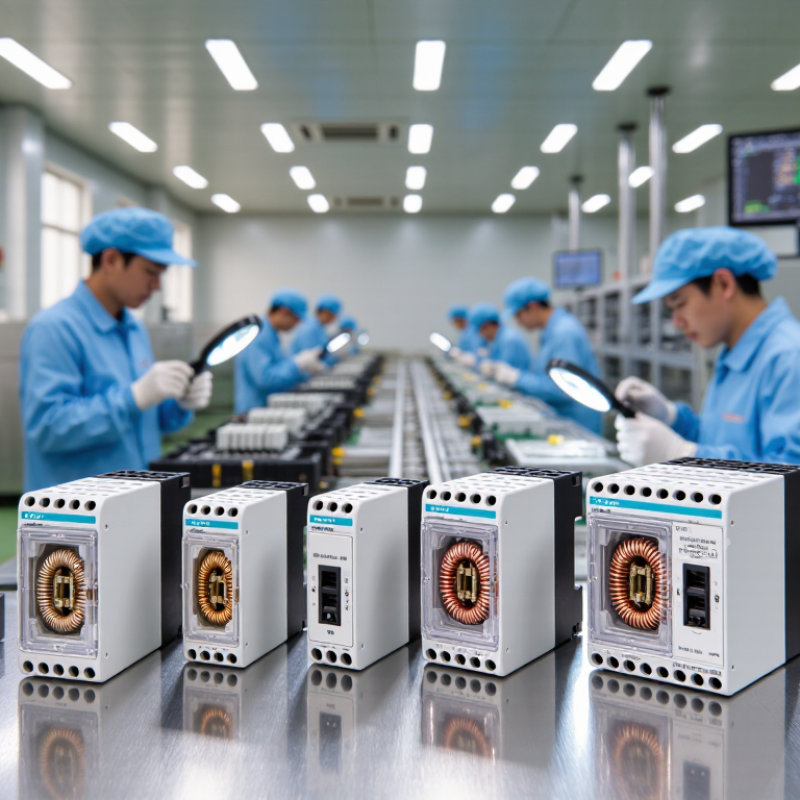
Who Are the Top Control Relay Manufacturers in China?

What Is a Control Relay and What Does It Do?

A control relay is an electrically operated switch. A small signal energizes its coil, creating a magnetic field that moves an armature and changes the contact positions. In a control cabinet, this lets a low-current command switch a separate circuit, such as a pump motor starter or an alarm lamp. The relay does not usually power the motor directly; it signals equipment designed to handle the load.

Simple, but important. Relays can provide electrical separation between control and switched circuits, depending on their design and wiring. A technician should check the coil voltage, contact arrangement, and rated load before installation. For example, a relay with a 24-volt DC coil may not operate from a 24-volt AC supply. Contact ratings matter, too, especially when switching motors, which can draw a brief surge at startup.

In a control panel, a relay may click when a sensor detects a full tank, then switch a pump off. That sound can help with basic troubleshooting, but it does not prove the contacts are healthy. Contacts can wear or become unreliable over time. When comparing control relay manufacturers in China, examine technical documentation, inspection practices, and support for the intended application. A neat product photo tells you very little.


How Is China's Control Relay Industry Organized?

China’s control relay industry is organized as a connected supply chain, not a single tier of factories. Upstream suppliers provide coils, contact materials, molded housings, springs, and insulation parts. Relay makers assemble these components into products for machinery, building controls, and power equipment. Some focus on high-volume standard models; others build customized units for specific control panels.

Production capability varies widely. Larger manufacturers may operate automated winding and assembly lines, while smaller factories often handle flexible orders and specialized designs. Distributors connect these producers with equipment makers and regional buyers. Engineering teams then match relay ratings, contact arrangements, and coil voltage to the application. The handoff can be imperfect: drawings may omit switching frequency or operating temperature, details that affect service life.

Quality checks are central to the structure. Buyers commonly examine coil resistance, contact continuity, insulation performance, and mechanical endurance. A sample relay can click correctly on a bench yet behave differently under heat, vibration, or frequent switching. That gap deserves attention. Factory audits and traceable test records help, but they do not replace application testing. A practical review includes the relay’s load type, panel space, wiring method, and expected maintenance interval.

How China’s Control Relay Industry Is Organized

A schematic view of the value chain, from component supply to end-user support.

The bars show sequence position only, not market size, market share, or a manufacturer ranking. The typical chain includes materials and component suppliers, relay production, assembly and testing, OEM or system integration, and distribution and after-sales support.

Which Companies Are Among China's Leading Control Relay Manufacturers?

Among China’s leading control-relay manufacturers, buyers typically encounter three groups: specialist relay producers, diversified electrical-control manufacturers, and factories offering OEM or custom production. They differ in contact configurations, coil-voltage options, enclosure designs, and testing depth. The International Federation of Robotics’ World Robotics 2024 report counted 4,281,585 industrial robots operating worldwide in 2023, up 10% year over year. This points to a growing automation base, but it does not rank relay suppliers or prove product quality.

A credible shortlist should be based on verifiable production and test evidence, not catalog size alone. Ask for rated-load test records, insulation data, expected electrical life, and traceability for a specific batch. Check whether stated ratings match your switching load and operating temperature. A polished sample may still differ from mass production. That detail is easy to miss.

Tips: Request samples with your actual coil voltage and load. Compare dimensions, terminal fit, switching noise, and temperature rise during repeated operation. Ask the supplier to explain any test limits in writing. If data are vague, pause and verify before ordering.

How Do Chinese Control Relay Manufacturers Differ in Products and Capabilities?

Chinese control relay manufacturers differ less by catalog size than by engineering depth. Some focus on standard plug-in relays for panels; others offer compact interfaces, timer functions, or customized coil and contact configurations. Buyers should compare rated load, coil voltage, insulation, electrical endurance, and performance under heat and vibration. A relay that fits the socket may still be wrong for a motor-control circuit.

Fortune Business Insights valued the global relay market at USD 9.21 billion in 2023 and projected USD 16.59 billion by 2032. This broad market figure is not specific to Chinese control relays, but it signals sustained demand for switching components. In practice, manufacturers vary in how they validate products: look for clear test conditions, batch traceability, and documented endurance results, not just a headline cycle count. Ask whether samples have been tested with your actual load. That detail matters. Export experience and short lead times can help, yet neither proves consistent quality. One weak point in many comparisons is limited public test evidence; procurement teams may need to request it directly.

Who Are the Top Control Relay Manufacturers in China? How Do Chinese Control Relay Manufacturers Differ in Products and Capabilities?
Manufacturer Segment Typical Product Range Common Applications Typical Capabilities How to Compare Suppliers
General-purpose electromechanical relay makers PCB relays, plug-in relays, power relays, and latching relays; options commonly include different coil voltages and contact arrangements. Control panels, appliances, office equipment, and general industrial circuits. Often offer broad catalogs and high-volume production. Product performance depends on the specific model, including rated load, contact material, electrical life, and insulation design. Check the datasheet for rated voltage and current, load type, electrical and mechanical life, dielectric strength, dimensions, and applicable safety approvals.
Industrial interface and slim-relay module makers Interface relays, slim relays, relay sockets, DIN-rail modules, and indicator or suppression accessories. PLC I/O interfaces, automation cabinets, building controls, and signal isolation. Typically focus on compact installation, convenient wiring, modular replacement, and compatibility with common control voltages. Complete module performance depends on both the relay and its socket or accessories. Compare module width, terminal type, coil or input voltage, output rating, wiring diagrams, temperature range, and availability of matching sockets and accessories.
Solid-state relay makers AC and DC solid-state relays, panel-mount units, and some PCB or compact designs. Heater control, repetitive switching, and applications where silent operation or the absence of moving contacts is useful. Solid-state designs have no mechanical contacts and can support frequent switching. They require attention to heat dissipation, leakage current, load compatibility, and protection from surges. Verify load type, voltage and current ratings, switching mode, heat-sink requirements, thermal derating, leakage current, and short-circuit protection guidance.
Automotive and transportation relay makers Automotive PCB and plug-in relays, power relays, and application-specific relay assemblies. Vehicle electrical systems and selected transportation or mobile-equipment circuits. Products may be designed for vibration, temperature variation, and demanding electrical loads. Qualification and traceability requirements are application-specific. Request evidence for the exact part number, including relevant automotive qualification, environmental test results, contact-load data, manufacturing traceability, and change-control practices.
Custom and application-focused relay suppliers Modified coil or contact configurations, special terminals, customized housings, and relay assemblies. Equipment with defined installation, switching, or environmental requirements that are not met by a standard catalog item. May provide engineering support and customization, but minimum order quantities, tooling, validation time, and long-term supply arrangements can vary. Confirm the approved specification, sample and qualification plan, tooling ownership, production change notification, delivery lead time, and end-of-life support.
This is a product-segment comparison, not a company ranking. Chinese suppliers vary by model and production site; ratings, certifications, and quality systems should be verified against the specific part number and current documentation.

What Factors Should Buyers Consider When Comparing Manufacturers?

When comparing Chinese control relay manufacturers, start with the application, not the catalogue price. Match coil voltage, contact configuration, switching load, insulation, and expected electrical life to actual panel conditions. A relay rated for 10 A may not suit every 10 A load; motor inrush and DC arcs can change performance. Ask for model-specific test reports, temperature limits, and endurance data. Request samples and inspect terminal fit and contact behavior under your real load.

Reliability evidence matters. The IEA report Electricity Grids and Secure Energy Transitions (2023) says annual grid investment needs to rise from about $300 billion to more than $600 billion by 2030. For buyers, that makes stable supply and documented quality controls worth checking. Compare lot traceability, change notifications, failure analysis, and delivery history—not certificates alone. Verify certificates with the issuing bodies and check whether test conditions match your application. A polished PDF is not proof. It is a starting point.

Tips: Send each supplier the same specification sheet. Ask for a sample, a recent test report for the exact model, and a written policy on substitutions. Vague answers deserve a pause. A factory audit can help, though it may not reveal every production weakness.

100% Mercury Free

100% Mercury Free

All of Hapco's formulations are completely free of Mercury.

50 Year Track Record

50 Year Track Record

Hapco has been in business for over 50 years!

ISO Certified

Higher Quality. More Efficiency. View Certificate

Technical Expertise

Hapco's employees are knowledgeable and ready to help.

Join Our Mailing List

Get the latest news, updates, and articles from Hapco, Inc.

Join Now