
Global buyers need more than a low quoted price when selecting a Galvanized Steel Plate Supplier. They need consistent coating quality, accurate dimensions, dependable documentation, and delivery plans that match project schedules. A plate may look bright and uniform, yet its zinc layer, surface treatment, or mechanical performance can vary significantly. Small differences matter.
This guide examines leading galvanized steel plate suppliers serving international markets. It considers production capacity, steel grades, coating thickness, plate sizes, tolerances, and inspection procedures. It also reviews practical evidence, including mill test certificates, third-party inspection options, sample approvals, and export experience. Reliable suppliers should explain their manufacturing process clearly. They should also answer technical questions without hiding behind vague promises.
Real purchasing decisions are rarely perfect. Freight costs change. Production dates move. A certificate may require closer review. Buyers should compare suppliers using the same specifications and request written confirmation before placing an order. Useful details include zinc coating weight, yield strength, tensile strength, surface finish, edge condition, packaging method, and port of shipment. Ask for recent project references where possible.
Some suppliers excel at large infrastructure orders. Others respond better to smaller, customized batches. Neither option fits every buyer. This comparison aims to support careful decisions through verifiable information, practical industry experience, and transparent evaluation criteria. The strongest supplier is not always the largest one. It is the partner that delivers suitable steel, accurate records, and consistent communication when conditions become difficult.
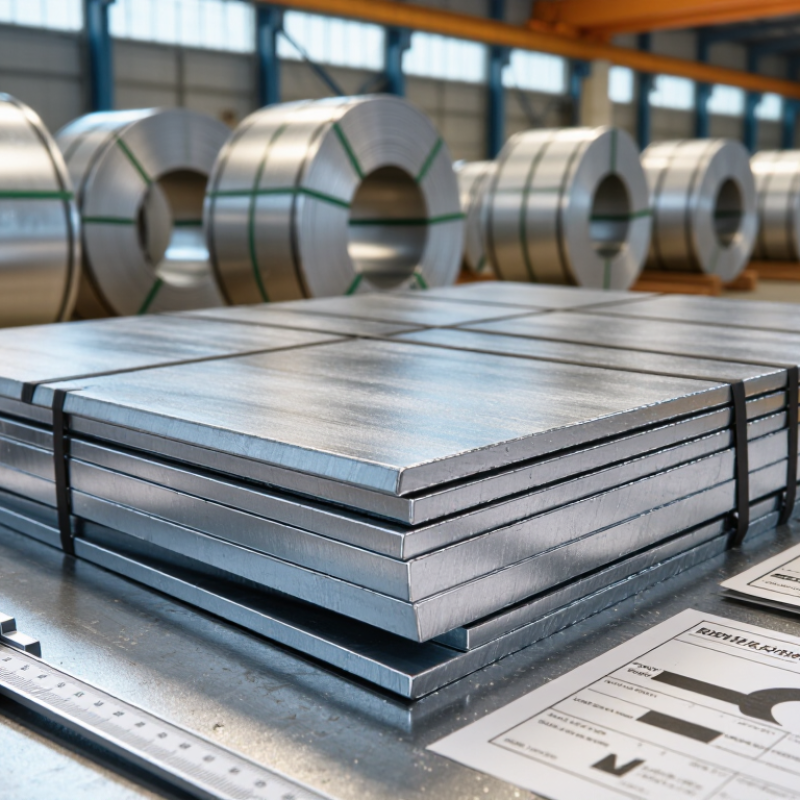
Global Galvanized Steel Plate Supply: 60–600 g/m² Zinc Coatings
Global buyers often compare galvanized steel plates by zinc coating mass, not appearance alone. A range from 60 to 600 g/m² can change service life, forming behavior, and total cost. World Steel Association data reported approximately 1.89 billion tonnes of crude steel production in 2023, showing the scale behind this supply market. Yet, production volume does not guarantee coating consistency.
A 60 g/m² coating suits lighter indoor or low-corrosion applications. Heavier coatings near 275, 350, or 600 g/m² offer stronger protection for humid, industrial, or outdoor environments. Always confirm whether the value applies to both surfaces or one surface. This detail is often missed. ASTM A653 and ISO uniformity requirements can support technical checks, but buyers should request mill test certificates, coating measurements, and edge inspection records. In practice, surface scratches and cut edges may reduce real protection. This is where specifications need more thought.
Tips: Ask suppliers to state coating mass, steel grade, plate thickness, tolerance, testing method, and delivery condition. Compare salt-spray results carefully; they are useful, but they do not fully reproduce local weather. Request samples before large orders. A thicker zinc layer is not always better. It can affect bending, welding, and handling. For reliable sourcing, match the coating to exposure conditions, expected service life, and fabrication process.
| Zinc Coating Mass | Approx. ASTM A653 Designation | Typical EN 10346 Designation | Approx. Zinc Thickness* | Typical Base Steel Thickness | Common End Uses | Buyer Specification Priority |
|---|---|---|---|---|---|---|
| 60 g/m² | G20 | Z60 | ≈ 8.5 μm total | 0.30–1.20 mm | Indoor panels, light-duty profiles, low-corrosion environments | Surface finish and dimensional consistency |
| 100 g/m² | G30–G35 | Z100 | ≈ 14 μm total | 0.35–1.50 mm | General fabrication, ducting, indoor construction components | Coating uniformity and formability |
| 120 g/m² | G40 | Z120 | ≈ 17 μm total | 0.40–1.80 mm | Roofing accessories, wall panels, light structural parts | Bend performance and edge protection |
| 180 g/m² | G60 | Z180 | ≈ 25 μm total | 0.45–2.00 mm | Exterior cladding, roofing sheets, HVAC components | Outdoor corrosion resistance and cut-edge quality |
| 275 g/m² | G90 | Z275 | ≈ 38.5 μm total | 0.50–2.50 mm | Roofing and siding, framing members, agricultural buildings | Verified coating mass and structural grade |
| 350 g/m² | G115 | Z350 | ≈ 49 μm total | 0.60–2.50 mm | Coastal construction, utility components, demanding exterior applications | Salt exposure resistance and coating certification |
| 450 g/m² | G150 | Z450 | ≈ 63 μm total | 0.70–3.00 mm | Heavy-duty roofing, infrastructure components, industrial enclosures | Long service life and abrasion resistance |
| 600 g/m² | G200 | Z600 | ≈ 84 μm total | 0.80–3.00 mm | Severe atmospheric exposure, marine-adjacent and industrial applications | Maximum coating mass, traceability and testing |
| Technical note: Zinc coating mass is normally specified as the total coating on both surfaces. Approximate coating thickness is calculated using a zinc density of 7.14 g/cm³ and may vary by measurement method. ASTM A653 designations are expressed in oz/ft², while EN 10346 designations are expressed in g/m²; buyers should confirm the applicable standard, tolerance, steel grade, surface finish, dimensions and inspection requirements before ordering. | ||||||

Reliable galvanized steel plate suppliers should offer thicknesses from 0.25 to 6.0 mm. This range supports roofing panels, ductwork, enclosures, and structural fabrication. Standard widths between 1,200 and 1,500 mm can reduce cutting waste during production. Buyers should confirm whether these dimensions are actual or nominal.
Thickness consistency matters. A small variation can affect forming, welding, and final assembly. Ask for dimensional tolerances, zinc coating weight, steel grade, and surface finish before placing an order. A clear inspection report should identify test methods and sampling frequency. Mill certificates also help verify chemical composition and mechanical performance.
In practical sourcing, packaging deserves equal attention. Galvanized plates need dry, secure wrapping with edge protection and stable pallets. Moisture trapped during ocean transport may cause white rust. It is preventable, but not always prevented. I have seen excellent material arrive with avoidable surface marks after weak packing. That detail deserves review.
Suppliers with dependable quality systems usually provide production samples, traceable batch numbers, and pre-shipment photographs. Independent inspection can check thickness, width, coating adhesion, flatness, and visible defects. Buyers should also clarify loading limits, coil or cut-sheet formats, and delivery documentation. The lowest price may hide higher processing costs. A careful comparison should include yield, packaging, inspection, and replacement risk.
For global buyers, supplier qualification should begin with evidence, not attractive pricing. ISO 9001 shows a controlled quality system, but it does not prove every coil meets contract requirements. Request the current certificate, scope, issuing body, and audit status. Then compare the supplier’s inspection plan with your intended application. Small gaps matter. A missing revision number can weaken traceability during a claim.
ASTM A653 covers zinc-coated steel sheet, including coating designations, mechanical properties, and surface requirements. EN 10346 addresses continuously hot-dip coated flat products, with grades and coating classes for different forming needs. JIS G3302 provides requirements for galvanized steel sheet and strip. Do not treat these standards as interchangeable. Confirm the grade, coating mass, dimensions, tolerances, and test methods on the purchase order. “Equivalent” needs written technical approval.
Before shipment, review heat numbers, mill test certificates, coating-mass results, tensile data, bend tests, and dimensional reports. A competent supplier should link each report to coil markings and packing photographs. Consider a witnessed inspection or independent laboratory test for large orders. It costs more. Rework costs more. Some suppliers provide complete documents but explain results poorly; that is a warning. Qualification should also include response time, corrective-action records, storage controls, and protection against white rust. No supplier is flawless, and a checklist can miss practical handling risks. Keep a trial order before scaling volume.
China, India, South Korea, and Türkiye serve different galvanized steel plate priorities. China offers broad production capacity, varied thicknesses, and competitive export pricing. Large mills can support container-scale orders with standardized packaging. This may reduce unit costs. However, buyers should verify coating mass, steel grade, and dimensional tolerances before payment.
India is often suitable for regional projects and customized specifications. Suppliers may provide flexible order quantities and practical support for construction-related applications. Ask for recent mill certificates, zinc coating test results, and third-party inspection options. South Korean producers are commonly evaluated for process consistency, surface quality, and reliable documentation. Their prices can be higher, but fewer defects may reduce cutting and rework losses.
Türkiye benefits buyers serving Europe, North Africa, and nearby markets. Shorter sailing routes can improve replenishment speed and simplify communication. Some suppliers also handle smaller commercial lots more flexibly. Yet freight costs, currency movement, and production schedules require careful checking. No region wins every tender.
A dependable comparison should examine total delivered cost, not only the plate price. Request samples showing edge condition, flatness, marking, and protective wrapping. Confirm whether the quoted zinc coating applies to both surfaces. Review loading photographs and inspection records when possible. One caution remains: a polished certificate does not guarantee perfect handling. Small scratches, wet storage, or weak packaging can still damage plates during transit.
For global buyers, supplier quality is only one part of a galvanized steel plate purchase. Commercial details often decide whether a 20–25 tonne shipment arrives smoothly or creates costly delays. A practical sourcing review should compare minimum order quantity, production capacity, inspection records, and export experience. Ask for written tolerances. MOQ should match your project schedule. A very low MOQ may hide higher unit costs, while a large MOQ can trap working capital.
Lead time needs two separate figures: manufacturing time and port-to-port transit time. Request a production schedule covering approval, galvanizing, testing, packing, and dispatch milestones. Standard plates may require several weeks, but coating thickness, cut sizes, and busy seasons can change estimates. Build a buffer. In my experience, reliable suppliers report delays early instead of protecting unrealistic promises. Buyers should still verify this behavior through references, inspection reports, and shipment records.
Incoterms must match your logistics control and customs capability. Under FOB, the buyer usually manages ocean freight after the named port. Under CIF, freight and insurance are included to the destination port. Clarify unloading, duties, documents, and risk transfer. For a 20–25 tonne load, confirm plate dimensions, bundle weight, truck limits, container or breakbulk options, and moisture protection. Ask for loading photos. That small check can expose weak wrapping or unsafe stacking.
One overlooked detail remains: quoted lead times are not guarantees.


All of Hapco's formulations are completely free of Mercury.

Hapco has been in business for over 50 years!
*NOTICE* Hapco will be will be closed on Monday, May 26th, in observance of Memorial Day. |
| Cookie | Duration | Description |
|---|---|---|
| cookielawinfo-checkbox-analytics | 11 months | This cookie is set by GDPR Cookie Consent plugin. The cookie is used to store the user consent for the cookies in the category "Analytics". |
| cookielawinfo-checkbox-functional | 11 months | The cookie is set by GDPR cookie consent to record the user consent for the cookies in the category "Functional". |
| cookielawinfo-checkbox-necessary | 11 months | This cookie is set by GDPR Cookie Consent plugin. The cookies is used to store the user consent for the cookies in the category "Necessary". |
| cookielawinfo-checkbox-others | 11 months | This cookie is set by GDPR Cookie Consent plugin. The cookie is used to store the user consent for the cookies in the category "Other. |
| cookielawinfo-checkbox-performance | 11 months | This cookie is set by GDPR Cookie Consent plugin. The cookie is used to store the user consent for the cookies in the category "Performance". |
| viewed_cookie_policy | 11 months | The cookie is set by the GDPR Cookie Consent plugin and is used to store whether or not user has consented to the use of cookies. It does not store any personal data. |