
Liquid Molding Monthly
China Top Grounding Transformer Manufacturers and Suppliers
China has become an important sourcing base for power-grid equipment, including the Grounding Transformer. Its manufacturers serve utilities, renewable-energy projects, industrial plants, and railway systems. However, supplier quality varies considerably.
The International Energy Agency reported in Electricity Grids and Secure Energy Transitions (2023) that annual global grid investment must exceed USD 600 billion by 2030. This expansion increases demand for reliable grounding equipment. Grounding transformers support neutral creation, fault-current control, and system protection. They are especially valuable in medium-voltage networks where three-phase systems lack an accessible neutral point.
China’s leading manufacturers usually offer zigzag and wye-delta designs, customized impedance values, and oil-immersed or dry-type options. Experienced suppliers should provide temperature-rise data, insulation levels, short-time current ratings, and routine test records. Compliance with IEC 60076-6 and relevant IEEE practices strengthens technical confidence. Factory inspection still matters. A polished catalogue is not enough.
The U.S. Department of Energy’s 2024 transformer supply-chain assessment also highlighted pressure on transformer availability, materials, and manufacturing capacity. That finding gives buyers a practical reason to examine delivery capability, not only price. Strong suppliers can explain core materials, winding construction, enclosure protection, and after-sales support without vague claims.
This guide reviews China’s top Grounding Transformer manufacturers and suppliers through technical capability, certifications, production experience, export performance, and customization support. Rankings are never perfectly objective. Project voltage, fault level, climate, and maintenance resources can change the best choice. A supplier that performs well in one substation may not fit another. Careful comparison remains essential.
What Is a Grounding Transformer and How Does It Work?
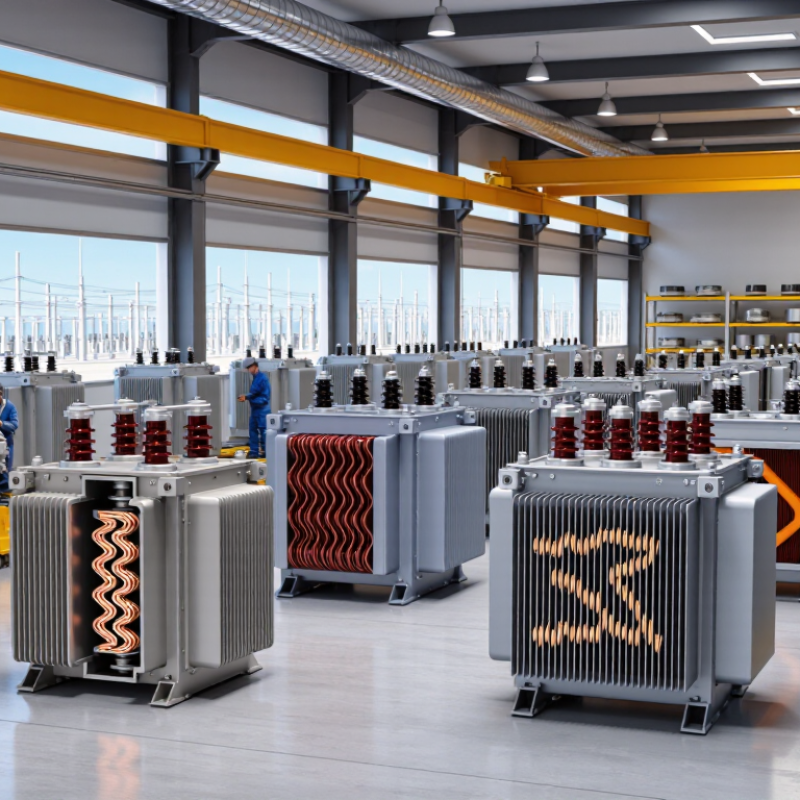
A grounding transformer creates a neutral point for an electrical system that has no accessible neutral. It usually uses a zigzag winding or a wye-delta arrangement. The winding provides a controlled path for zero-sequence current during a line-to-ground fault. Under normal balanced conditions, its magnetic flux largely cancels. During a fault, the transformer carries current toward ground and helps protective relays detect the problem.
The grounding method matters. A neutral grounding resistor can limit fault current and reduce thermal damage, while still allowing reliable relay operation. IEEE guidance commonly links grounding design with touch voltage, fault duration, and equipment withstand capability. IEC 60076-6 also addresses reactor and special transformer applications, including insulation and temperature considerations. The U.S. Department of Energy estimates that distribution transformers consume roughly 60–80 billion kWh annually, showing why losses deserve attention even in auxiliary grounding equipment. Small losses still accumulate.
Field commissioning often reveals the overlooked issue: a grounding transformer cannot replace a complete protection study. Engineers must check neutral displacement, zero-sequence impedance, resistor rating, and relay coordination. A simple rule can mislead. Short-circuit software may also produce different results when cable capacitance or inverter-based generation is included. Recent grid studies from the International Energy Agency describe rising inverter-connected capacity, which can change fault-current behavior. Practical verification remains essential. Test the neutral connection, inspect grounding conductors, and compare measured values with the design model before energization.
China Top Grounding Transformer Manufacturers and Suppliers - What Is a Grounding Transformer and How Does It Work?
Grounding Transformer Technical Data Table — Key operating principles, configurations, ratings, and selection factors for industrial and utility applications.
| Data Dimension | Technical Description | Typical Data or Options | Engineering Significance |
|---|---|---|---|
| Basic Definition | A grounding transformer is a transformer designed to provide a neutral point for grounding a three-phase electrical system. | Used mainly on systems that do not otherwise have an accessible neutral point. | It enables controlled zero-sequence current to flow during a line-to-ground fault. |
| Primary Function | It establishes an artificial neutral and provides a defined path for ground-fault current. | Commonly applied on delta-connected or otherwise ungrounded medium-voltage systems. | Improves protection-system operation and helps limit temporary overvoltages during ground faults. |
| Common Connection | The most common winding arrangements are zigzag and grounded-wye/delta. | Zigzag: grounding duty with little or no secondary power output. Grounded-wye/delta: grounding duty with an available delta winding. | The selected connection depends on fault-current requirements, auxiliary-load needs, and system voltage. |
| Zigzag Configuration | The zigzag winding divides each phase into sections on different magnetic limbs, allowing zero-sequence current while opposing positive- and negative-sequence effects. | Usually selected when the main purpose is neutral creation and grounding-fault current control. | It can provide a compact grounding solution without a conventional power-transformer secondary. |
| Grounded-Wye/Delta Configuration | The grounded-wye side provides the neutral point, while the delta side supports the transformer magnetic circuit and may supply auxiliary loads when specifically designed for that purpose. | The delta winding can be specified for continuous or limited auxiliary power, subject to the nameplate rating. | Suitable where grounding and a secondary power supply are required in the same installation. |
| Neutral Grounding Method | The transformer neutral may be solidly grounded or connected to ground through an impedance device. | Typical options include a neutral grounding resistor, reactor, or other engineered impedance. | Impedance grounding limits fault current and helps coordinate the system with protective relays and switchgear. |
| Ground-Fault Current | The available ground-fault current is determined by system voltage, transformer zero-sequence impedance, and the neutral grounding impedance. | Specified in amperes by the system designer; it is not a universal value for all grounding transformers. | The target current must be high enough for reliable protection while remaining within equipment withstand limits. |
| Zero-Sequence Impedance | Zero-sequence impedance is the impedance presented to currents that are equal in magnitude and in phase in the three windings. | Provided as a percentage or ohmic value at the specified frequency and temperature reference. | It directly affects the magnitude of the ground-fault current and the grounding-system performance. |
| Voltage Rating | The high-voltage winding is designed for the line-to-line voltage of the electrical system to which it is connected. | Examples include medium-voltage systems such as 3.3 kV, 6.6 kV, 10 kV, 11 kV, or 13.8 kV, subject to the project specification. | The rated voltage must match the system insulation level and operating voltage. |
| Frequency | The transformer is designed for the system operating frequency. | Common power-system frequencies are 50 Hz and 60 Hz. | Frequency affects magnetic flux, core design, losses, heating, and the suitability of the transformer for the network. |
| Thermal Duty | Many grounding transformers are designed for short-duration ground-fault duty rather than continuous full-load operation. | Common fault-duty intervals include 10 seconds, 30 seconds, or 1 minute, depending on the protection-clearing time. | The specified duration must exceed the maximum expected fault-clearing time, including protection-system margin. |
| Continuous Rating | A grounding transformer may have a continuous current or auxiliary-load rating in addition to its short-time grounding rating. | Continuous duty is project-specific and must be stated separately from short-time fault duty. | Separating continuous and short-time ratings prevents overheating and incorrect equipment selection. |
| Cooling Method | Cooling removes heat produced by winding and core losses during normal operation and fault duty. | Common options include dry-type air cooling and liquid-immersed cooling. | The cooling method influences installation location, maintenance requirements, fire protection, and enclosure design. |
| Insulation Level | The insulation system must withstand normal operating voltage and specified transient overvoltages. | Insulation coordination includes power-frequency withstand and lightning-impulse withstand levels where applicable. | Correct insulation selection supports safe operation in substations and industrial distribution systems. |
| Protection and Monitoring | Protection may include ground-fault relays, overcurrent protection, temperature monitoring, and neutral-current measurement. | Additional devices can include winding temperature indicators, pressure relief equipment, and surge protection. | Protection and monitoring should be coordinated with the grounding transformer, resistor, switchgear, and upstream relays. |
| Installation Location | Grounding transformers are installed in substations, industrial power-distribution systems, renewable-energy collector systems, and utility networks. | Indoor or outdoor installation is possible when the enclosure, cooling, environmental protection, and clearances are appropriately specified. | Site conditions influence enclosure rating, ventilation, corrosion protection, noise control, and maintenance access. |
| Key Selection Inputs | Selection requires system voltage, frequency, grounding method, available fault current, fault duration, insulation level, and installation conditions. | Other inputs include continuous auxiliary-load requirements, altitude, ambient temperature, seismic conditions, and applicable standards. | Complete technical data is essential for correct manufacturing, testing, protection coordination, and long-term reliability. |
| Testing Requirements | Routine and type tests verify electrical, mechanical, thermal, and insulation performance. | Typical checks include winding resistance, insulation resistance, ratio verification where applicable, dielectric tests, losses, temperature rise, and grounding-duty verification. | Testing confirms that the manufactured unit complies with the approved design and project specification. |
| Primary Benefits | Grounding transformers create a stable neutral reference and make ground-fault protection practical on systems without a natural neutral. | They can be combined with neutral grounding resistors or reactors to control fault current. | Proper application improves system safety, fault detection, equipment protection, and service continuity. |
| Important Limitation | A grounding transformer does not automatically determine the correct grounding current or protection settings. | All ratings must be calculated from the complete power-system model and confirmed by the equipment nameplate and design documents. | Project-specific engineering is required before procurement, installation, and energization. |


100% Mercury Free
All of Hapco's formulations are completely free of Mercury.

50 Year Track Record
Hapco has been in business for over 50 years!