Who Are the Top Pure Zirconia Suppliers in China?
China’s Pure Zirconia suppliers serve buyers in ceramics, electronics, refractories, and dental materials. Yet supplier lists alone reveal little about product consistency. Buyers need to compare chemical purity, stabilizer content, crystal phase, particle size, and batch-to-batch variation. Small differences can affect sintering behavior and finished-part performance.
The USGS Mineral Commodity Summaries 2025 reports China’s 2023 zirconium-mineral-concentrate production at about 140,000 metric tons. This is an upstream supply indicator, not a measure of refined Pure Zirconia output. That distinction matters. A useful historical reference is materials scientist R. C. Garvie and his co-authors’ 1975 paper, titled “Ceramic Steel?”, which highlighted zirconia’s transformation-toughening potential. Their framing still points to a practical lesson: performance depends on material structure, not simply a purity label. For buyers, request a recent certificate of analysis, test methods, trace-element limits, and evidence of production consistency. Then check whether the supplier can maintain the same specification across repeat orders. Not just price. This comparison also has limits: public supplier data may not disclose actual yields or independent audit results. A ranking should therefore distinguish verified specifications from company claims. The guide that follows examines leading Chinese suppliers through product range, technical documentation, manufacturing capability, and export experience—while treating unverified marketing statements cautiously.
What Is Pure Zirconia and How Is It Used?
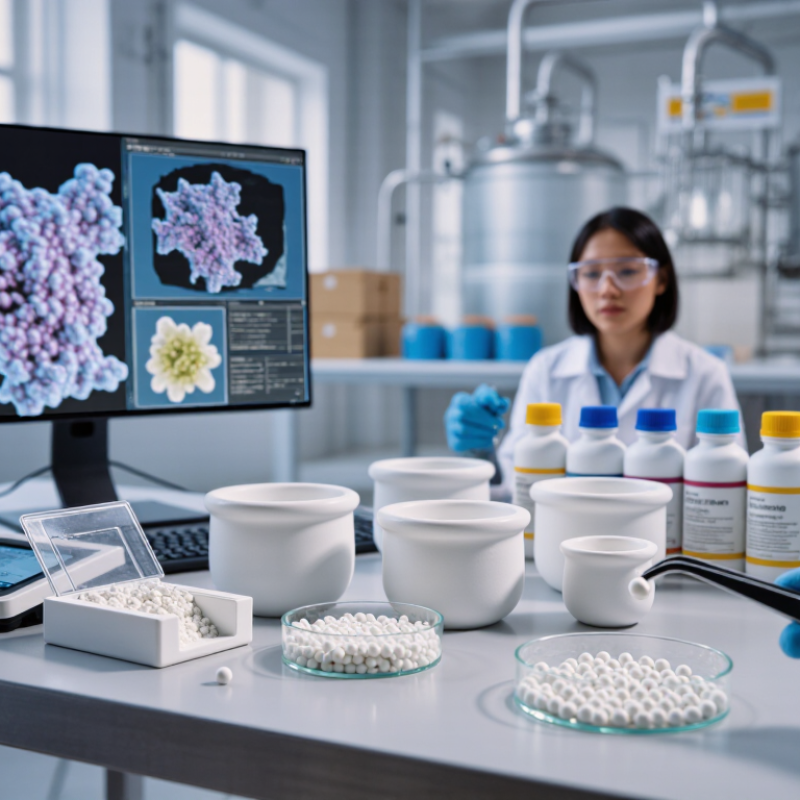
Pure zirconia is zirconium dioxide (ZrO₂), a ceramic oxide valued for hardness, chemical resistance, and high-temperature stability. As a powder, it is typically white and fine, almost flour-like, but it is an industrial material. Its crystal structure changes with temperature, and those shifts can cause cracking during heating or cooling. That detail matters. Commercial ceramic grades often include small amounts of stabilizers, such as yttria, to manage these changes. “Pure” may describe high chemical purity rather than an unstabilized finished part.
Zirconia is used in dental crowns, cutting tools, pump seals, and wear-resistant liners. A crown needs a precise fit and a smooth surface; a seal must withstand friction and contact with fluids. At high temperatures, zirconia can conduct oxygen ions, making it useful in oxygen sensors. Choosing a grade depends on the part’s load, heat exposure, moisture, and required precision. A powder certificate alone cannot predict performance. Grain size, forming, sintering, and finishing all matter. Even a flawless-looking ceramic may fail under impact.
How Are Pure Zirconia Suppliers in China Evaluated?
When comparing pure zirconia suppliers in China, define “pure” before reviewing quotations. It may mean high chemical purity, or stabilized zirconia with added yttria; these are not interchangeable. Ask for batch-specific certificates showing ZrO₂ content, stabilizer level, major impurities, particle-size distribution, and test methods. A certificate without traceable batch numbers is weak evidence. Small detail, big difference.
Check whether reported properties match your application and independent test results. For implant-grade stabilized zirconia, ISO 13356 sets material requirements; it should not be treated as a universal standard for every zirconia powder. The USGS Mineral Commodity Summaries 2024 estimated 2023 world zirconium mineral-concentrate production at about 1.4 million metric tons. That figure describes upstream concentrate, not refined zirconia, so it cannot prove a supplier’s capacity or purity. Request production records, representative samples, and third-party checks for critical orders. Compare quoted density, strength, and phase composition using consistent test conditions. Results can vary with processing. Even careful comparisons leave some uncertainty.
How to Evaluate Pure Zirconia Suppliers in China
Suggested buyer-side evaluation weights for comparing suppliers. These are framework weights, not audited supplier scores or rankings.
Assess chemical purity and phase composition alongside particle characteristics, batch consistency, sintering performance, documentation, and delivery reliability. Adjust the weighting to match your application and verify claims with test reports and samples.
Which Chinese Companies Supply Pure Zirconia?
Chinese pure zirconia is supplied by specialist producers of zirconium compounds and advanced ceramic powders. Some companies focus on high-purity zirconia for technical ceramics, while others serve dental, thermal-barrier, or polishing applications. Their products may differ in purity, particle size, crystal phase, and stabilizer content. A powder labeled “pure” is not automatically suitable for every process.
When comparing Chinese suppliers, ask for a recent certificate of analysis and a technical data sheet. Check zirconia content, trace impurities, particle-size distribution, and whether the material is monoclinic, tetragonal, or stabilized. Request a small sample for testing under your own firing or forming conditions. A supplier’s published figures can be useful, but batch variation still deserves attention. Some specifications look impressive on paper and prove less helpful in production.
Tips: Confirm test methods, packaging, and minimum order quantities before requesting a quote. Ask how each batch is identified and stored. If the application is sensitive, compare two samples using the same laboratory procedure.
How Do Suppliers Differ in Grades and Production Capabilities?
Chinese pure zirconia suppliers can differ more in material control than in headline purity. Ask whether “pure zirconia” means unstabilized ZrO₂, and request the full chemical analysis. Small differences in hafnium, silica, or other impurities may matter in demanding applications. Grade names alone are not enough.
Compare particle size, surface area, moisture, and batch-to-batch variation. These figures affect how powder flows, presses, and sinters. Request a recent inspection certificate and clarify the test methods behind each value. Details matter. A specification sheet can look complete while omitting the measurement method—a gap worth resolving before placing a large order.
Production capability also varies. Some suppliers focus on small, tailored batches; others run larger volumes with tighter process controls. Ask about milling, calcination, granulation, sampling frequency, and how rejected batches are handled. A useful factory discussion includes actual batch records, not just a maximum annual output. Capacity numbers can be misleading. A supplier may have ample equipment but limited experience with your target particle range. Sample the material, test it using your own process, and assess consistency across multiple lots before deciding.
What Should Buyers Check Before Choosing a Supplier?
Choosing a Chinese pure-zirconia supplier starts with a precise grade specification. Ask for zirconia content, stabilizer type, impurity limits, particle-size distribution, and phase composition. A certificate of analysis should show actual batch results, not just typical values. Request test methods and, where performance is critical, confirm results through an independent laboratory.
Small details matter. A fine white powder can still vary in moisture, agglomeration, or trace iron. I would not treat a polished brochure as proof.
Check whether the supplier can trace each shipment to its production lot and provide retained samples. Ask how it controls mixing, milling, drying, and packaging, then compare several batches. The USGS Mineral Commodity Summaries 2024 estimated global zirconium-mineral-concentrate production at about 1.5 million metric tons in 2023; that figure describes upstream feedstock, not finished zirconia quality. Keep the distinction clear.
For medical-grade materials, ISO 13356:2015 specifies requirements for zirconia ceramics intended for surgical implants, but it does not certify every supplier or every application. Ask for scope-specific evidence. One awkward point: a supplier may meet a stated purity target while still missing your process needs. Test a representative sample in your own application before committing to volume.