Top Warehouse Rack Types for Global Buyers?
Choosing the right Warehouse Rack begins with the products, not the catalogue photograph. A distributor storing boxed electronics needs different support from a cold-chain operator handling pallets of frozen food. Selective pallet racks offer fast access and flexible beam levels. Drive-in systems improve storage density but reduce direct access. Cantilever racks suit timber, pipes, and other long materials. Mobile racks can save floor space, yet they demand stronger planning and controlled movement.
John Paxton, former president and CEO of MHI, has described supply chains as “a competitive advantage,” a useful reminder for global rack buyers. A rack is not merely steel. It influences travel distance, picking speed, worker visibility, and future expansion. Experienced buyers check pallet dimensions, maximum loads, forklift turning space, floor strength, and local seismic conditions before comparing prices. They also verify welding quality, coating performance, corrosion resistance, and the supplier’s installation records.
There is no universal winner.
That is easy to forget.
A high-density system may look efficient until workers wait for access. A low-cost rack may become expensive after repeated repairs. Some buying decisions will remain imperfect because demand changes, forecasts fail, and warehouses rarely stay still. This guide examines leading Warehouse Rack types for international buyers, including their practical strengths, limitations, and suitable applications. It also encourages readers to request load calculations, technical drawings, inspection procedures, and clear after-sales support. Reliable decisions come from measurable site conditions, not attractive promises.
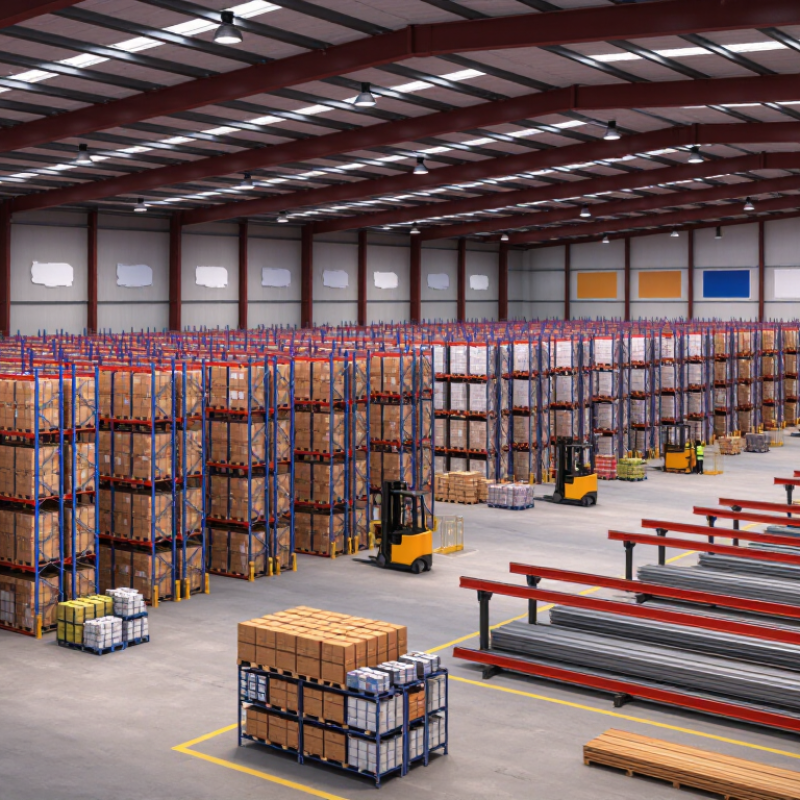
Warehouse Rack Systems: Purpose, Structure, and Core Functions
Top Warehouse Rack Types for Global Buyers?
Warehouse Rack Systems: Purpose, Structure, and Core Functions
Warehouse racks do more than store cartons. They create a controlled path for receiving, picking, replenishment, and dispatch. A suitable rack system uses vertical space while keeping products visible and reachable. The best choice depends on load weight, item size, turnover rate, aisle width, and handling equipment.
Selective pallet racks suit varied stock and frequent access. Drive-in systems increase density but reduce direct access. Cantilever racks support long goods, such as pipes, timber, or metal profiles.
Shelving works well for hand-picked cartons and small parts. Each structure needs upright frames, horizontal beams, bracing, base plates, and properly rated connections. Guardrails and load signs add practical protection. They are not decorative.
Tips: Measure ceiling height, aisle width, pallet dimensions, and floor capacity before ordering. Leave clearance around sprinklers, lights, doors, and pedestrian routes. Check beam locks, anchors, and visible damage during inspections. Train operators to place loads evenly and avoid impacts. A rack that looks strong may still fail under poor loading or an uneven floor. Local engineering requirements should guide anchoring and inspection decisions.
One rack type rarely solves every warehouse problem. A mixed layout can improve access and density, although it complicates training and maintenance. Review seasonal demand and future pallet sizes. Do not design only for today. Even experienced teams miss workflow conflicts, so test the layout with actual operators before installation.
Main Types of Warehouse Racks and Their Storage Applications
Top Warehouse Rack Types for Global Buyers?
Warehouse racks should match product velocity, load weight, aisle width, and available height. Selective pallet racks suit mixed SKUs and frequent forklift access. They provide direct access to every pallet, but consume more floor space. Drive-in racks increase density for uniform products with limited SKU variety. Push-back racks offer better selectivity, while pallet-flow racks support first-in, first-out handling for dated goods. Cantilever racks are practical for timber, pipes, panels, and other long materials.
The 2024 MHI Annual Industry Report found that 73% of supply-chain professionals expect to adopt robotics and automation within five years. This trend makes rack accuracy more important. Rack positions must support scanners, conveyors, and safe forklift movement. Global buyers should verify beam capacity, upright thickness, floor loading, corrosion resistance, and local engineering requirements. A perfect-looking rack drawing can still be wrong. Product dimensions often change after installation.
Tips: Measure the largest pallet, not the average one. Keep clearance beneath sprinklers and lighting. For fast-moving goods, place pick faces near dispatch doors. Use drive-in storage only when batch rotation is predictable. Request load tables and installation drawings before purchase. An independent inspection can reveal overloaded beams, uneven floors, or damaged frames. Costs may rise slightly, but replacement risks are rarely small.
How Rack Design Affects Capacity, Accessibility, and Workflow
Top Warehouse Rack Types for Global Buyers?
Rack design directly shapes storage capacity, picking speed, and worker movement. Selective pallet racking offers immediate access to every pallet, but it consumes more aisle space. Drive-in racking increases density by reducing aisles, although stock rotation becomes less flexible. Double-deep systems add capacity, yet they may require reach equipment and stricter loading discipline.
The 2024 MHI Annual Industry Report surveyed more than 2,000 supply chain professionals. It found that 55% expected greater use of robotics and automation within five years. This matters because rack geometry must support future handling equipment, not only today’s forklifts. Narrow aisles can increase capacity, but turning space, visibility, and emergency access may suffer. Rack safety guidance from the U.S. Occupational Safety and Health Administration also emphasizes stable loading, inspection, and clear aisles. One overlooked detail is beam height. A few extra centimeters can prevent wasted vertical space across hundreds of bays. Still, higher is not always better.
Tips: Map real traffic first. Measure pallet dimensions, load weights, forklift turning radii, and daily replenishment routes. Leave practical clearance, not theoretical clearance. Test one aisle before approving the entire layout. MHI’s data supports technology planning, but local operators reveal problems that spreadsheets miss. My own view is less tidy: the densest design often looks efficient until one damaged pallet slows every surrounding task.
Top Warehouse Rack Types for Global Buyers
Rack design directly affects storage capacity, accessibility, and workflow efficiency. The benchmark below uses a practical 1–5 industry rating, where 5 indicates the strongest performance for each factor.
How to read the chart: Selective pallet racking provides the highest accessibility and flexible picking workflow, while drive-in and mobile racking generally deliver greater storage density. Double-deep and very narrow aisle systems can increase capacity but may require specialized handling equipment and tighter operational control.
Key Selection Factors for Global Warehouse Buyers
Top Warehouse Rack Types for Global Buyers?
Selecting warehouse racks is not only about storage density. Global buyers must match the system to products, buildings, labor, and local operating conditions. Selective pallet racks offer direct access and flexible SKU management. Drive-in racks increase density but reduce selectivity. Cantilever racks suit long materials, while carton flow racks support fast-moving picking operations.
Load capacity is the first technical checkpoint. Ask for certified load data, upright dimensions, beam ratings, and clear installation drawings. Floor strength, ceiling height, forklift turning space, and seismic risk also influence the design. In humid or coastal locations, corrosion protection deserves careful attention. Temperature-controlled warehouses may require different finishes and maintenance schedules. Local safety codes and qualified installation teams should guide the final specification. Documentation matters.
Tips: Measure real pallets, not ideal ones. Confirm pallet weight, height, and entry direction. Request a layout showing aisles, emergency access, and sprinkler clearance. Compare total ownership cost, including freight, installation, inspections, and replacement parts. A cheaper rack can become expensive after one layout change.
During project reviews, buyers often focus too heavily on maximum capacity. That approach can overlook picking speed and future product changes. Leave practical tolerance around loads and aisles. It may feel inefficient. It often prevents daily congestion. Review supplier drawings with an experienced warehouse engineer, and verify materials before production. Mistakes are possible, even with careful planning.
Safety Standards, Customization, Shipping, and Supplier Evaluation
Top Warehouse Rack Types for Global Buyers?
Warehouse rack selection should begin with load safety, not appearance. Pallet racks, cantilever racks, and carton flow systems serve different storage conditions. Confirm the weight of each pallet, beam level, and upright frame. Request load calculations, material specifications, and test records from the supplier. Local seismic, fire, and workplace requirements may also affect the design. A rack that suits a dry warehouse may fail in a humid facility. Small details matter.
Customization should reflect actual warehouse measurements. Check pallet dimensions, forklift turning space, ceiling height, floor strength, and aisle clearance. Adjustable beams can support changing inventory, while corrosion-resistant finishes may help in cold or damp areas. Avoid accepting drawings without reviewing every dimension. No checklist is perfect. Site conditions often expose assumptions that looked reasonable on paper.
Shipping creates another risk. Knock-down racks usually reduce freight volume, but weak packaging can bend frames or damage connectors. Ask for moisture protection, labeled bundles, packing lists, and clear installation drawings. Clarify product classification, shipping terms, lead time, and inspection responsibility before payment. Supplier evaluation should include factory quality controls, sample projects, response speed, replacement policies, and independent pre-shipment checks. A low quotation may hide missing accessories, uncertain steel grades, or costly installation work. Verify everything.