What Is a Portable Fire Monitor?
A Portable Fire Monitor is a movable device designed to direct a powerful stream of water, or an approved firefighting solution, toward a fire. Unlike a handheld nozzle, it can support sustained, higher-volume discharge while an operator controls its direction. Many models connect to fire hoses and sit on a ground base, wheeled frame, or other portable support. Exact designs vary. That matters.
You may see portable monitors at industrial sites, warehouses, outdoor events, or other locations where crews need reach and flow. Picture a unit positioned on a firm surface, its hose coupled securely, with the nozzle aimed toward a distant hazard. The monitor can help firefighters apply water while keeping some distance from heat, but it does not replace a full incident plan or trained operators. Performance depends on the model, water supply, hose arrangement, and operating pressure. Details vary.
This guide explains how a Portable Fire Monitor works, what common designs offer, and where it may be useful. It also considers practical selection factors, including flow capacity, portability, stability, and compatibility with existing equipment. Product ratings and instructions should come from the manufacturer, not guesswork. A monitor that looks sturdy may still shift under reaction force if it is poorly positioned or operated. That is easy to overlook. Understanding both its capabilities and limitations helps readers make more informed decisions about fire response equipment.
Definition and Purpose of a Portable Fire Monitor
What Is a Portable Fire Monitor?
Definition and Purpose of a Portable Fire Monitor
A portable fire monitor is a movable device that directs a high-volume stream of water or approved firefighting foam. It typically combines a nozzle with a stable base, such as a tripod, skid, or wheeled frame. Unlike a handline, it can deliver a sustained stream while reducing the need for an operator to hold the nozzle’s full reaction force. That distinction matters. Crews may position one to protect equipment, cool exposed surfaces, or reach a fire area that is difficult to approach closely.
Its purpose is controlled, longer-range application—not simply “more water.” The National Fire Protection Association’s Fire Loss in the United States During 2023 report estimated 1,389,000 fires attended by U.S. fire departments that year. The figure shows why suitable equipment and sound deployment decisions matter, though it does not measure monitor performance. In practice, the required flow depends on the nozzle, water supply, hose layout, and site conditions. Operators also need to check footing and secure the unit; a monitor can move under reaction force, especially on slick or uneven ground. The setup can look straightforward. It is not always. A portable monitor supports a fire response, but it does not replace hazard assessment, trained crews, or an adequate water supply.
Main Components and Their Functions
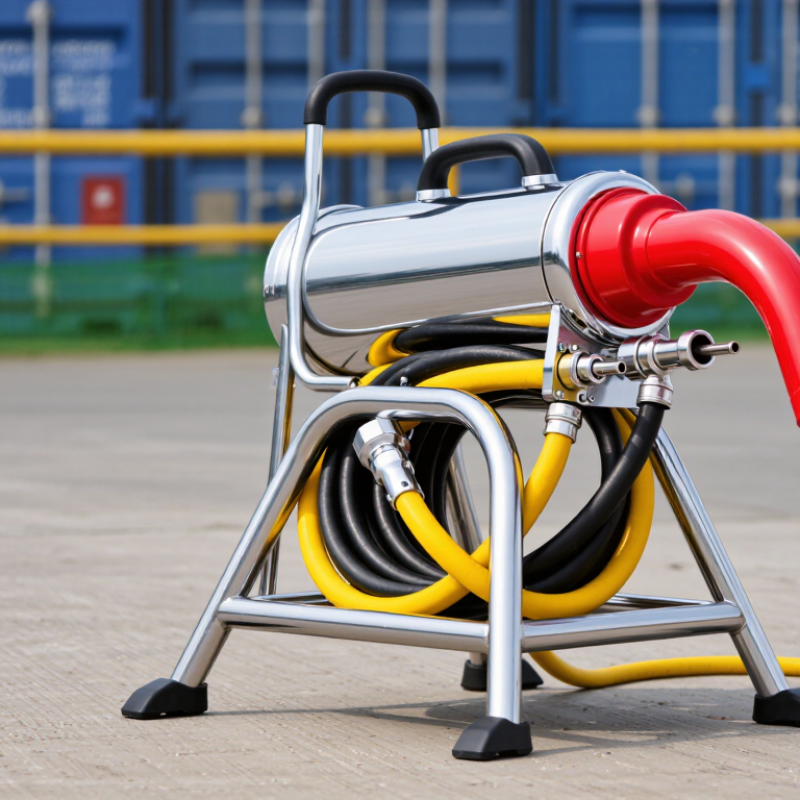
A portable fire monitor is a movable, high-flow device used to direct water or foam onto a fire. Its base or frame supports the unit and helps resist hose reaction. The inlet connects the supply hose, while the body directs incoming water toward the outlet. A nozzle shapes the stream; adjustable settings can produce a straight jet or a wider spray. Handles or controls let an operator aim the monitor, and some models include a locking mechanism to hold its position. Simple parts, but every connection matters.
The National Fire Protection Association’s U.S. Fire Loss in 2023 report recorded about 1.39 million fires and 3,670 civilian fire deaths in the United States. Those figures do not measure monitor performance, but they show why dependable equipment and practiced operation matter. Before use, crews should check the frame, inlet seals, controls, and nozzle for damage or blockage. A monitor can look ready while a worn seal leaks under pressure. That detail is easy to miss.
Tips: Confirm the monitor is stable on the chosen surface, then secure and route the hose to limit kinks. Check the nozzle setting and aim before opening the water supply. Keep people clear of the discharge path; high-pressure reaction can shift equipment unexpectedly.
How a Portable Fire Monitor Operates
What Is a Portable Fire Monitor?
How a Portable Fire Monitor Operates
A portable fire monitor is a water-delivery device set on the ground, not carried like a handline. A pump pushes water through one or more supply hoses into the monitor’s body. The body directs the flow through a barrel, while the nozzle shapes it into a solid stream or spray. Flow and reach depend on the water supply, nozzle, and operating pressure; they are not fixed specifications.
The stream creates a backward reaction force. Crews position and secure the monitor, check hose connections, then increase flow in a controlled way. Operators adjust direction and nozzle pattern while watching the stream and the people nearby. That force is easy to underestimate. NFPA’s Firefighter Injuries in the United States, 2023 estimated 63,175 on-duty firefighter injuries nationwide. The report does not attribute those injuries to portable monitors, but it underscores why stable footing and careful equipment handling matter.
Before operation, crews should follow the device’s instructions and their department’s procedures. A kinked hose, loose coupling, or shifting surface can disrupt the stream. Someone should monitor the water supply and communicate any change in pressure. Even a compact unit may move under load. Practice helps, though it cannot remove every surprise.
Common Types and Configurations
A portable fire monitor is a movable device that directs a high-volume water or foam stream toward a fire. Unlike a hand-held hose nozzle, it can be positioned on the ground and operated by a crew member. Its base helps manage reaction force, but it still needs stable footing. On wet pavement or uneven ground, placement matters.
Common configurations include folding-leg ground monitors, compact fixed-base units, and wheeled models that are easier to move over longer distances. Inlets may accept one or more hose lines, depending on the model and required flow. Nozzle choices often include smooth-bore designs for a concentrated stream and adjustable fog patterns for broader coverage. Some monitors swivel or elevate to change direction without moving the base. Not every setup fits every site.
Tips: Check the monitor’s rated flow, inlet connection, and nozzle range before use. Secure the base on firm ground, keep the hose from kinking, and follow the manufacturer’s operating instructions. A quick setup can still be wrong.
Typical Uses and Key Selection Factors
A portable fire monitor is a movable, ground-supported device that directs a high-volume water stream toward a fire. Crews may use one in industrial yards, loading areas, docks, or other sites where a hand-held hose cannot deliver enough reach or flow. It can also support incident response in open areas, provided the equipment and water supply suit the conditions. Setup matters. Uneven ground, hose movement, and stream reaction can affect stability, so trained operators should follow the monitor’s instructions and keep people clear of its discharge path.
Selection starts with the job. Compare the required flow rate and operating pressure with the available pump or water source; a powerful monitor is of little use if the supply cannot keep up. Check stream reach, elevation range, and whether the nozzle offers patterns suited to the site. Look at weight, carrying handles, deployment time, and the footing needed on the surfaces where it will stand. Connections and materials should also match existing hoses and the expected environment. Small details count. A unit that is difficult to position may slow a response, even when its performance figures look impressive. No single specification tells the whole story, and a site walk-through can reveal awkward corners or unstable ground that a brochure misses. Recheck components and test the setup as part of routine maintenance.