
Choosing the best Grid On Inverter in China requires more than comparing price tags. It requires evidence.
The global market is expanding rapidly. The IEA PVPS Trends 2024 report recorded about 456 GW of new solar capacity in 2023. Cumulative global capacity exceeded 1.6 TW. Every installed panel depends on stable conversion, accurate control, and reliable grid communication. The inverter sits at the center of that process.
Mark Dyson, an electricity systems expert at RMI, has described advanced inverters as “the bridge between distributed energy resources and the grid.” That bridge must handle real conditions. Think of rooftop heat, voltage fluctuations, weak rural feeders, and sudden cloud cover. A strong Grid On Inverter should offer high conversion efficiency, precise MPPT, anti-islanding protection, and clear monitoring data. It should also support the grid code required in the installation market.
Chinese manufacturers lead global solar supply, according to IEA and Wood Mackenzie industry research. Yet the largest brand is not automatically the best choice. Product testing, warranty response, software quality, and local certification matter more than impressive brochure figures. Field experience also reveals small differences. Some units remain quiet under load. Others produce noticeable fan noise.
That detail matters.
This comparison will examine efficiency, safety, durability, smart-grid functions, service support, and total ownership cost. The answer may not be universal. A residential roof, commercial building, and utility project need different designs. That is where many buying guides become too simple.
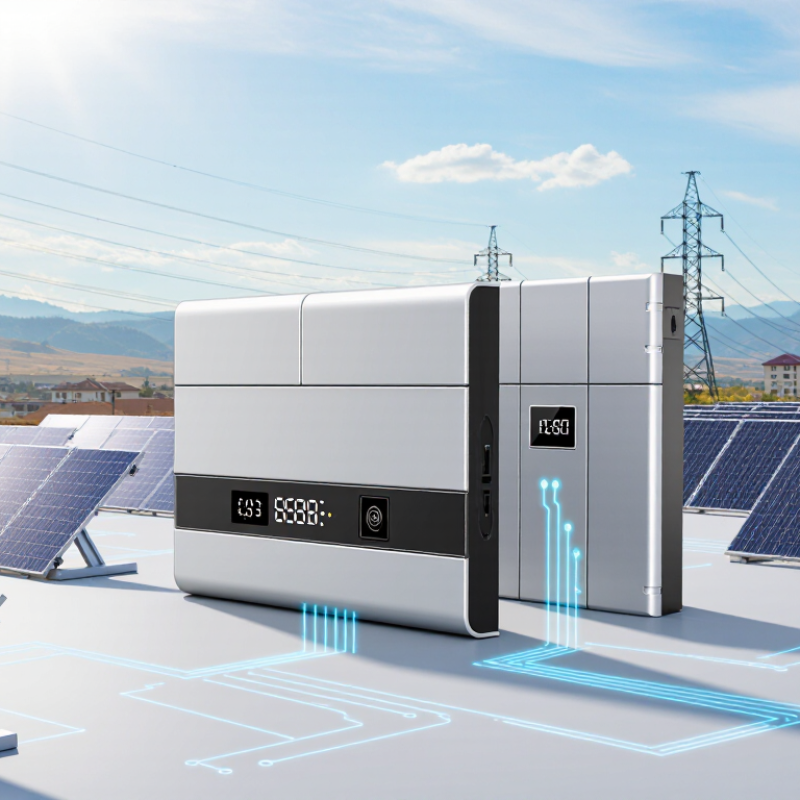
A China grid-on inverter is a device that converts solar panel electricity from direct current into grid-compatible alternating current. It synchronizes with the local utility’s voltage, frequency, and phase. This allows household or commercial solar power to run appliances and send extra electricity to the grid, where permitted.
Most grid-on inverters do not provide backup power during an outage. They shut down automatically to prevent electricity from flowing into repair lines. This safety function is essential. A suitable model should support the local grid standard, stable maximum power point tracking, clear monitoring, and certified protection features. In practice, installers should also check roof shading, cable length, heat exposure, and the utility’s connection rules. A powerful inverter is not always the best choice. Oversizing it without reviewing the panel layout can reduce real-world performance.
Tips: Ask for test certificates, installation records, and warranty terms in writing. Check whether the inverter supports your panel voltage and household phase system. Keep ventilation clear around the unit. Dust and heat matter. I would also compare monitoring accuracy, because attractive software can still report delayed or incomplete data. Local professional inspection remains important, especially when settings must match changing grid requirements.

A China grid-on inverter converts solar electricity in two controlled stages. Solar panels produce direct current (DC), but household and utility grids use alternating current (AC). The inverter tracks each panel string’s maximum power point, then switches DC into grid-matched AC. It also checks voltage, frequency, and phase before exporting power. If the grid fails, anti-islanding protection disconnects the system. This protects repair crews and prevents unstable backfeed.
The scale is substantial. The IEA PVPS Trends 2024 report recorded more than 1.6 terawatts of global solar capacity by the end of 2023. The IEA’s Renewables 2024 report also expects solar PV to drive most new renewable capacity through 2030. For China, this makes conversion efficiency, voltage control, and grid-code compliance practical priorities, not brochure language. Certified equipment should meet relevant safety requirements, including IEC 62109, while installation settings must match local grid rules. A high efficiency figure can still hide losses from heat, cable resistance, clipping, or poor ventilation.
Tips: Leave airflow around the inverter, keep cables short and correctly sized, and review daily power curves after installation. A sudden midday drop may indicate overheating or curtailment, not weak sunlight. Monitoring is useful, but it is not perfect. Meter readings and inverter data can disagree slightly. Have a qualified technician verify unusual patterns before changing settings.
This chart shows the conversion of solar-panel DC power into grid-compatible AC power using a representative 97.5% conversion efficiency. The remaining energy is released mainly as heat and system losses.
At a 5 kW DC input, approximately 4.875 kW is delivered as AC output, while about 0.125 kW is lost during conversion.
A high-quality China grid-on inverter begins with stable conversion, not flashy software. Its MPPT range should match the array’s voltage during cold mornings and hot afternoons. Independent MPPT channels help manage roofs with different directions or partial shade. Efficiency matters, but the published peak figure is not enough. Ask for weighted efficiency and verified testing conditions. Small details matter.
Grid safety deserves careful attention. The inverter should provide certified anti-islanding protection, overvoltage control, frequency monitoring, and residual-current detection. It must disconnect safely when the utility supply becomes abnormal. Compliance documents should be traceable to recognized testing laboratories and current local requirements. A clear fault log also helps electricians diagnose problems without guessing. That saves time.
Thermal design often separates a dependable unit from an attractive one. A strong heat sink, sensible derating, and protected circuit boards support stable output in hot, dusty environments. Monitoring should show daily energy, faults, voltage, and temperature, rather than only colorful charts. Secure firmware updates are important too. In practical installations, weak ventilation can reduce performance more than expected. I would inspect the installation guide closely, because some instructions remain vague. Warranty length is useful, but service response, spare parts, and technical support matter more. No specification sheet tells the whole story.
The best grid-on inverter depends on your site, utility rules, and maintenance plan. During practical project reviews, I compare manufacturers through verified specifications, sample testing, and technical support. Rated efficiency matters, but real output also depends on heat, dust, voltage swings, and partial shading. Request efficiency curves, not only a single headline number.
Check the inverter’s grid protection carefully. Anti-islanding response, overvoltage limits, frequency control, and fault recording should match local requirements. Ask for independent test reports and current compliance certificates. Do not rely on a copied PDF. Small document errors can signal weak quality control. This part is often overlooked.
Factory capability deserves equal attention. Review production traceability, burn-in procedures, component inspection, and serial-number records. A factory tour helps, although one visit cannot prove long-term reliability. Ask for warranty terms, replacement procedures, remote monitoring access, and response times. A low price may become expensive when spare parts travel slowly. Compare five-year operating costs, not just the purchase quotation.
Request a production sample before placing a large order. Test startup behavior in the morning, response during cloud movement, and shutdown at sunset. Check connector fit and cooling noise. These details feel minor. They are not. Manufacturer claims should be matched with field references, clear manuals, and engineers who answer specific questions. No comparison is perfect, and my own evaluation can miss problems without independent inspection.
What Is the Best China Grid On Inverter?
Selecting the best China grid-on inverter starts with your solar system, not a product label. Check your local grid voltage and frequency first. The inverter must match these values exactly. Confirm the required utility approvals before purchase. A qualified electrician should review the connection plan.
Check your local grid voltage and frequency first.
The inverter must match these values exactly.
Look at the inverter’s MPPT range, maximum DC voltage, and rated output. These figures should suit your panel layout, roof direction, and seasonal sunlight.
Panel layout
These figures should suit your panel layout.
Roof direction
These figures should suit your roof direction.
Seasonal sunlight
These figures should suit your seasonal sunlight.
For example, morning shade can reduce one string’s performance. Separate MPPT inputs may help in that situation. High efficiency is useful, but it does not tell the whole story. Cooling design, overload handling, and anti-islanding protection also matter. I would not choose a model from efficiency figures alone.
Tips:
Compare verified test reports, warranty terms, monitoring functions, and local service support. Ask how spare parts are handled. Read the installation manual carefully. Check noise levels if the inverter will sit near living areas. A small display is convenient, but remote monitoring can reveal repeated voltage faults.
Be cautious with unclear specifications or unusually low prices. They may hide limited testing or weak after-sales support. Still, even a carefully selected inverter can perform poorly with loose wiring or poor ventilation.
That detail is easy to overlook. Inspect the installation space, cable size, and grounding plan before final approval.


All of Hapco's formulations are completely free of Mercury.

Hapco has been in business for over 50 years!

*NOTICE* Hapco will be will be closed on Monday, May 26th, in observance of Memorial Day. |
| Cookie | Duration | Description |
|---|---|---|
| cookielawinfo-checkbox-analytics | 11 months | This cookie is set by GDPR Cookie Consent plugin. The cookie is used to store the user consent for the cookies in the category "Analytics". |
| cookielawinfo-checkbox-functional | 11 months | The cookie is set by GDPR cookie consent to record the user consent for the cookies in the category "Functional". |
| cookielawinfo-checkbox-necessary | 11 months | This cookie is set by GDPR Cookie Consent plugin. The cookies is used to store the user consent for the cookies in the category "Necessary". |
| cookielawinfo-checkbox-others | 11 months | This cookie is set by GDPR Cookie Consent plugin. The cookie is used to store the user consent for the cookies in the category "Other. |
| cookielawinfo-checkbox-performance | 11 months | This cookie is set by GDPR Cookie Consent plugin. The cookie is used to store the user consent for the cookies in the category "Performance". |
| viewed_cookie_policy | 11 months | The cookie is set by the GDPR Cookie Consent plugin and is used to store whether or not user has consented to the use of cookies. It does not store any personal data. |