
A Heat Recovery Ventilator (HRV) brings fresh outdoor air into a home while exhausting stale indoor air. In winter, its core transfers heat from outgoing air to incoming air, helping reduce heat loss without simply sealing the house. That can matter in a tightly built home, where closed windows and cooking smells may leave rooms feeling stuffy. The International Energy Agency’s 2023 buildings analysis reports that building operations account for about 30% of global final energy use. An HRV is not a magic fix, but ventilation and energy use belong in the same conversation.
Building scientist Dr. Joseph Lstiburek is often quoted as saying, “Buildings don’t need to breathe; people do.” The line points to the real goal: controlled fresh-air delivery, not drafts through walls. An HRV can help provide that airflow while recovering some heat, though results depend on climate, installation, and regular filter maintenance. Imagine a bedroom door shut overnight, two people sleeping, and moisture gathering on a cold window. A correctly sized, balanced system may help manage stale air and humidity. Small detail, big difference. Yet an HRV cannot correct every moisture problem, and a poorly maintained unit may underperform. This guide explores when a Heat Recovery Ventilator makes sense, what to check before buying, and why installation quality deserves careful attention.
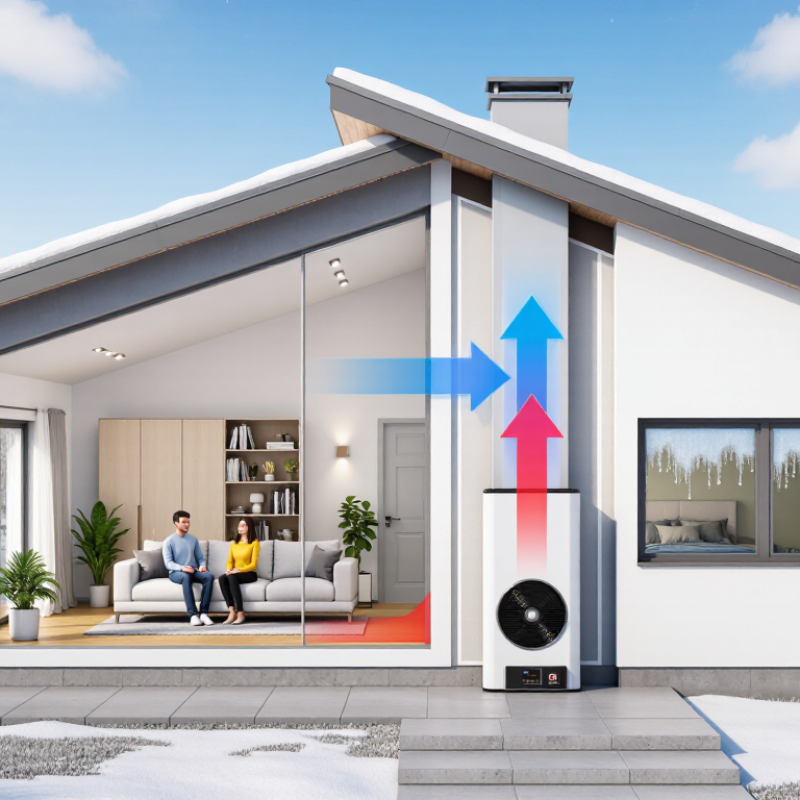
In a tightly sealed home, indoor pollutants can build up faster than many people expect. Cooking releases fine particles and gases; cleaning products, new furniture, and paints may release volatile organic compounds. Even breathing adds moisture and carbon dioxide to a closed room. Not all pollution is visible.
When windows stay shut, these contaminants may linger, especially in bedrooms overnight or near a kitchen after dinner. A stuffy feeling can be a clue, but it cannot identify the cause by itself. An HRV exhausts stale air while bringing outdoor air inside, transferring heat between the outgoing and incoming streams. Depending on its filters and upkeep, it can also reduce some airborne particles. It does not remove every gas or replace source control, such as using a range hood while cooking.
It is tempting to blame every stale room on poor ventilation; that is not always the answer. A system needs proper sizing, balanced airflow, and a suitable outdoor-air intake. Filters also need regular inspection, not just attention when airflow seems weak. On a cold evening, for example, an HRV can exchange bedroom air without requiring a window to stay open, while recovering some of the heat. Small details matter. A blocked intake or neglected filter can undermine that benefit.

A heat recovery ventilator (HRV) replaces stale indoor air with outdoor air while transferring sensible heat between the two airstreams. In winter, warm exhaust air passes through a heat-exchange core and warms incoming cold air. The air streams remain separate. Odours and indoor pollutants leave with the exhaust rather than being deliberately recirculated.
The heat savings are real, but not absolute. Natural Resources Canada’s HRV guidance notes that some units can recover up to 80% of heat from outgoing air under suitable conditions. That is a rated potential, not a guarantee for every home. Dirty filters, blocked exterior grilles, poor balancing, or very cold weather can reduce actual performance. A kitchen’s steamy window may still need attention.
Ventilation rates matter as much as recovery. ASHRAE Standard 62.2-2022 bases residential ventilation requirements on factors including floor area and bedrooms, rather than guesswork. A properly selected and commissioned HRV can help meet that fresh-air demand with less heat loss. Listen near a supply grille: airflow should be steady, not a sharp draft. One caveat: HRVs recover heat, not moisture, so winter air can still feel dry. The numbers deserve checking against the unit’s certified test ratings and the home’s actual ductwork.
Why Do You Need a Heat Recovery Ventilator?
How CSA C439 Measures an HRV’s Sensible Heat-Recovery Efficiency
A heat recovery ventilator brings in outdoor air while exhausting stale indoor air. In winter, that exchange can reduce ventilation heat loss. Natural Resources Canada’s Keeping the Heat In guide describes typical HRV heat recovery in the range of 60–80 percent. That range is useful, but it does not predict performance in every home. Airflow, frost control, installation, and maintenance all matter.
CSA C439 provides a controlled way to compare units. In laboratory tests, an HRV moves measured airflows through its heat exchanger under specified conditions. The test assesses sensible heat recovery: how much heat transfers between outgoing and incoming air, without counting moisture transfer. Certified results can include sensible recovery efficiency and airflow measurements, helping buyers compare performance at stated test conditions. Look closely at the airflow beside the rating. A high percentage at one airflow may not describe the setting your home needs. Cold-weather frost protection can also change operation. Real houses are messier than test chambers. A poorly balanced system, a clogged filter, or a partially blocked intake can reduce delivered ventilation and recovery. Check the product’s certified test data, then have airflow balanced after installation; even careful readers can overlook that last step.
In this illustrative example, outdoor air is −10°C, indoor exhaust air is 21°C, and the HRV supplies air at 11.7°C. The simplified temperature-based effectiveness is (11.7 − (−10)) ÷ (21 − (−10)) × 100 = 70%. This example is not product data or a CSA C439 rating. CSA C439 assesses ventilation-unit performance using controlled laboratory procedures and prescribed test conditions and corrections.
Why Do You Need a Heat Recovery Ventilator?
A heat recovery ventilator brings outdoor air inside while exhausting stale indoor air. In winter, its heat exchanger transfers warmth from outgoing air to incoming air. The U.S. Department of Energy’s Energy Saver guidance puts typical heat recovery at about 70–80%. In a simplified example, 100 units of heat leaving with exhaust air might mean 70–80 units are transferred back. The remaining loss is smaller, but not zero. That matters when ventilation runs for hours on cold days.
Real buildings are messier. Actual recovery depends on airflow balance, installation, filter condition, and outdoor temperature. Frost protection can also affect performance. A dusty filter may restrict airflow, while leaky ducts can waste recovered heat before it reaches a room. Recovery efficiency also does not include the electricity used by the fans. Still, bringing in fresh air with less heating loss can ease the load on a heating system. A cool hallway near a supply vent is a useful reminder: rated performance and lived comfort are not always the same thing. The DOE figure is a typical range, not a guarantee for every home.
| Measure | Illustrative value | What it means |
|---|---|---|
| Ventilation airflow | 200 m³/h | The example assumes a steady supply of outdoor air and an equal exhaust airflow. |
| Indoor and outdoor temperatures | 20°C indoors; 0°C outdoors | A 20°C temperature difference creates a heating demand to warm incoming air. |
| Ventilation heat-loss rate without recovery | About 1.36 kW | Estimated using sensible heat loss: 0.34 × airflow (m³/h) × temperature difference (°C). |
| Heat recovered at 70% sensible efficiency | About 0.95 kW | Approximately 70% of the example’s sensible ventilation heat loss is transferred from exhaust air to incoming air. |
| Remaining ventilation heat load at 70% recovery | About 0.41 kW | The heating system still needs to provide heat for the unrecovered portion. |
| Heat recovered at 80% sensible efficiency | About 1.09 kW | Approximately 80% of the example’s sensible ventilation heat loss is recovered under the stated conditions. |
| Remaining ventilation heat load at 80% recovery | About 0.27 kW | Higher recovery efficiency reduces, but does not eliminate, the ventilation-related heating load. |
| Illustrative annual heat loss without recovery | About 5,440 kWh over 4,000 operating hours | Calculated from the 1.36 kW example heat-loss rate multiplied by 4,000 hours. |
| Illustrative annual heat recovered | About 3,808–4,352 kWh at 70–80% recovery | Calculated from the example annual heat loss. This is recovered heat, not guaranteed net energy or cost savings. |
| Ventilation and indoor-air benefits | Continuous, controlled outdoor-air supply | A heat recovery ventilator can provide fresh air while exhausting stale air, helping manage ventilation without relying on open windows alone. |
| Important assumptions | These figures are illustrative sensible-heat calculations, not product test results. Actual performance and net savings depend on climate, airflow, operating hours, installation, duct leakage, frost control, bypass operation, and fan electricity. Sensible heat recovery does not necessarily recover moisture or latent heat. | |
In an airtight home, fresh air cannot reliably slip in through cracks. That is good for energy use, but it can leave cooking smells, shower moisture, and indoor pollutants lingering. A heat recovery ventilator brings outdoor air into living spaces while exhausting stale air. In winter, its heat exchanger transfers warmth from outgoing air to incoming air, without mixing the airstreams. The U.S. Department of Energy’s Energy Saver guidance says HRVs can recover about 70–80% of the heat in exhaust air. That matters on a freezing morning.
Bedrooms, bathrooms, and tightly sealed renovations often benefit most, especially when windows stay shut for months. A balanced system can help manage ventilation without dumping all the home’s warmth outdoors. But fit matters. Duct layout, airflow balance, filter maintenance, and frost control affect real-world performance. A rated efficiency is not a promise for every house. Look for certified performance data, and have airflow checked after installation. Even then, an HRV does not fix every moisture problem; a persistently damp basement may need a separate remedy. The detail is easy to miss. A little commissioning can make the difference between fresh air at the bedroom grille and a noisy unit nobody wants to run.


All of Hapco's formulations are completely free of Mercury.

Hapco has been in business for over 50 years!

*NOTICE* Hapco will be will be closed on Monday, May 26th, in observance of Memorial Day. |
| Cookie | Duration | Description |
|---|---|---|
| cookielawinfo-checkbox-analytics | 11 months | This cookie is set by GDPR Cookie Consent plugin. The cookie is used to store the user consent for the cookies in the category "Analytics". |
| cookielawinfo-checkbox-functional | 11 months | The cookie is set by GDPR cookie consent to record the user consent for the cookies in the category "Functional". |
| cookielawinfo-checkbox-necessary | 11 months | This cookie is set by GDPR Cookie Consent plugin. The cookies is used to store the user consent for the cookies in the category "Necessary". |
| cookielawinfo-checkbox-others | 11 months | This cookie is set by GDPR Cookie Consent plugin. The cookie is used to store the user consent for the cookies in the category "Other. |
| cookielawinfo-checkbox-performance | 11 months | This cookie is set by GDPR Cookie Consent plugin. The cookie is used to store the user consent for the cookies in the category "Performance". |
| viewed_cookie_policy | 11 months | The cookie is set by the GDPR Cookie Consent plugin and is used to store whether or not user has consented to the use of cookies. It does not store any personal data. |