Liquid Molding Monthly
Who Are the Top Polymer Plastic Suppliers in China?
China’s polymer supply chain is broad, fast-moving, and difficult to judge from a product list alone. A polished website tells you very little about how a resin performs in your production line. Polymer Plastic buyers need evidence: current technical data sheets, consistent batch records, clear grade specifications, and responsive engineering support.
Materials-design expert William McDonough is often associated with the concise principle, “Waste is a failure of design.” It offers a useful lens for supplier selection: material choice affects processing losses, product durability, and end-of-life options. Yet no single supplier fits every application. A grade suitable for injection-molded housings may fail in film extrusion or demanding outdoor use. Details matter.
This guide examines leading Polymer Plastic suppliers in China through practical criteria, including product range, quality systems, customization, export experience, and technical service. It also considers how buyers can verify claims rather than relying on rankings or broad promises. Ask for samples. Compare specifications. Check whether stated certifications apply to the relevant facility and product. These steps are not glamorous, but they can prevent expensive surprises.
Some comparisons remain imperfect. Public information may be incomplete, and supplier capabilities can change. Treat any shortlist as a starting point, then confirm the details directly with each company. The right partner is not necessarily the largest; it is the one whose materials, documentation, and support match your actual process.
What Polymer Plastic Suppliers Do in China
What Polymer Plastic Suppliers Do in China
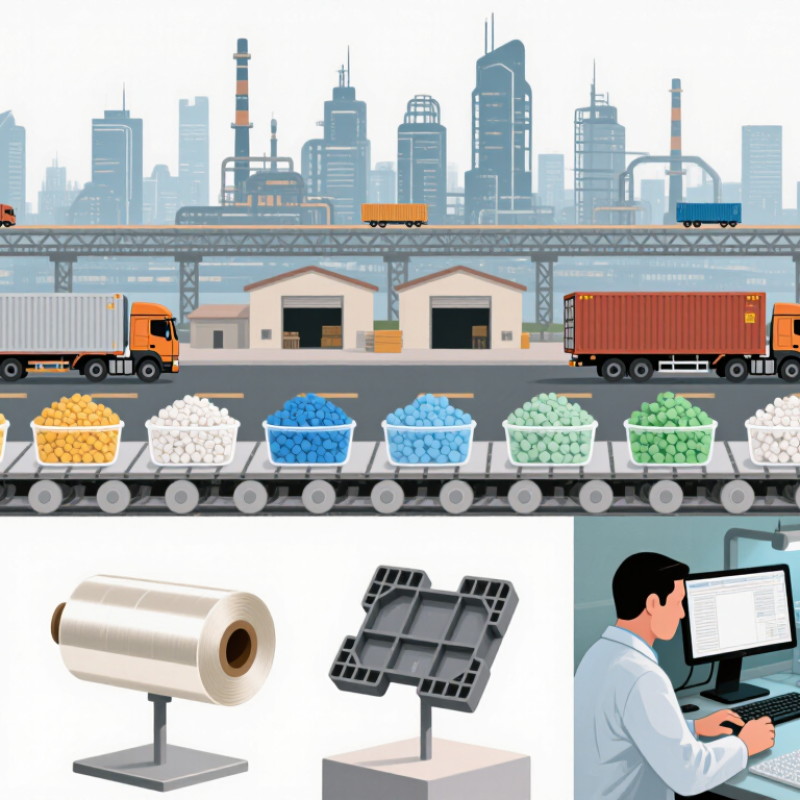
Polymer plastic suppliers in China connect manufacturers with resin materials and processing support. Some distribute standard grades, such as polypropylene or ABS, while others compound materials with colorants, fillers, or performance additives. They may also help buyers match a grade to injection molding, extrusion, or film production. That matters.
A capable supplier can provide technical data sheets, sample quantities, and batch information. Buyers should confirm details such as melt flow rate, impact strength, color tolerance, and packaging before placing a large order. For regulated applications, check which test reports or certifications are relevant to the product and its destination. One easy-to-miss gap is how consistently a quoted specification is maintained between batches. A polished quotation does not answer every production question.
Tips: Request a recent sample and compare it with the written specification. Ask how the supplier handles batch variation, storage, and delivery schedules. Keep the agreed grade and acceptance criteria in writing. Small details count. If the application is unfamiliar, involve a qualified materials engineer; supplier guidance is useful, but it may not capture every condition on your production line.
| Supplier Category | Common Polymer Materials | Typical Products or Services | Common Applications | What Buyers Should Verify |
|---|---|---|---|---|
| Commodity resin producers and distributors | Polyethylene (PE), polypropylene (PP), polyvinyl chloride (PVC), polystyrene (PS), and polyethylene terephthalate (PET) | Supply resin in pellet or powder form; provide grade and shipment documentation; coordinate domestic or export logistics. | Packaging, pipes, household goods, films, fibers, and general-purpose molded products. | Resin grade, melt-flow or viscosity specification where applicable, technical data sheet, safety data sheet, batch traceability, and delivery terms. |
| Engineering-plastics suppliers | Polycarbonate (PC), polyamide (PA), acrylonitrile butadiene styrene (ABS), polyoxymethylene (POM), and polybutylene terephthalate (PBT) | Supply engineering resin grades and, where offered, provide material selection guidance and processing information. | Electrical and electronic parts, automotive components, machinery, appliance housings, and precision molded parts. | Mechanical and thermal properties, moisture-conditioning requirements, applicable test methods, regulatory documentation, and grade consistency. |
| Modified-compound manufacturers | Modified PP, reinforced PA or PBT, impact-modified ABS, and flame-retardant PC blends | Compound base polymers with additives or reinforcements, such as glass fiber, impact modifiers, colorants, or flame retardants. | Automotive parts, electrical enclosures, appliance components, and products requiring specified strength or flame behavior. | Full formulation-related declarations where available, glass-fiber content, color tolerance, test results, restricted-substance compliance, and production-lot controls. |
| Plastic masterbatch and additive suppliers | Color masterbatch, black and white masterbatch, UV stabilizers, processing aids, and other polymer additives | Supply concentrated color or functional additives designed for blending into a compatible polymer during processing. | Film, injection-molded products, fibers, pipes, and other colored or performance-modified plastic products. | Carrier-resin compatibility, recommended dosage, dispersion performance, color reference, safety documentation, and suitability for the intended end use. |
| Recycled-plastic suppliers | Recycled PE, PP, PET, ABS, and other polymers, depending on available feedstock and processing capability | Sort, reprocess, pelletize, or distribute recycled polymer materials; provide information about source and processing where documented. | Non-food packaging, construction products, household goods, and other applications whose specifications permit recycled content. | Recycled-content evidence, contamination limits, color and odor consistency, property test data, traceability, and end-use regulatory suitability. |
| Plastic-product manufacturers and custom processors | Selected thermoplastics such as PE, PP, PVC, ABS, PC, and PA, according to the product design and process | Convert polymer materials into finished or semi-finished goods using processes such as injection molding, extrusion, blow molding, or thermoforming. | Custom components, packaging, profiles, sheets, molded parts, and consumer or industrial products. | Manufacturing process capability, drawings and tolerances, tooling ownership, sample approval, quality inspection plan, and production capacity. |
| Technical and export-service providers | Material selection varies by project and may include commodity, engineering, modified, or recycled polymers. | Support sourcing, sample coordination, documentation, packaging, order consolidation, and shipment arrangements; service scope varies by provider. | Cross-border procurement and projects requiring coordination among material suppliers, processors, and buyers. | Supplier authorization where relevant, document accuracy, Incoterms, packaging requirements, lead-time commitments, and responsibility for claims. |
| Selection note: “Top” suppliers are not a single fixed category. Compare suppliers against the required polymer grade, application, verified specifications, quality controls, compliance needs, and delivery capability. Confirm all material properties and certifications directly with the supplier for the specific grade and production lot. | ||||
Related Posts
-
7 Tips for Choosing the Right Polymer Material
-

2026 Best High Performance Polymers for Global Buyers?
-

7 Compelling Reasons to Choose Polyurethane Casting for Your Next Project
-

2026 Best Clear Epoxy Resin for Global Buyers?
-
How to Choose High Performance Urethanes for Your Needs?
-

10 Best High Quality Epoxy Resin Suppliers?


100% Mercury Free
All of Hapco's formulations are completely free of Mercury.

50 Year Track Record
Hapco has been in business for over 50 years!